In Germany, five members of the Baden-Württemberg state parliament from the CDU have formally asked the state government to consider setting up a public list of people who spread what the authorities decide to consider as climate “misinformation.”
The MPs, who belong to the Christian Democratic Union, have signed a motion that asks the government to look into the feasibility of creating such a list, and to make it “publicly accessible.”
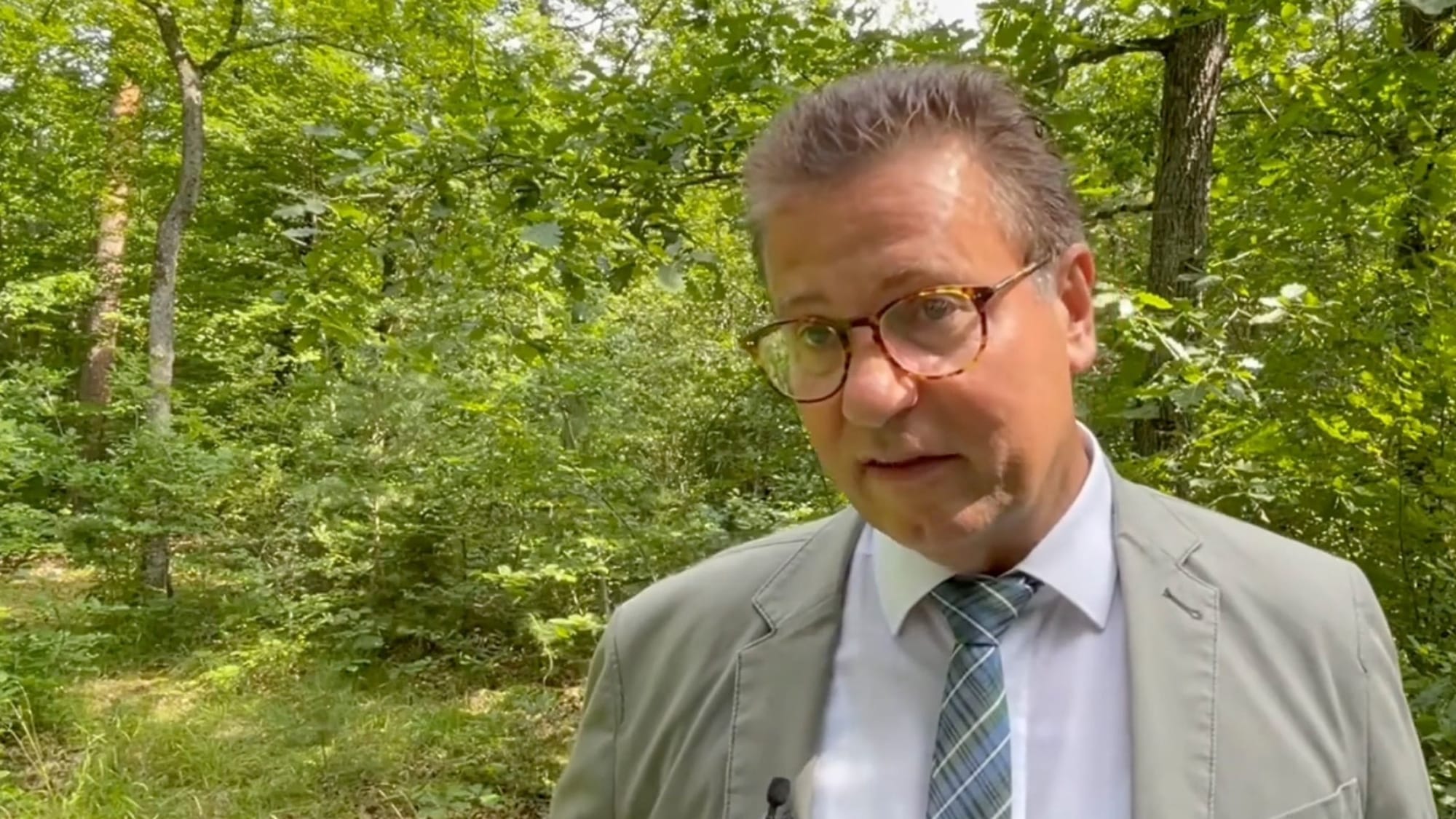
The motion, signed by Peter Hauk, a former state consumer protection minister, and four other MPs, and received by the parliament on November 3, says that the state’s Consumer Commission first came up with the idea.
The quotes from the document, and other cited sources, are our translations from German.
The five MPs – Hauk, and his party colleagues Rathgeb, Dr. Schwarz, Dr. Rapp, and Herzog – are asking the government to consider whether it makes sense to set up the list, and if so, what steps it would take to do so.
The motion was filed on October 27, and is justified by the need to stop what is considered to be “climate misinformation.”
The MPs do not propose the idea, but rather say that the Consumer Commission, which Apollo News describes as an independent advisory body that counsels the state government on consumer policy, made the recommendation on October 6.
The commission’s recommendation reads: “Comparable to a lobby register, persons and organizations that have repeatedly spread false information about climate change should be listed, with traceable documentation.”
Such a database, the statement continues, should be “easily accessible to consumers and continuously updated by an independent institution.”
“Such a database could present people with their statements and positions, flag misinformation in them and set them against the correct information, including sources.”
In other words, a public file on named individuals and their opinions, kept by an institution that is not elected by anyone.
As for who would qualify to be put on such a list, the commission says that denying climate change is no longer the main trend, but that “Measures to curb climate change are ineffective or harmful (denial of the effectiveness of political measures)” is.
In fact, the commission says, “Instead of denying the existence of man-made climate change, the effectiveness of countermeasures and the credibility of scientists are questioned, and even the harmfulness of climate policy measures is asserted.”
This means that simply arguing that a climate policy is ineffective, or that it has too high a cost, could land someone on the list.
What’s more, intent does not matter, the commission says, as “For consumer protection, however, this distinction is irrelevant.”
The document also concedes that, “Some information is neither clearly true nor clearly false (for example subjective assessments of opinion or issues on which there is no scientific consensus).”
It also says, “The goal of regulation must therefore not be to ban opinions.”
It continues to recommend that a public list of people who express those opinions should be kept, and that it should be “easily accessible.”
The idea of the database is not the only recommendation that the MPs are asking the government to consider. The commission’s recommendations also include social media platforms deleting bots, and ensuring that “no posts containing false information end up in the networks’ feeds.”
Chatbots should be treated the same way: “Classification and sanctioning of the output of false information about climate change by chatbots as a prohibited AI practice,” the commission said, and added that the federal network regulator “should sanction providers of chatbots that spread false information about climate change accordingly.”
The MPs first ask if the government “intends to implement the recommendations” of the commission. The justification of the motion says that false information about climate change can “impair the acceptance of effective climate protection measures.”
This is not the first time that the CDU has been in the news for wanting to restrict speech and impose more government regulation of the internet. In February, the party’s branch in Schleswig-Holstein pushed for a real-name requirement on the internet, and said that freedom of expression needed what they called “Leitplanken” (guardrails) – i.e., state-imposed boundaries.
In September, CDU leader and Chancellor Friedrich Merz said, “Please, nobody come to me with free speech. This has nothing more to do with free speech.”
A public register of people who hold certain views on climate policy, or any policy for that matter, is simply a blacklist, regardless of what it is called.