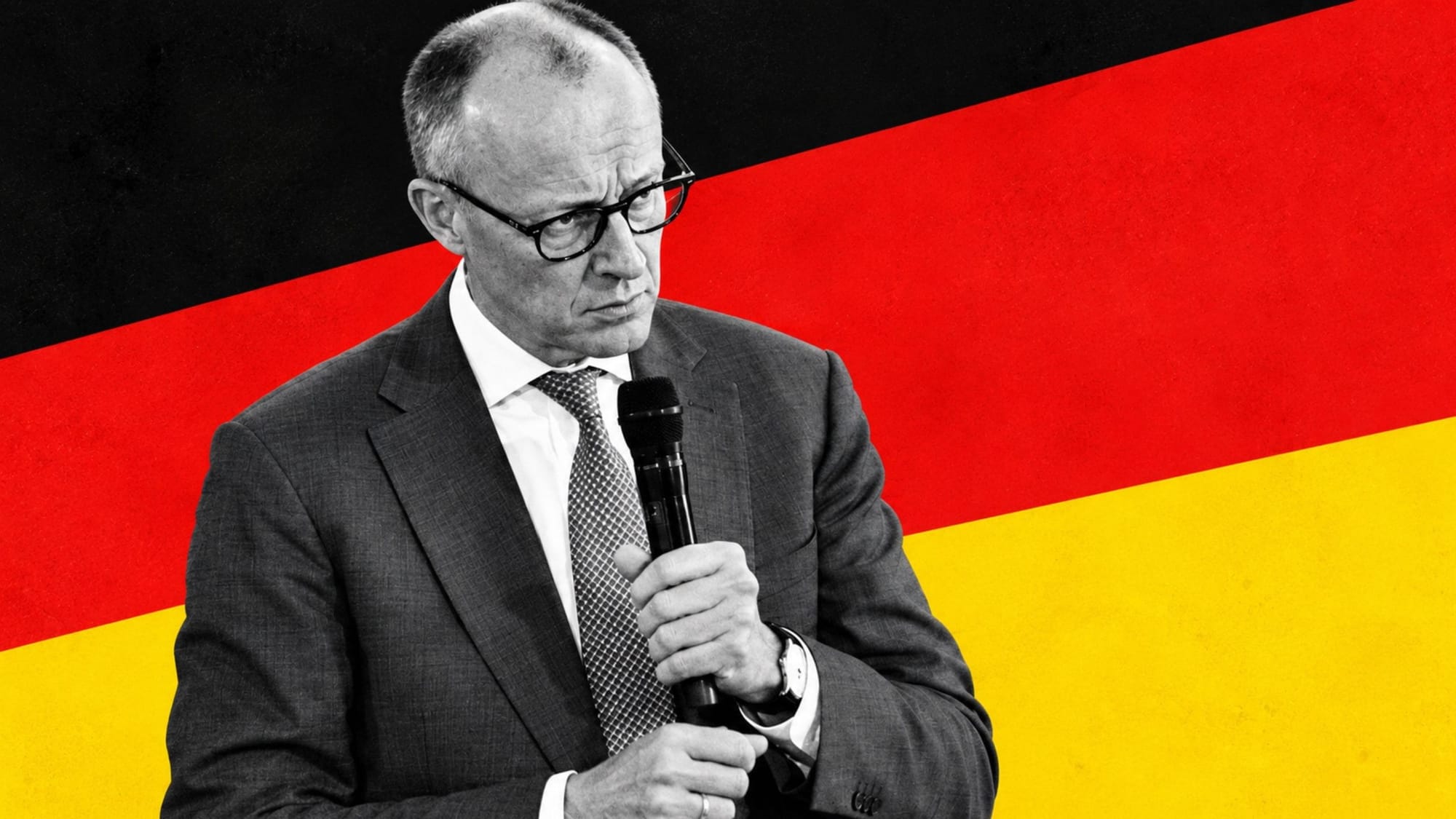
German Chancellor and CDU leader Friedrich Merz is once again advocating for an end to online anonymity.
Merz spoke at the Chancellery in Berlin on Tuesday, where he received the winners of the 61st federal “Jugend forscht” youth research competition, and took their questions. The event was streamed live by the government.
One of the participants asked Merz about introducing a real-name requirement on the internet, and how it could be reconciled with the work of informants, investigative journalism, and the need to sometimes be able to communicate anonymously.
Merz’s answer did not address the question of journalism at all. Instead, he spoke about the difficulties in establishing who is behind an online message, and who to hold responsible, as well as the proliferation of messages generated by bots.
“Please, nobody come to me with free speech. This has nothing more to do with free speech,” Merz said. Free speech, he continued, is “at best” a libertarian understanding of politics out of parts of the United States, “that I personally do not share.”
A liberal society, he went on, must be able to protect its citizens “from false information, from personal denigration, from discrimination.”
Merz, who “grew up in the analog world” said he often wonders if the digital world should be allowed to have “completely different rules.”
In the old world, he said, if a newspaper published false information, one could take action against it, and this, he said, created a certain “hygiene.”
In the digital world, Merz is unhappy that people can use pseudonyms, abbreviations, or made-up names, “and we have enormous difficulty establishing at all who is responsible for it. Is it the platforms or is it the authors themselves? And if so, who actually are the authors?”
He mentioned the “coarsening of manners” and the role of bots in generating messages. According to Merz, his party’s (CDU) competitor, AfD, had benefited in Saxony-Anhalt from messages generated by bots.
It is essential to protect personality rights and “our democracy,” Merz said.
He did allow that there are good reasons to allow for anonymous expression, but did not go into any of them.
It’s also important to note that Merz was not announcing any new policy, bill, or law, and was answering a question from a teenager.
However, this is not the first time Merz has spoken in favor of forcing people to use their real names on the internet. In February he said, “I want to see real names on the internet. I want to know who is speaking.”
He also said at the time that in politics, debates are conducted using real names, and “I expect the same from everyone else who critically examines our country and our society.”
Germany’s criminal code already punishes insult, malicious gossip, and defamation, while politicians enjoy even better protection. What is missing is a law to make it easy to identify who is behind each and every post.
And while Merz spoke about the need to protect “our democracy” from false information, he did not say who decides what is false. But he has personally filed hundreds of criminal complaints over the years, while his party and others refer thousands of social media posts to the prosecutors each year. And the police carry out hundreds of raids over insults and alleged hate speech.
In other words, the machinery is in place, and all that is needed is to make it easy to identify who is to be targeted.