The US Senate Judiciary Committee’s Subcommittee on Crime and Counterterrorism held a hearing on Tuesday, November 17, 2026, that heard real and harrowing accounts of sexual abuse of children on the online gaming platform Roblox, but the “solutions” proposed by the lawmakers and witnesses were the usual: more age verification, more surveillance, more removals, and more lawsuits.
Roblox already checks the age of users before allowing them to chat, and in fact, the company’s chief safety officer, Matt Kaufman, wrote on November 12 that “we don’t encrypt chat, which enables our safety system and specialists to monitor text interactions, spot potential grooming behavior earlier, and intervene in real time.”
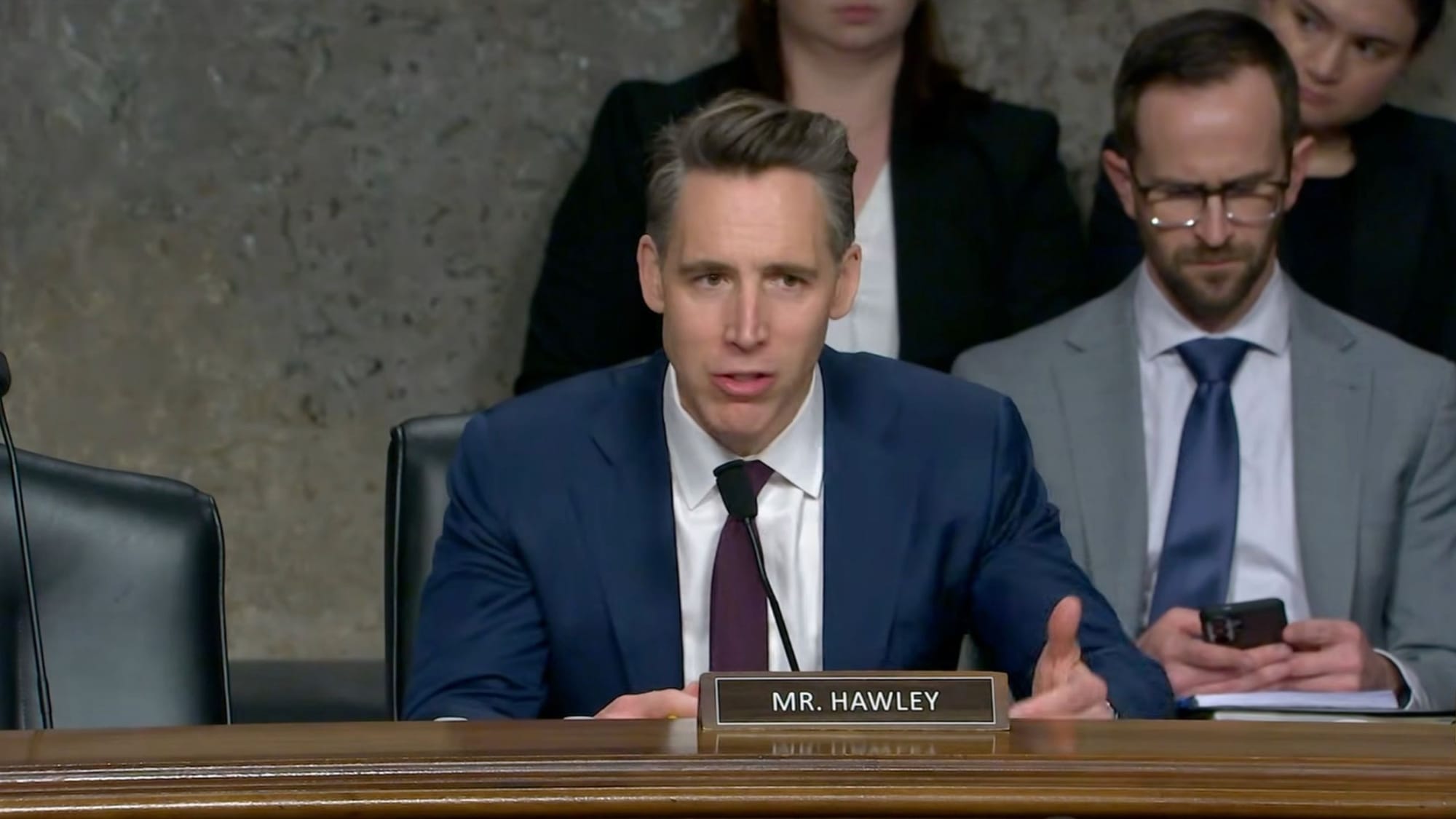
Senator Hawley wants an ID check just to play: “The company does not require any age verification...there’s no requirement to verify anybody’s age,” he said, and noted that “Roblox recently added a few more hoops to jump through to send chat messages” – but complained that “typing in a birthday is still all that it takes to start playing games.”
Hawley pointed to reports of predators operating on Roblox, children able to reach graphic violence and sexual content, and “countless criminal cases” coming out of Roblox.
Khari James of the National Center on Sexual Exploitation said her organization’s adult researchers “can still create accounts pretending to be five-year-olds without parental consent or age verification” and reached “experiences involving dating, romance, and violence,” made friends with strangers and joined private chats with them.
James said chat features built by Roblox’s developers are not subject to Roblox’s new safety settings: “Roblox cannot claim to protect children through age verification while allowing developers to build features that bypass those very protections.”
Michael Schlep, a victim of grooming on Roblox, said, “Roblox claims it has changed, but their new age verification system is very easy for child predators to bypass.”
The abuse is obvious. But the push here is to verify the age of every user, and that will inevitably mean catching every adult in the dragnet, introducing a level of surveillance never before seen, just to get online or play a game.
Senator Josh Hawley promoted his new bill, the No Forced Arbitration for Child Sexual Exploitation and Cyber Injuries Act, which he introduced with Senator Richard Durbin (D-IL) on Monday. "After months of investigation, Senator Durbin and I have introduced legislation that would ban arbitration for child victims of online crimes. We think it is time to do something. And the most important thing Congress can do in the immediate future is allow victims to get their day in court," he said.
What the bill actually does is allow families to take claims to court, including class actions, even if they had previously clicked "agree" to terms requiring private arbitration. And it's not limited to sexual exploitation, but covers any "child cyber injury," meaning a minor suffering "any kind of personal injury, including death, reputational harm, mental suffering, and emotional distress" from the design or operation of an app, platform, AI, or game, "regardless of whether the conduct of a third party also contributed to the injury."
This is a broad definition, a potential affront to the First Amendment, and the bill is designed to apply to pending cases "regardless of when the conduct, injury, or agreement at issue occurred." It borrows its definition of an interactive computer service from Section 230 itself.
The point is that these lawsuits are a workaround to Section 230 – the legal immunity shielding online platforms from liability for third party content. Plaintiffs sue over a platform's "design, features, or operation" instead of what users posted, and the remedies they seek are age verification, surveillance, and removal of content. A bill that makes those suits easier to bring means more pressure on platforms in that direction.
Senator Richard Blumenthal (D-CT) promoted a second one: "Senator Britt, Senator Booker and I have introduced a bill to end forced arbitration in cases involving harms to minors in online platforms, video games, streaming services, and AI systems. Our...bill, known as the Ending Forced Arbitration of Children Online Act, will hold these platforms accountable for the harms that they have caused."
This one was also introduced on November 16, with Senators Katie Britt and Cory Booker, and is similar to Hawley's, but its scope of harms is broader: the bill text covers anyone "alleging physical injury, mental or psychological harm, or a violation of privacy or misuse of personal data" relating to a minor's use of a "covered platform". Unlike Hawley's bill, it applies only to disputes that arise after it becomes law.
Myriam Gilles, a law professor at Northwestern, spoke in favor of the STOP CSAM Act, which she said “would give victims the right to sue the platform and...I applaud that effort, but let’s be honest, Congress can pass laws, but if they just get shunted into private arbitration, they’re doing no good in the world. So, you know, right to sue that ends in secret arbitration is...a right in name only.”
The bill, S. 1829, would do a lot more. It would allow victims of child abuse to sue a provider of an interactive computer service over the “intentional, knowing, or reckless hosting or storing of child pornography” – with no time limit – and get $300,000 in liquidated damages.
The bill states that using end-to-end encryption, “Not possessing the information necessary to decrypt a communication,” or refusing to undermine encryption cannot “serve as an independent basis for liability.”
The bill adds, evidence of those same things “shall be admissible” to “prove motive, intent, preparation, plan, absence of mistake, or lack of accident.”
The bill’s text shows that it’s a vehicle for undermining encryption, and the way it does this is by using a “recklessness standard.” This means that a service that cannot see its users’ messages because they are encrypted can be painted as “reckless by design.”
The bill’s sponsors are not trying to ban encryption – but they don’t have to. All they have to do is make offering encryption a legal risk. And that’s what this does.
Senator Marsha Blackburn (R-TN) promoted the Kids Online Safety Act (KOSA) while questioning Khari James, saying, “Kids Online Safety Act, we’ve mentioned that we’re up to 77 sponsors in the Senate. We passed it out last year, 91 to 3, broadly bipartisan. Our friends in the House are trying to come around to supporting this. We’re nudging them.”
She asked James to, “Talk about the importance of getting a law on the books that holds tech companies responsible.”
James agreed that there has to be a “consequence” because “Roblox has...scratched the surface and done the bare minimum to say that they’re protecting children, but that’s because the world is watching right now.”
Senator Richard Blumenthal (D-CT) also spoke in favor of KOSA, saying, “Roblox has fought the Kids Online Safety Act. And I think the testimony today shows very graphically and dramatically why it has fought. KOSA, because it knows it would be held to a standard of care.” He added, “Exploiting kids is their business model.”
KOSA, which has been introduced as S. 1748, says that a platform, “shall exercise reasonable care in the creation and implementation of any design feature to prevent and mitigate” a list of harms to minors, enforced by the Federal Trade Commission as an unfair or deceptive practice. This would put more censorship pressure on platforms over content deemed harmful to minors.
The bill, if passed, would also order the Secretary of Commerce, working with the FCC and the FTC, to study, “the most technologically feasible methods and options for developing systems to verify age at the device or operating system level.”
The point of KOSA is to introduce a duty of care toward minors – but in order to know which of its users are minors, a platform must check the age of all its users. And the study ordered by the Senate bill specifically mentions “the device or operating system level” as the place where this should be done – meaning the phones and computers people use.
Children deserve to be protected, but nobody at the hearing mentioned the price that would have to be paid by every internet user, children and adults, if the laws and rules discussed in the Senate on Tuesday were to be adopted. And that price is the loss of privacy, free speech, the right to be anonymous online, and the right to have a private conversation.