
On Monday, November 16, US Senators Josh Hawley (R-Mo.) and Dick Durbin (D-Ill.) introduced the No Forced Arbitration for Child Sexual Exploitation and Cyber Injuries Act, a day before Hawley was set to chair the first congressional hearing on Roblox.
This is not a coincidence, as the proposed bill directly pertains to the type of business the giant gaming platform is in – and the type of legal trouble it finds itself in.
The bill seeks to make sure that in cases of child sexual exploitation, as well as what is termed as "child cyber injuries," arbitration clauses in terms of service are ignored, allowing families to sue in open court, including via class actions. According to Durbin, "an 'agreement' buried in the terms of service shouldn't limit a child's or family's rights to bring their claim before a judge or jury."
What the bill does is to make sure that in these cases, the terms of service that most people never read and just click "agree" on do not take precedence over the right to sue in court, and, importantly, to be able to organize class actions.
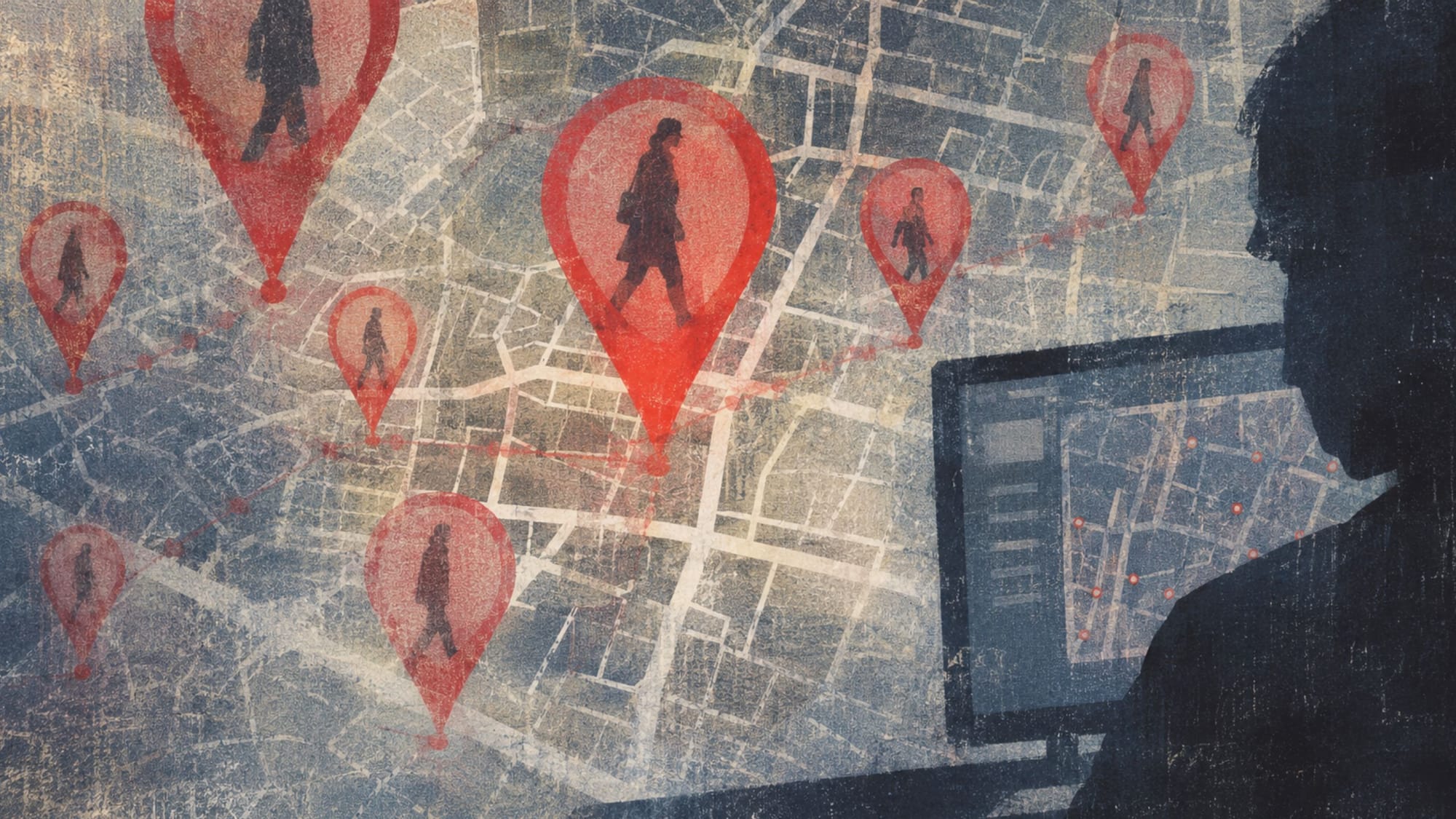
Why does this matter from the privacy angle? It is because lawsuits like these have become a way to go after platforms for things that Section 230 was designed to protect them from, i.e., third party content. Instead, plaintiffs sue over the platform's "design, features, or operation" – and the remedy they seek is more and more surveillance and censorship.
The bill uses this phrase, and the effect of the lawsuits is to get platforms to ID every user, monitor every communication, and remove content. That's what the legal efforts that the new bill seeks to facilitate keep resulting in.
For example, a suit brought by Oklahoma said that Roblox not asking for age and ID at sign-up is "a design feature that leads to child endangerment," while a complaint filed by Los Angeles County listed "age verification" as the first measure the platform failed to adopt.
In May, we reported that a settlement in Nevada forced Roblox to remove encryption from chats of all its minor users.
That is why these lawsuits, even though they may seem to be about holding a company to account for things it is actually responsible for, are dangerous for the privacy of all users, as the end result is more surveillance, more data harvesting, and more censorship.
The bill is broad in its definition of what it covers, going far beyond the very serious issue of child exploitation. According to the text of the bill, it covers "any grooming, enticement, or coercion of a minor" – but also any "child cyber injury," which is defined as a minor suffering "any kind of personal injury, including death, reputational harm, mental suffering, and emotional distress" from the design or operation of an app, platform, AI, or game. And this is the case "regardless of whether the conduct of a third party also contributed to the injury."
We obtained a copy of the bill for you here.
The bill borrows its definition of an interactive computer service from Section 230 itself.
The bill states that a parent or guardian signing off on the terms of service "shall have no effect" – and it is a court, not an arbitrator, that decides if it applies. It also covers cases that are already pending "regardless of when the conduct, injury, or agreement at issue occurred."
The day after the bill was introduced, the Senate Judiciary Subcommittee on Crime and Counterterrorism, led by Hawley, held a hearing on the subject of the dangers Roblox poses to children.
The hearing, titled "Roblox and Online Gaming: Digital Playgrounds Endangering America's Children," heard from two abuse survivors and two experts. The company's CEO Dave Baszucki was invited but declined to testify, CBS reported.
Hawley said that he is investigating allegations that Roblox has become "a breeding ground for sexual predators."
The senators sent a letter to the company in August, announcing the investigation, and accusing it of prioritizing profits over children's safety. The letter said that in 2025, Roblox reported 65,381 cases of suspected exploitation to the National Center for Missing and Exploited Children (NCMEC) - more than double the number in 2024.
Meanwhile, the company faces nearly 200 federal lawsuits and has settled with at least six states, CBS said.
What is Roblox already doing to make itself less of a target, and to make its platform safer? On November 12, Chief Safety Officer Matt Kaufman wrote a blog post to say that "we don't encrypt chat, which enables our safety system and specialists to monitor text interactions, spot potential grooming behavior earlier, and intervene in real time."
Kaufman said that this is the reason the company has a high number of reports to NCMEC. "Our ability to monitor all communication in real time leads directly to comparatively high law enforcement reporting numbers," he said.
He also said that Roblox was "the first major gaming platform to require age checks to access chat features." The company uses machine learning models to detect and flag conversations that are then reviewed by human moderators. Roblox also shares information about suspected bad actors with other companies through the Tech Coalition's Lantern project.
Kaufman noted that about 40% of its reports to NCMEC are children talking to children, which it classes as "informational" cases.
The company is not afraid to throw its users under the bus to save itself - or, as Kaufman put it, "Some of the guardrails we've built are uncommon for gaming platforms - and can be unpopular."
Reclaim The Net has been covering this, and we know that these "guardrails" are not only unpopular, but also highly controversial. They include face scans and government ID checks, introduced last year, that caused the platform to lose 12 million daily users in just a few months.
We also reported about the Oklahoma and LA County lawsuits that are trying to force the company to introduce more ID checks. At the time, we noted that Oklahoma was at least the tenth state to sue the company.
While the new bill is sold as a way to give victims a chance to seek justice in court, every single lawsuit it enables is another argument in favor of a platform that will scan every face, and read every message, of all of its users, to limit its liability.