On Friday, November 13, Australia's Home Affairs Minister Tony Burke opened a Counter Terrorism Online Centre (CTOC) in Sydney – a "joint covert centre" that combines the powers of the country's intelligence agency ASIO and the Australian Federal Police (AFP).
The center is the latest in a series of Australia's forays into expanding online surveillance, and the way it was presented to the public indicates that the authorities are trying to normalize this type of activity. "The capability we've always had to monitor extremists in the meeting room, now extends to the chat room," said Burke.
The government's own release says covert operatives have been trained to identify "potential terrorist actors or those at risk of manipulation and radicalisation."
The center is not only about identifying those who have done something wrong, but also those who might do it – and even those who have done nothing but are considered to be at risk. This is evident from the tasks the center has been given: "Discovering, mapping and connecting potential threats to allow for better intelligence and early intervention," and identifying threats across "at risk, individuals, communication apps, gaming platforms and trends."
The Sydney center is to become "The single-entry point for overseas partners to provide intelligence and warnings about online national security threats" – and will "Bring together covert online operations across the Commonwealth" over the next two years. The longer-term plan is to "Eventually combine artificial intelligence and human ingenuity through technology-enabled online operations."
ASIO Director-General Mike Burgess explained the reason for setting up the new center by saying that online operations are often the only way to identify and engage with individuals to understand their intent, capability, identity and targets.
The minister in charge of his country's police and spies, Tony Burke, made sure to note that CTOC will "go where the threat is, regardless of ideology, online location, or actors."
A number of statements made by Australia's top officials at the time of the center's opening suggest that the primary target is young people, teenagers and even younger children.
AFP Commissioner Krissy Barrett spoke of the need to put "a magnifying glass over online hate-breeding grounds" and said that the new center will allow investigators to "identify and focus on those who are at risk or are causing risk."
She also spoke of a "grievance generation, who are angry and feel powerless, but are willing to show their power by exerting acts of violence, consuming violent extremist material or joining sadistic online groups."
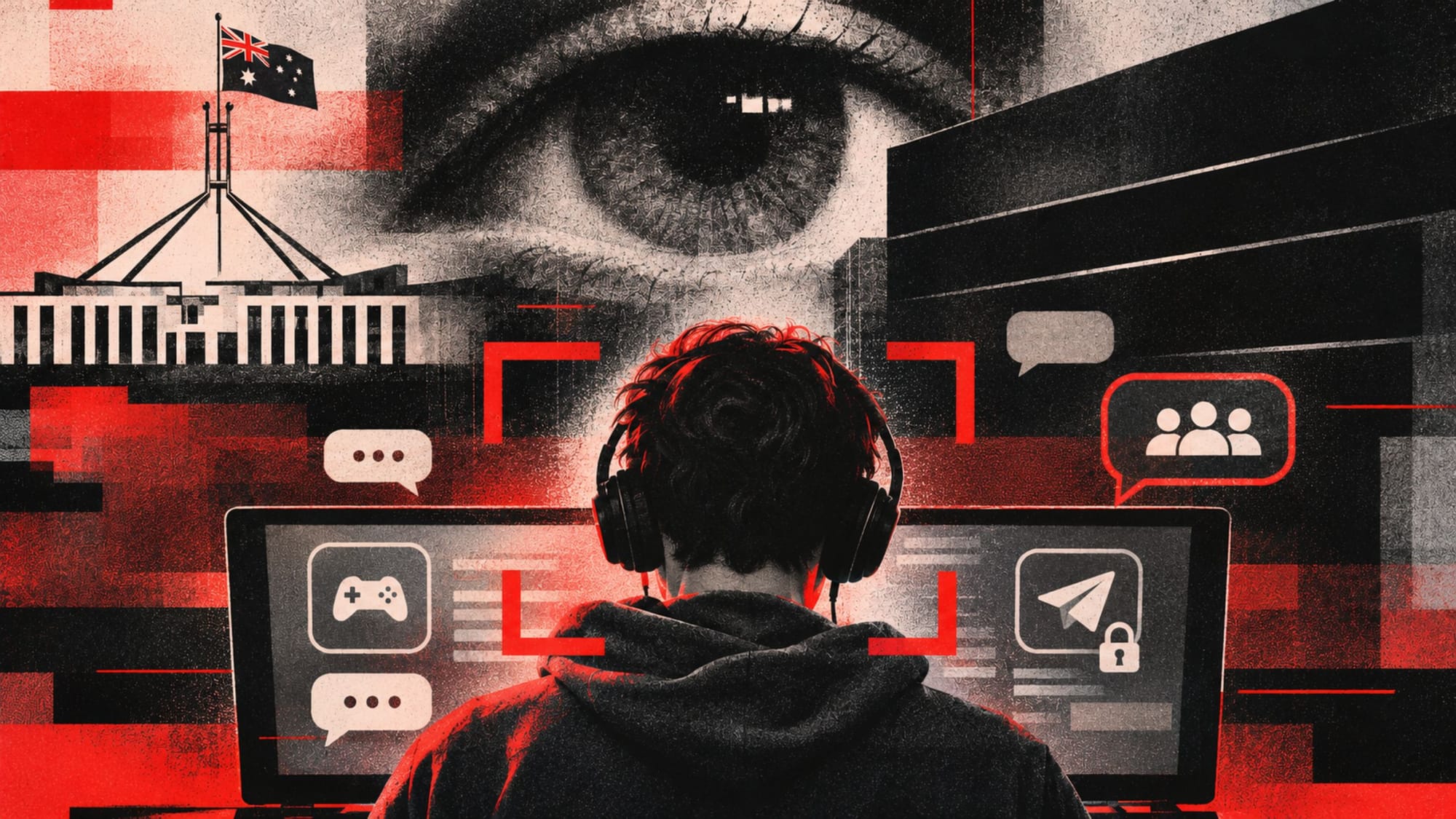
Barrett also revealed that law enforcement is dealing with children, and lots of them. "Too many kids are at the crossroads to crime," she said. "In part this is because the fertile hate-breeding grounds are where our youth live and play: gaming platforms, dedicated encrypted communication platforms and social media platforms."
Burgess provided an example of the work of his agency's covert operators who "recently gained access to a global, private neo-Nazi Telegram group." They then identified an Australia-based person, and "ASIO's investigation identified exactly who the individual was" - a child under 16, who was referred to a Countering Violent Extremism Program.
In May, when he announced $74 million in funding for CTOC over two years, on top of $106.2 million over four years from 2024-25 that was allocated in the counter-terrorism strategy, Burke said 19 of the 31 people charged under the 2024 online extremist-material offenses were minors.
He also said at the time, "I don't want to create some sort of impression that every young male who's engaging on a gaming platform is somehow in a specifically dangerous circumstance."
Nevertheless, the focus on children is there, and it is strong.
The $74 million over two years was announced in May, while the Budget Paper 2 mentions "$80.0 million over two years from 2026–27 to enhance capabilities to counter terrorism threats online, and prevent violent extremism and youth radicalisation" as part of its post-Bondi package - without mentioning the center.
There is also no mention of any kind of oversight, or safeguards against abuse of the new center's powers.
In May, Burke said, "The best outcomes are the ones that no one ever knows about."
Reclaim The Net has been reporting about Australia's steady and persistent move towards wider online surveillance and erosion of privacy for years.
In September 2024, we wrote about ASIO Director-General Mike Burgess telling messaging companies to prepare to open encrypted chats to his agency. "We're not asking for mass surveillance. We need their cooperation," he said at the time.
Burgess also had a message for those companies that would not comply: "If they (tech companies) don't cooperate, then there's a private conversation I need to have with government about what we accept or what I need to do my job more effectively."
Australia already has the 2018 Assistance and Access Act (TOLA) that lets agencies serve secret notices to tech companies compelling them to help get into communications. Disclosing the fact that such a notice has been received is a crime. The law is supposed to have a safeguard that prevents "systemic weakness" in products, but in the years since, no workable definition of what that is has been produced. In 2022, we reported that agencies had started issuing these compulsory notices for the first time.
In December 2025, after the Bondi attack, we wrote about the government's turn towards even more online surveillance and content control.
Now, it seems that the authorities have found a way to get into encrypted chats - not by compelling companies to open them, but by joining them as participants, using spies and police officers. And this is done by a secret unit that is building AI tools to map and flag children's group chats, with no publicly available information on how many such operations there will be, what the threshold for flagging a child is, and what happens to their data if they are never charged.
That is something that should worry Australians, regardless of the center's stated goals.