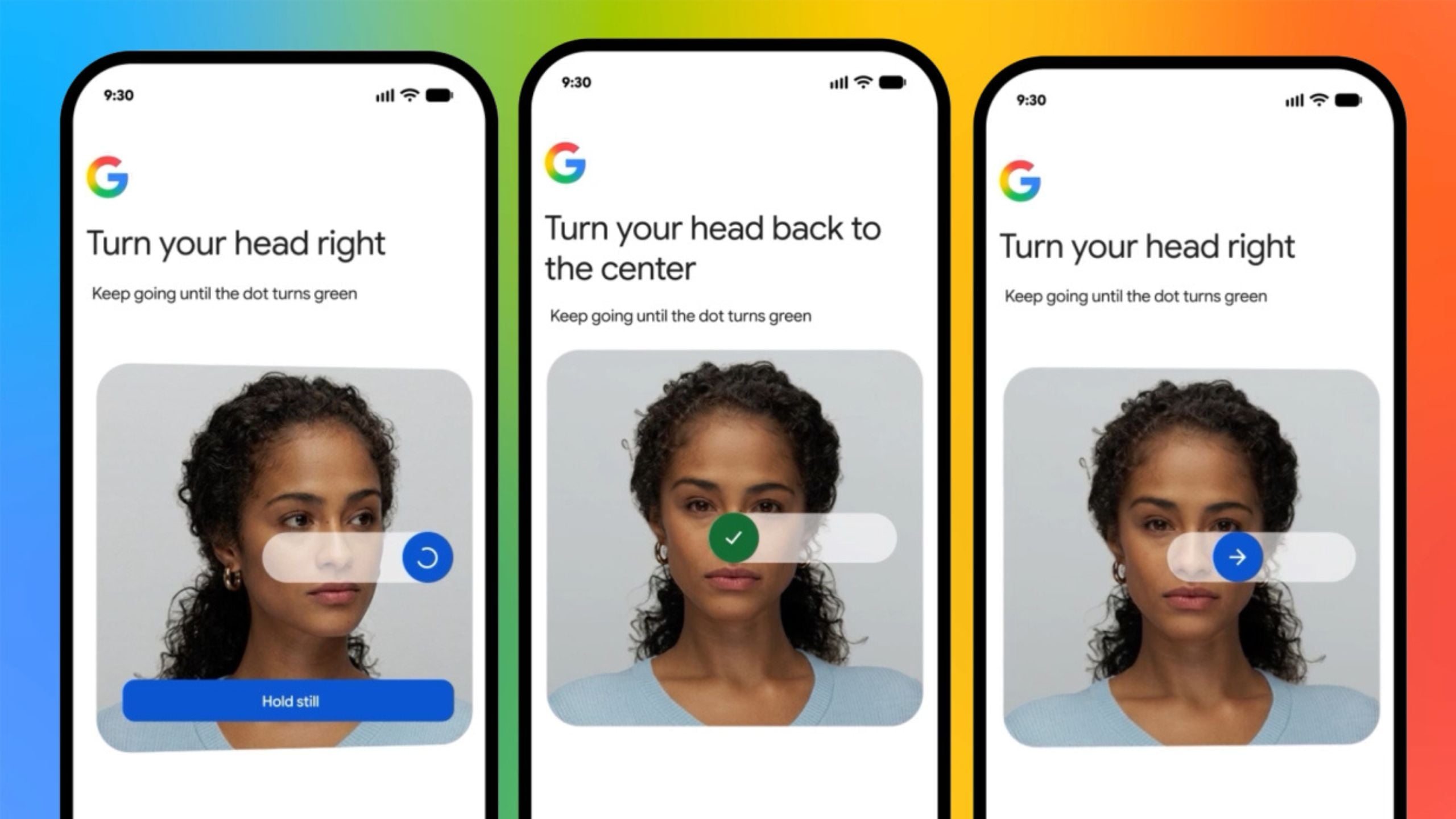
Google’s newest account-recovery option asks for something no password ever required: a moving image of the account holder’s face, kept on the company’s servers.
Selfie video sign-in, launched July 23, records a short clip of the user turning their head on cue. When someone is locked out, Google matches a fresh clip against the stored one to decide whether to let them in.
The head movements are the security pitch.
They let Google’s systems tell a live face from a photograph or a prerecorded loop, the same trick it uses to turn away deepfakes.
Those checks all serve the accuracy of the match.
They say nothing about how much of the face Google stores, or for how long.
The company’s assurance covers only the storage. In its words, the video is “encrypted at rest, meaning it’s securely stored even when it’s not being used.”
Encryption at rest is a claim about how the file is stored. It says nothing about who can open it.
Its systems have to read the enrolled video to check any new face against it, so Google can decrypt the footage on demand. Encryption that only the account holder could open would rule that out, and Google has not claimed it.
Passkeys, hardware keys, and authenticator apps already restore a locked account with no biometric anywhere in the process.
Google added the face scan on top of them.
By default, the company says the clip stays with verification and recovery. A separate setting asks the user to release the same data toward developing Google’s products.
The feature is opt-in and reversible. Eligible accounts around the world can switch it on, and account holders can delete the stored clip at any time.
The company has not said how long it keeps that clip while the feature runs, or where the footage is handled.