Governor Gavin Newsom signed a law on July 13 that plugs California’s driver records into a national identity network, quadruples the reach of the state’s phone-based ID, and clears the way for a camera enforcement grid across Los Angeles during the 2028 Olympic and Paralympic Games.
The state sold SB 169 as a bill about shorter DMV lines. Of course, it does far more than trim paperwork.
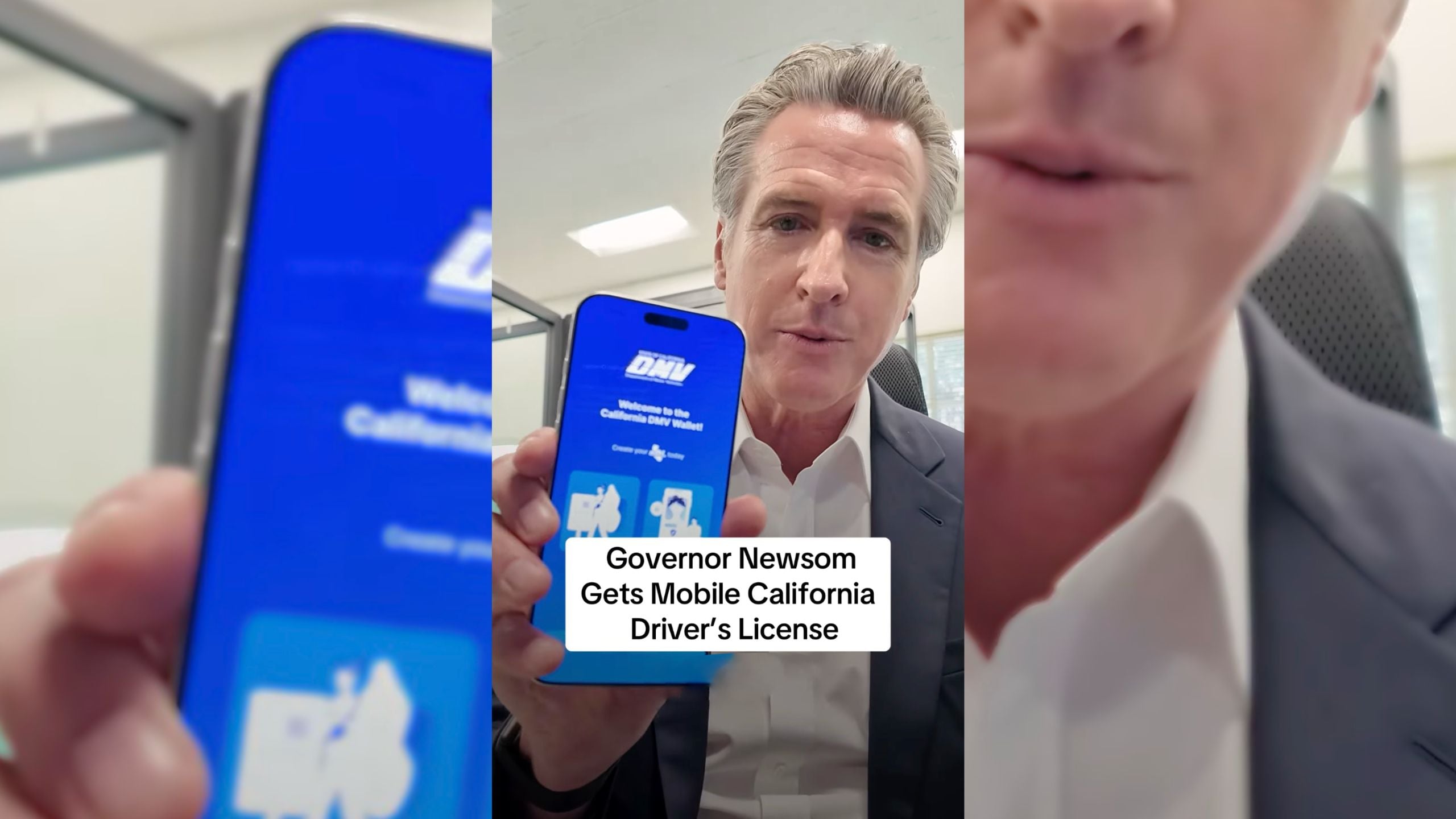
Start with the mobile driver’s license, the feature the state most wants you to see. SB 169 raises the cap on California’s mDL pilot from 15 percent of licensed drivers to 60 percent, a fourfold jump that could reach well over 16 million people.
More than 3.5 million Californians have applied since the program launched in August 2023. Newsom pitched it as freedom from the wallet. “Now we’re going further by cutting the red tape that slows government down and giving more Californians the option to carry their ID right on their phone,” he said.
A digital ID changes the physics of identification. A plastic card fits in a pocket and says nothing until its owner chooses to show it. A phone credential runs on software the state controls, can log when and where it gets checked, and turns each scan into a possible record.
Convenience arrives with a trail the old card never left.
The provision that held up the bill for months has nothing to do with wallets. SB 169 lets the DMV join the State-to-State Verification Service, a data exchange run by the American Association of Motor Vehicle Administrators, a private organization that sits outside the rules that bind government agencies. States use it to check whether a license applicant already holds credentials somewhere else, a step tied to REAL ID.

The service feeds a central hub called the System for Electronic Exchange of Driver Data. Once California connects, its driver and ID records join a shared national pool of American identities.
California says it will share only part of each record. That part still covers full names, dates of birth, the last five digits of Social Security numbers, license and ID numbers, credential types, REAL ID status, and driving history down to accidents, convictions, and license restrictions. Home addresses stay behind. Almost everything else travels.
More than 160 organizations fought the plan.
State lawmakers sided with them long enough to strip the governor’s $56 million funding request from their budgets. A compromise later restored the money after negotiators bolted on guardrails.
California-style, an advisory committee would bring in an immigration rights advocate, an “LGBTQ+” rights advocate, and a cybersecurity expert, along with a monitoring plan for data requests from other states. But no one appears to be there to representing the overall affront to privacy.
The governor’s office says federal immigration enforcement cannot reach the network and that it records no immigration status.
“California continues to lead in supporting immigrant families and protecting personal data from federal overreach,” a spokesperson said.
“The state is taking this same approach to protect Californians’ data during the REAL ID implementation, all while maintaining REAL ID compliance for the benefit of Californians.”
Guardrails written by one administration bind no future one. A database, once filled, tends to stay filled. What protects Californians from the misuse of their own records is a promise not to misuse them.
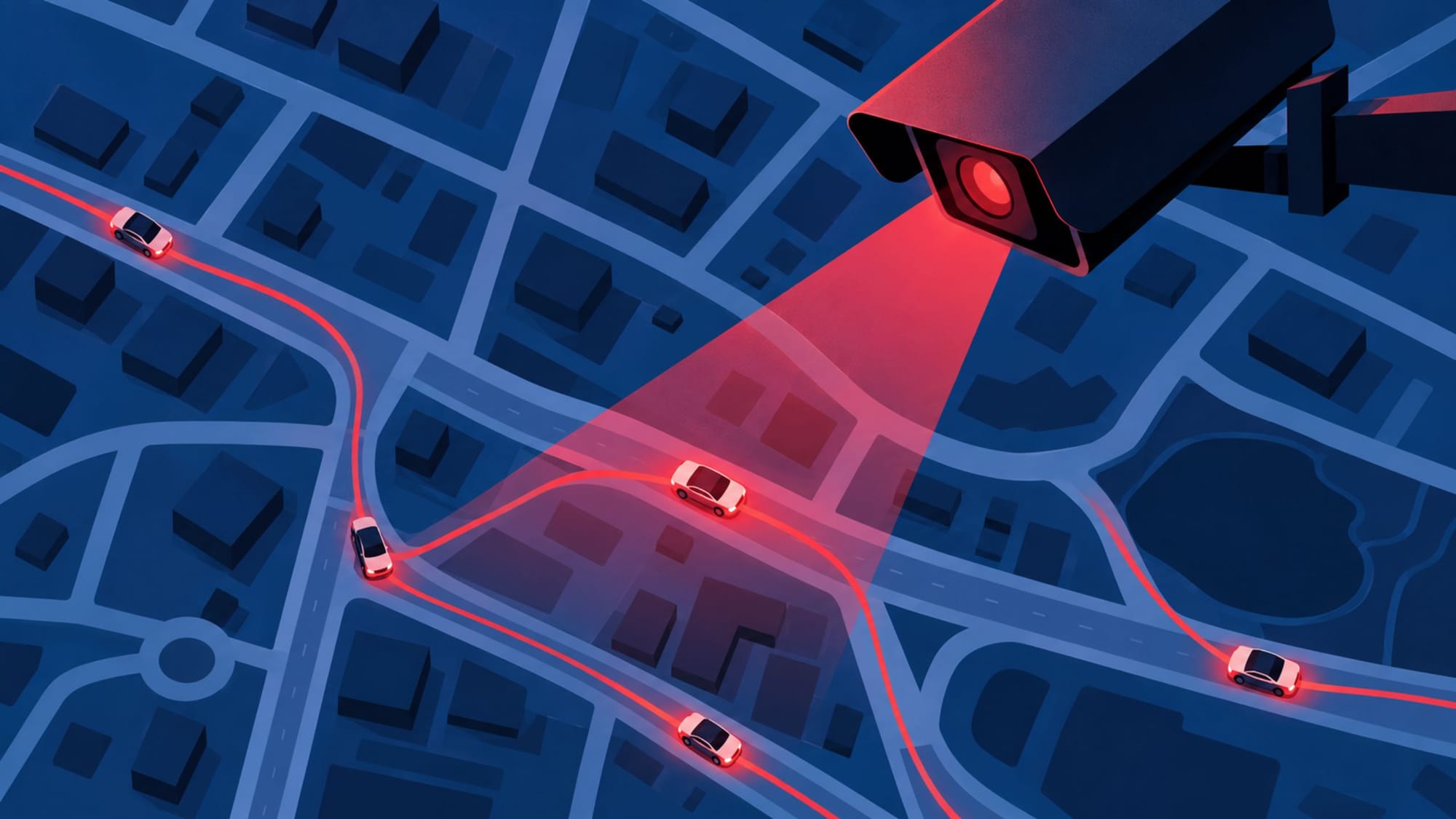
The bill’s third act looks to 2028. SB 169 lets the California Department of Transportation stand up an automated enforcement system along the “games route network,” the dedicated Olympic lanes running through Los Angeles.
Cameras, sensors, and mobile apps will flag drivers who cross into restricted lanes, with violation notices mailed to registered owners within 15 days.
Caltrans did build in limits, and they read better than most surveillance programs. Cameras may capture only the rear plate and the Olympic decal, not faces, passengers, or pedestrians.
Stray identifying images get blurred. Facial recognition is banned outright. The photos and administrative records stay confidential, exempt from the California Public Records Act, and face destruction within 30 days of a resolved violation, or five business days when no notice ever goes out. The whole apparatus expires on January 1, 2029.
Those limits deserve credit. They also make the camera ordinary. A watch system built for a few weeks of sport becomes standing equipment, with wiring, contracts, and vendors who would rather keep it running.
Aggregate violation counts fall outside the confidentiality rule. Sunset dates have a habit of sliding.
SB 169 comes wrapped in the language of speed and service. Shorter lines, no printed handbooks, an ID on the phone. They also push more of every Californian’s identity through systems the state, and more and more other states, can read. The old plastic card was dumb, and that was the best thing about it.