
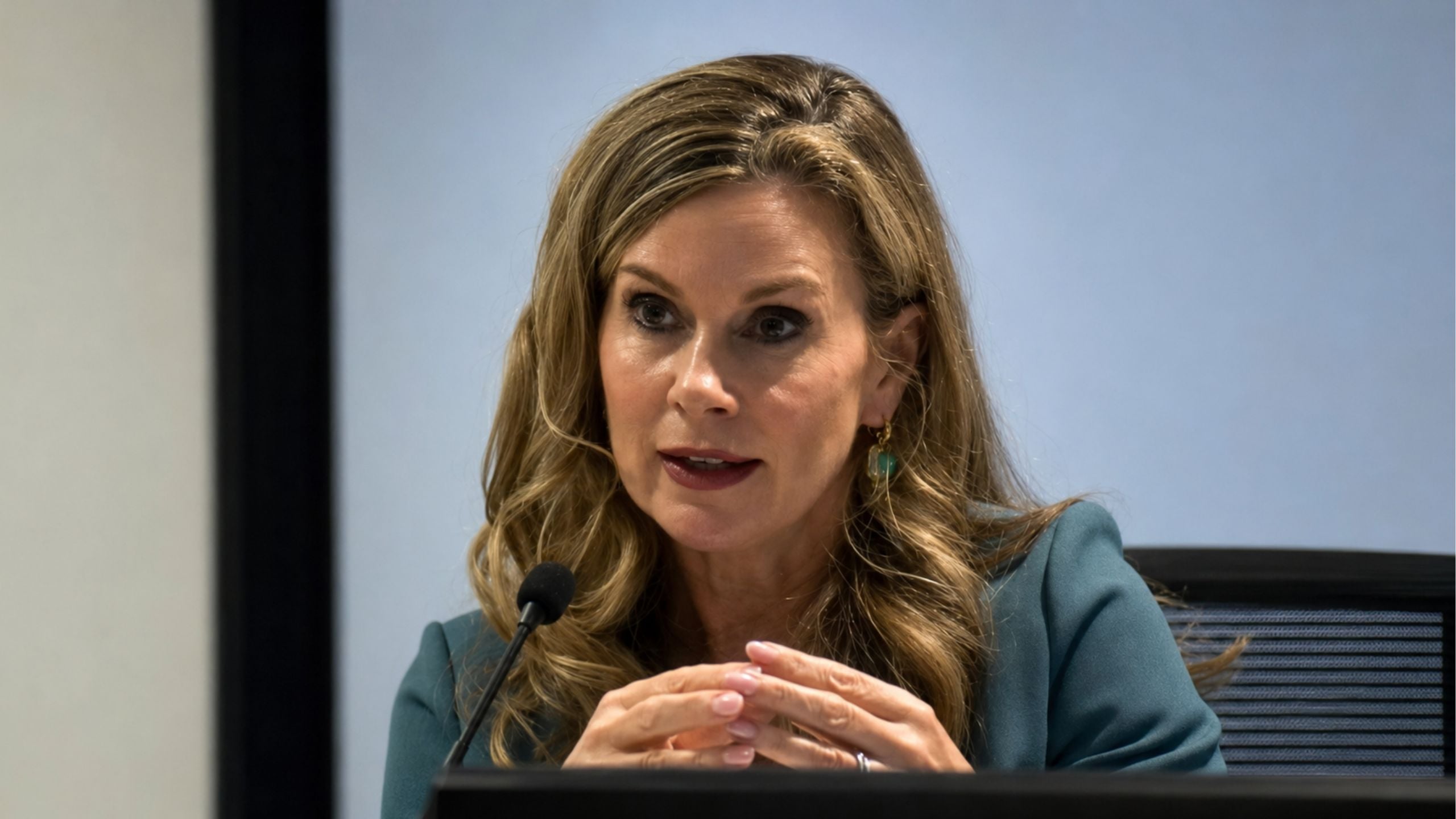
Australia’s eSafety Commissioner wants legal power to order social media companies to shield favored users from criticism and to suspend everyone piling on against them. Julie Inman Grant made the pitch on July 2, testifying to the Royal Commission on Antisemitism and Social Cohesion, the government probe set up after the Bondi Beach terror attack.
She calls the tool a “notification power.” What it does is let her office tell a platform that a particular Australian account is under heavy criticism and demand that the platform punish the accounts responsible.
Her own description of the trigger runs to “insulting” and “ugly” comments stacking up beneath someone’s posts. “If there’s a pile-on, if there’s a brigade, if it’s meant to be an avalanche of online hate, we put the onus back on the platform to say, this Australian is being targeted,” she told the commission.
“We expect you to protect their account and take action against all of those people that you can see… whether it’s you just suspend them or you take them away.”
Watch the video here.
She wants the power to reach across platforms, too. The current adult cyber-abuse rules frustrate her because they force her office to “look at that specific tweet” rather than the whole swarm of replies beneath it. The fix she wants hands platforms a standing order to police disapproval on her behalf.
Grant does not think of this as censorship, of course. Asked about companies that frame their resistance as free speech, she said “it’s easy to slip a censorship label on just about anything,” and offered a softer account of her own work. “What we’re trying to do is minimize harm. Encourage as much speech as possible, but when it veers into the lane of hurting individuals, hurting communities, hurting society and undermining democracy, I think we all need to band together and take more of a stand.”
The regulator asking for authority to suspend users in bulk says her goal is more speech.
Who defines the harm that flips speech from protected to punishable? She does. Phrases like “hurting communities” and “undermining democracy” stretch far enough to cover most heated political argument, and the office reaching for them writes the definition.
Much of her testimony was a complaint that the companies keep winning. eSafety has eight cases running against X Corp, and Grant said six of them were “led by X.” She cast the legal pushback as commercial greed dressed up in principle, accusing platforms of fighting “to be able to serve, share and monetize horrific content.”
Asked whether she had actually seen platforms fight to monetize such material, she answered “I can’t imagine any other reason they would want to put it up there.”
The clearest example she offered cuts against her. After the Wakely church stabbing of Assyrian bishop Mar Mari Emmanuel, eSafety sent formal removal notices to Meta and X. “Meta applied within the hour, and then of course, X Corp said, ‘We’re not taking it down, we’ll see you in court,'” Grant said.
X won the legal challenge. And the bishop whose stabbing she cited as the reason to censor went on to back Elon Musk and defend free speech from the pulpit in his first sermon after surviving the attack.
The person eSafety said it was protecting did not want her protection.
Grant wants more than the notification power. She told the commission her authority to tackle cyber abuse against adults sits at a “very high threshold” that holds her office back.
She called for an online hate code that would push responsibility onto the platforms, something she said “we know they could roll that out tomorrow.” She warned of a world where “we’ve got the most powerful technology in the world, owned by the richest, wealthiest technologists in the world, but we’ve never had looser guardrails. That, to me, is a recipe for disaster.”
Loose guardrails, in this telling, mean a regulator who has to convince an independent board before deleting a video, and companies willing to make her prove her case in court. The process worked, and she lost. Her fix is to ask for powers that route around it.