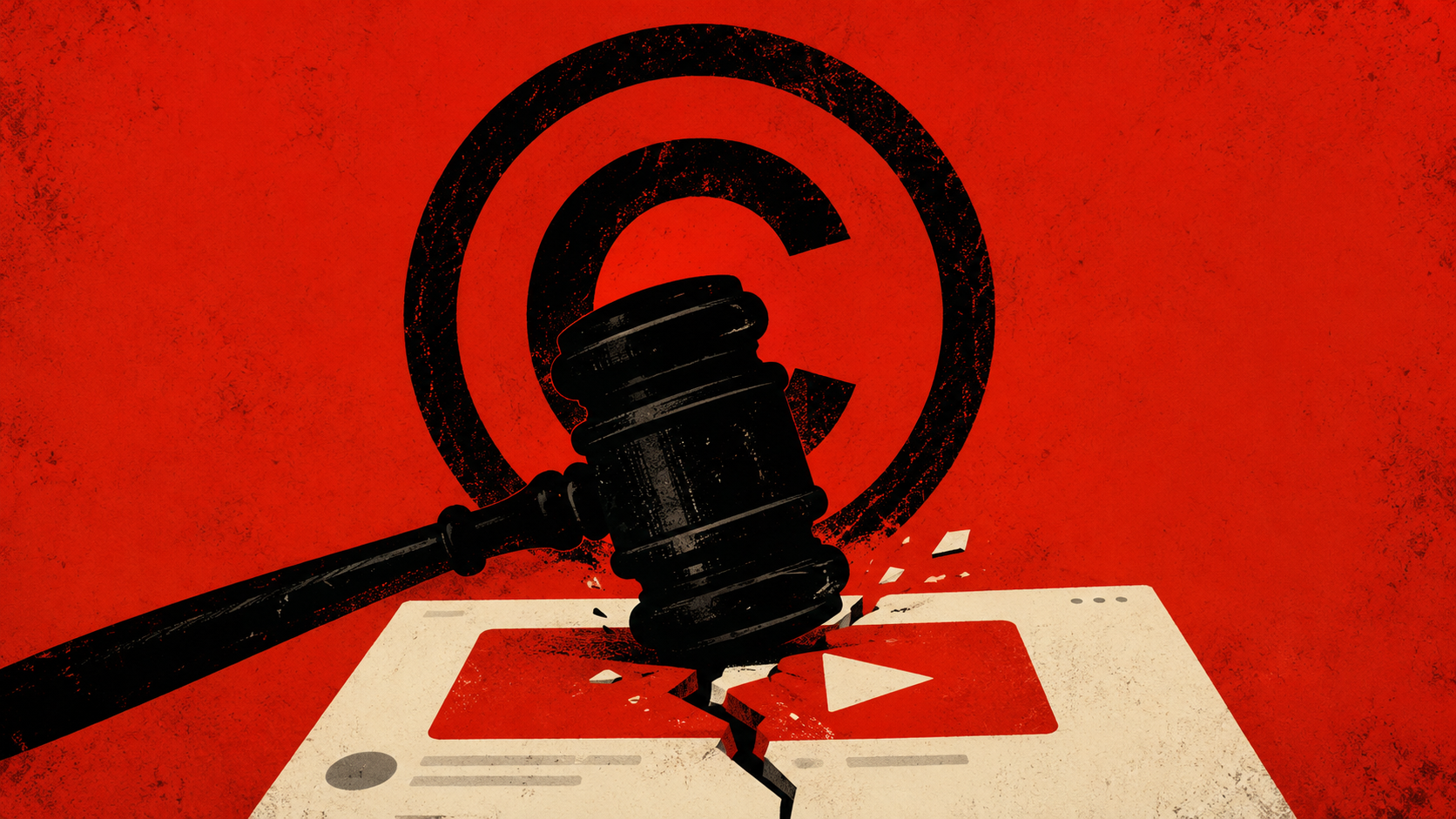
The US copyright system is often used as a tool of censorship, and a recent court ruling shows that there is little to stop this from happening.
The way the system is set up, it provides a powerful tool for anyone to unceremoniously remove content from the internet, with no questions asked. At least not initially.
That tool is the DMCA takedown notice, and the law that underpins it, and the whole system, is the Digital Millennium Copyright Act (DMCA). One of its sections, 512(f), is meant to deter abuse of this process, but as the court decision shows, it is toothless.
The case concerns a local news outlet in Massachusetts that had its YouTube channel taken down because of videos it posted about local government meetings.
The city of Waltham had outsourced the recording of its meetings to a contractor, Waltham Community Access Corporation (WCAC), and it was this entity that sent the DMCA notices to YouTube, targeting 15 videos on the Channel 781 News outlet.
This resulted in YouTube temporarily deactivating the channel.
But the court found that WCAC had done nothing wrong, and that its consideration of the fair use doctrine was sufficient, even though it was minimal.
The court's decision was to grant summary judgment to WCAC and dismiss the claim that the takedowns were a misrepresentation under Section 512(f) of the DMCA.
We obtained a copy of the ruling for you here.
The news outlet argued that WCAC had knowingly and materially misrepresented that the videos were infringing because it had failed to consider fair use before sending the takedowns.
However, the judge found that no reasonable jury could conclude that the contractor had failed to consider fair use, even though it was only an email and a YouTube video that a WCAC employee, Wangler, used as the basis to determine that fair use did not apply.
In fact, Wangler only sent takedowns for videos that had "zero editing or commentary" added to the original recording, meaning that those with commentary were not targeted.
The court found that this was sufficient to show that Wangler had "expressly researched the fair use doctrine; made an effort to apply the doctrine to Channel 781's clip videos; and determined before sending the takedown notices that the relevant videos were not fair use."
Law professor Eric Goldman called the ruling an illustration of "the inevitable futility of most 512(f) cases" – they occasionally get "a little traction" at the motion-to-dismiss stage, then predictably die at summary judgment.
This is because the sender of the takedown notice only has to show it considered fair use, "albeit not in a 'searching or intensive' way," to prevail.
Goldman also had a word to say about the "secret villain" of the story, the government of Waltham, whose outsourcing of recording public meetings has resulted in a private company owning the copyright and using the DMCA to remove content from the internet.