The US Court of Appeals for the Eighth Circuit has blocked a Minnesota “nudification” law as it applies to xAI (now known as SpaceXAI), pending the outcome of the company’s appeal.
The law, signed in May, took effect on August 1, and the company is challenging its constitutionality. The law provides for a $500,000 fine per violation.
The appeals court order is very brief and does not provide any reasoning, but simply states that xAI’s motion for an injunction pending the appeal has been granted.
The lawsuit was originally filed against Minnesota Attorney General Keith Ellison by xAI in late July, just before the law came into force, but a district court judge refused to block the law, first, a temporary restraining order, and later a preliminary injunction.
The law is designed to prevent the creation and dissemination of non-consensual nude images of real people – a goal that xAI says it does not object to – but, according to the company, the way it is written is so broadly that it captures “benign images of people in shorts (inner thigh), men without shirts (breast), and competitive swimmers (buttocks and breast).”
The law, Minnesota Statutes 325E.91 (HF 1606) states that a website or app “must not” let a user “nudify” an image or video – i.e., alter or generate it “to depict an intimate part not depicted in an original unaltered image” of an identifiable person, in a realistic enough way to pass as real.
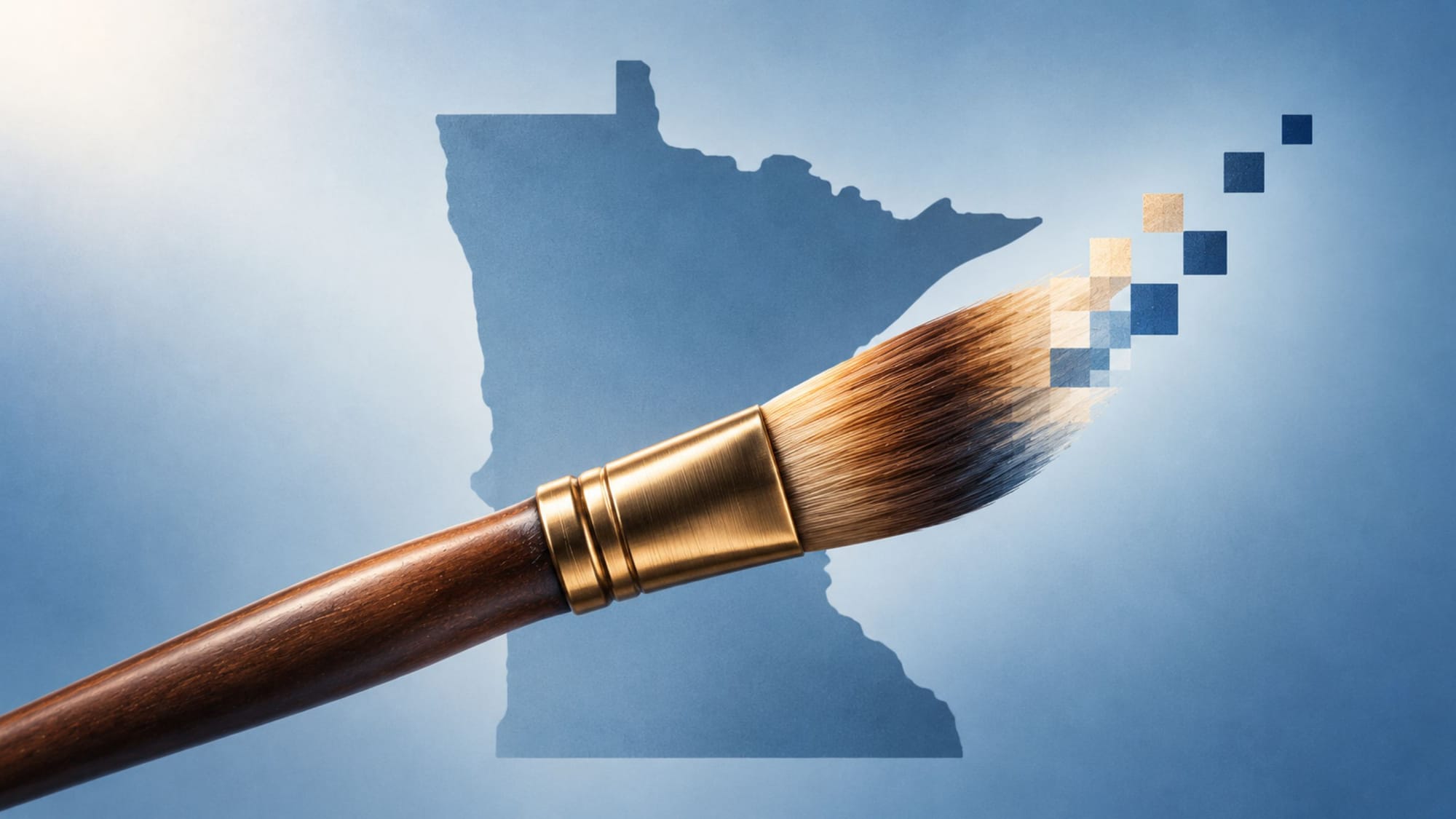
There is an exception – if the service “requires the technical skill of a user to nudify an image or video.” In other words, if the same image were made by hand, with “technical skill” (i.e., with a paintbrush), it would be perfectly legal. But if AI is used to make it, it is a violation of the law.
The statute provides that a violation can result in “a civil penalty not to exceed $500,000 for each unlawful access, download, or use.”
Individuals depicted in the images can sue for triple damages and punitive damages.
The law’s definition of an “intimate part” is borrowed from the state’s criminal sexual-contact statute.
The First Amendment Lawyers Association filed a brief in support of xAI, while xAI argued that the law “lacks any exception for images with genuine artistic, satirical, journalistic, scientific, educational, medical, religious, or (most troublingly) political value.”
“The statute also has no scienter or dissemination requirements and applies even to images created with the consent of the depicted individual,” xAI said.
In its September 11 motion to the appeals court, the company said that it does not dispute the state’s right to ban non-consensual nude images of real people – and that Grok Imagine already blocks those. But the law is written in a way that it also covers images of people in swimwear, or men without shirts.
The appeals court has now put enforcement of the law on hold as far as xAI is concerned. The question is now whether a state can ban an AI tool, when the same result could be achieved with a paintbrush.