
A tower dump can never satisfy the Fourth Amendment, US District Judge Carlton W. Reeves held on August 5, 2026, going past the three warrant applications in front of him to the technique itself.
Judge Reeves denied the Justice Department's request to reverse Magistrate Judge Andrew Harris, who had refused those applications. "To uphold core constitutional principles, this Court finds that tower dumps are per se unconstitutional," he wrote.
We obtained a copy of the ruling for you here.
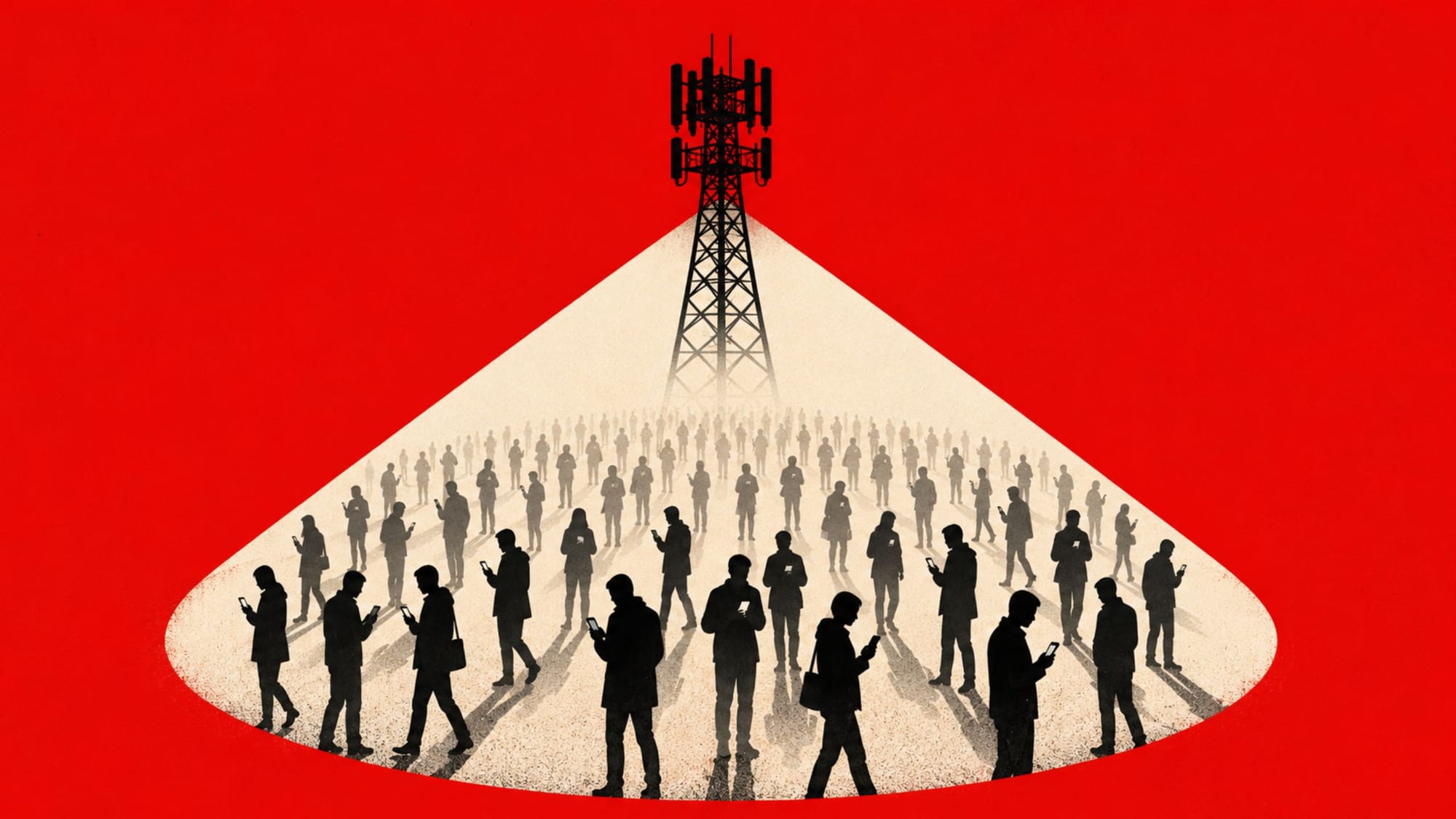
A tower dump hands police the time-and-location data of all devices that connected to a cell tower during a chosen window, which in a city means the phone of anyone who drove past, worked nearby or lived across the street.
Six weeks earlier the Supreme Court had decided Chatrie v. United States, holding 6-3, in an opinion by Justice Kagan, that police conducted a Fourth Amendment search when they took a user's Location History from Google.
An individual, the Court held, "has a reasonable expectation of privacy in records about his cell phone's location." That binds every court in the country, Reeves included, and his order leans on it as the most recent word from above.
Federal agents have been investigating gang activity in Jackson, Mississippi, and the government alleges that a series of violent crimes over a 14-month period were carried out by members of a gang and its rivals. The warrants, the supporting affidavit and the government's memorandum are under seal, so the published order names no gang, no suspect and no address. To identify who was at the scenes, prosecutors applied in February 2025 for four warrants covering the four cellular providers whose towers serve nine locations. Harris denied all four on February 21, 2025, holding that under the Fifth Circuit's decision in United States v. Smith, tower dumps are impermissible general warrants.
But the government came back in June asking for less. Three new warrants covered six locations tied to a homicide, a vehicular theft and two shootings over a two-day period in early 2024, with windows running from thirty minutes down to ten. This time the government asked only for devices that connected to two or more of the six. Harris denied those as well, on June 27, 2025, on the same reasoning.
Reeves, reviewing that denial along with the government's contention that the February applications had been constitutional all along, granted that the cross-checking does what the government says it does. Requesting subscriber information for multiple locations lets the government cross-reference the data to identify who was present at the crime scene, he wrote, and "[a]cross the country, tower dumps have been used effectively for this purpose." He was still unmoved by the arithmetic. "Regardless of whether there is a reduction of identifiers through cross-checking, Smith instructs against accepting this as a basis for constitutionality," he wrote. "Post facto narrowing cannot justify an unparticularized search."
Ten minutes is still every phone in range for ten minutes.
The order said law enforcement "would also have access to the cellular records of countless individuals, the vast majority of whom were merely passing by a location at the 'wrong' time. That is an unreasonable search under the Fourth Amendment."
Reeves also took apart the comparison between a tower dump and footage from a security camera. "Security cameras, placed on the outside of buildings, record those out in the public." Tower dumps, he wrote, "can identify individuals that are within buildings." The location data can put a person at home, or at "a voting site, place of worship, doctor's office, domestic violence shelter, rehab facility, immigration clinic, gun show, or strip club."
The order notes that some of the six locations cover areas "that are highly frequented, including but not limited to major highways that service thousands of drivers daily." Some of the windows "fall into rush hour and/or evening hours when there may be even more cars on the road."
Where do the records of all those drivers go once the government has decided that none of them is the suspect?
"Nowhere in the Affidavit is there probable cause for each cellular device," Reeves wrote, adding that "The Court doubts that any tower dump warrant applications could be" supported. He wrote much the same on particularity - "The Court finds it hard to imagine that any tower dump warrant application can satisfy the particularity requirement."
The Supreme Court swept historical cell-site location information inside the Fourth Amendment in 2018 in Carpenter v. United States, expressly declining to address tower dumps. Smith held geofence warrants categorically unconstitutional in 2024. Both stopped short of the technique in front of Reeves, and so did Chatrie.
A tower dump searches everybody within reach of an antenna on the chance that one of them committed a crime. And the government could work another way. Its own June applications covered six locations where February had wanted nine, and asked ten minutes at some of them where it asked thirty at others. It knew the whole time how to ask for less, and asked for more anyway.
The Massachusetts Supreme Judicial Court went the other way in Commonwealth v. Perry, upholding one tower dump warrant, which established probable cause to believe the suspect had used a phone in the crime, while suppressing the evidence from a second warrant that failed to establish the same facts. The records in that case covered "more than 50,000 individuals...without any one of them ever knowing that he or she was the target of police surveillance," according to the Electronic Frontier Foundation. It filed an amicus brief there arguing that a tower dump is a general search. The court declined to adopt a rule that tower dumps are always unconstitutional and left the argument open for a future case. It did require a judge to issue any such warrant, and required the warrant to include protocols for the prompt and permanent disposal of any data not related to the crime under investigation.
The order closes on the trade. "Law enforcement benefits from tower dumps, as evidenced by recent cases, and this decision may thwart certain criminal investigations. But the gentlemen in Philadelphia knew the Fourth Amendment's protections would come with costs. The cost to law enforcement is the price we pay to be free from arbitrary Government intrusion into our everyday movements."
Keep in mind, this is one district judge, bound only by the Supreme Court and the Fifth Circuit, and the Fifth Circuit has ruled on geofence warrants without ruling on tower dumps. Reeves acknowledged decisions elsewhere that have found tower dump warrants permissible, none of which bind him. Chatrie itself left open whether the search there was reasonable, and whether an exception to the exclusionary rule might still let the Location History data in.