Texas can start forcing app stores to check the age of everyone who wants to download an app, after the 5th Circuit Court of Appeals on Thursday cleared the state to enforce its App Store Accountability Act while the legal fight over it plays out.
We obtained a copy of the order for you here.
The three-judge panel gave no reasoning for the order, which lifts an injunction that US District Court Judge Robert Pitman issued last year in Austin after finding the restrictions likely violate the First Amendment.
SB 2420 does more than bar anyone under 18 from downloading apps or making in-app purchases without a parent’s permission. To draw that age line, marketplaces run by Google and Apple have to verify how old you are before you install anything, which pulls every user into the age-checking machinery rather than just minors.
Apple and Google have already built tools to pass each person’s age range to developers on request, opening a fresh stream of personal data out of the verification step.
The statute also pushes developers to sort their apps into four age bands, covering children under 13, young teens aged 13 to 15, older teens aged 16 to 17, and adults 18 and older, and to slap the same labels on individual in-app purchases.
That structure is what bothered Pitman and he wrote that the law “is akin to a law that would require every bookstore to verify the age of every customer at the door and, for minors, require parental consent before the child or teen could enter and again when they try to purchase a book.”
Texas passed the measure last year and set it to take effect in January, with Utah and Louisiana enacting similar statutes and federal lawmakers floating a national version.
The Computer & Communications Industry Association, a tech trade group, and the advocacy organization Students Engaged in Advancing Texas sued separately in October, arguing the statute violates the First Amendment.
The National Center on Sexual Exploitation backed the law, telling the court it “reinforces longstanding requirements” around parental authorization for take-it-or-leave-it contracts with minors.
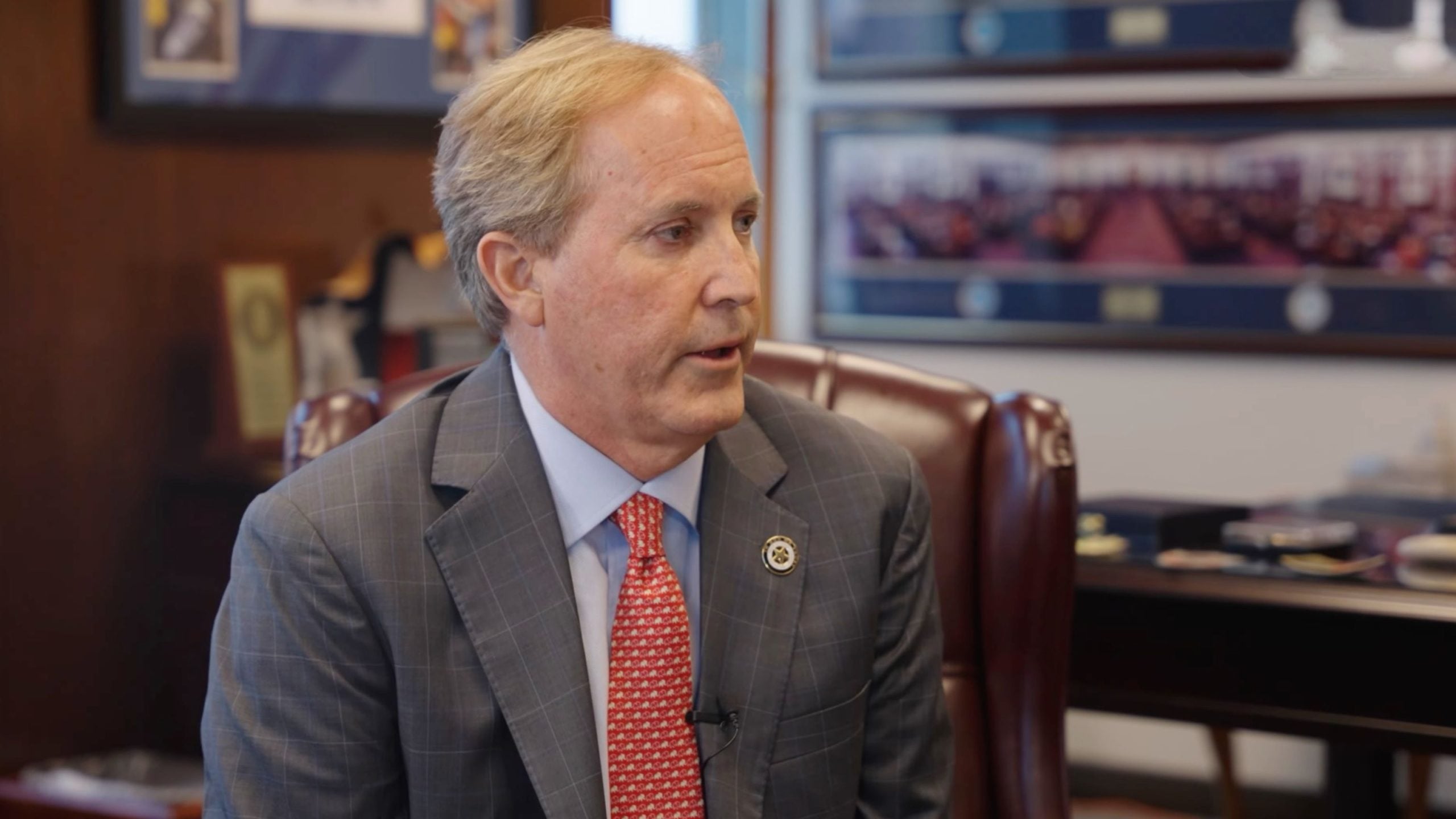
Texas Attorney General Ken Paxton, who took the injunction to the 5th Circuit frames it as a valid regulation of “commercial” transactions between minors and app stores. “When minors download apps they are accepting terms of service, including agreements about how their data is used,” Paxton argued. “The child may even be agreeing to have the information in their phone monetized by the tech companies or used to track location.”
The remedy Texas picked collects more data, not less. To shield children from apps that harvest and sell their information, the state requires age-verifying every user and tying minors’ accounts to a verified parent, then leaves the actual data harvesting untouched.
Once a parent signs off, the app gathers and monetizes information exactly as it did before. What changes is the front door, which now demands proof of identity from people who used to walk through anonymously.
The challengers pressed that distinction with the appeals court. “SB2420 restricts an enormous amount of online speech in violation of controlling First Amendment precedent,” the groups wrote, asking the panel to keep Pitman’s injunction in place. They rejected what they called Texas’s attempt “to reframe SB2420 as directed only at contracts and data privacy.”
The groups argued that “While app store user agreements may … authorize data collection and set terms for user privacy, the Act does not regulate those aspects of the agreements.”
They added, “It instead uses age-verification at the account-creation stage to create a parental-consent obligation that specifically (and exclusively) covers obtaining apps and in-app content.”
Thursday’s order landed before Paxton’s office had even responded to that filing. The panel called its decision an “administrative stay,” a temporary measure, and the judges could still restore the injunction later. The trade group and the student organization can ask the full 5th Circuit or the Supreme Court to step in right away.
Until they do, the age checks can switch on across Texas.