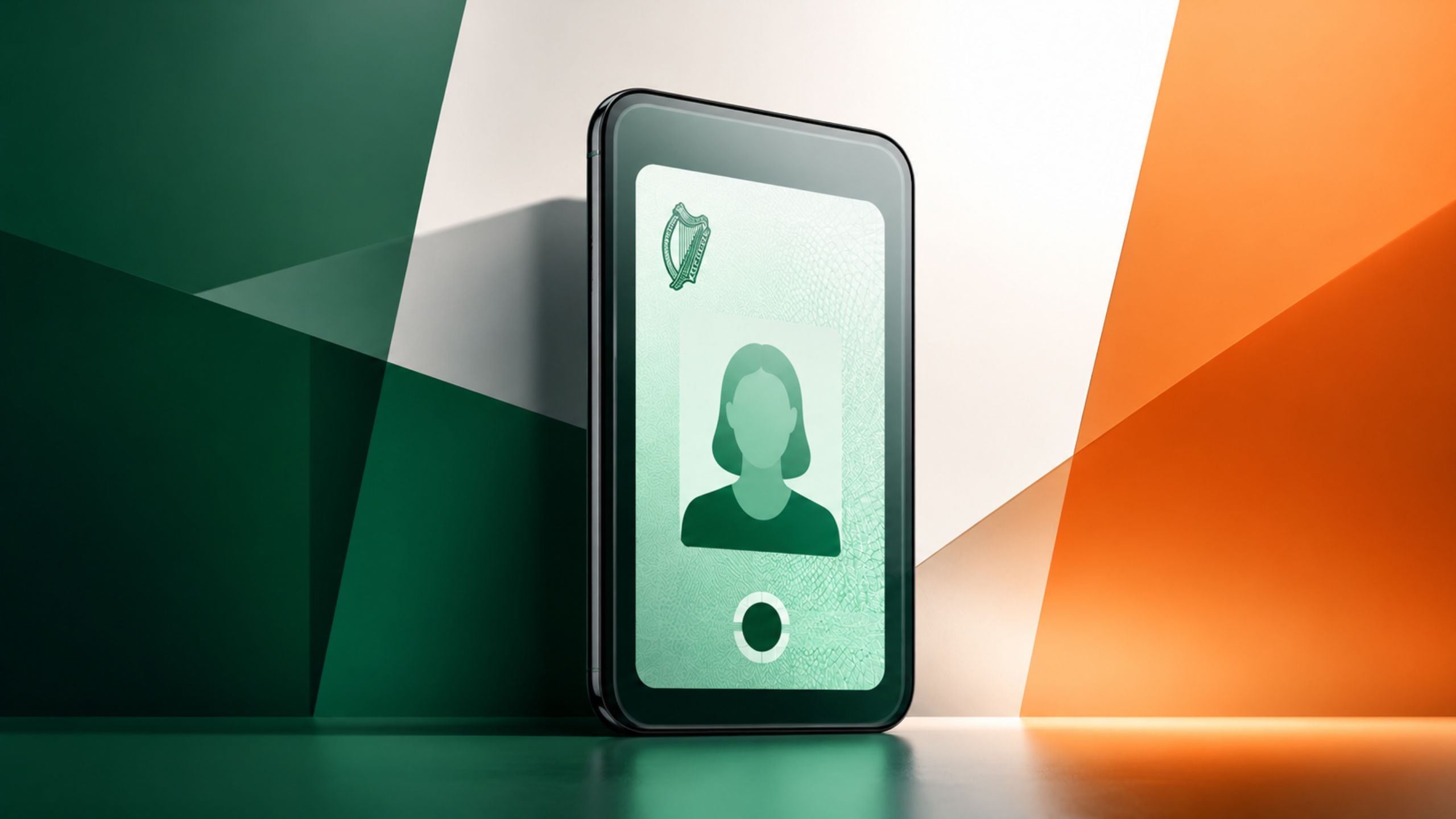
Ireland has switched on the first working pieces of its state digital ID. The version citizens can now download is the opening move in something larger than a convenience app.
Built on top of the existing MyGovID login, the Government Digital Wallet begins the slow removal of anonymous dealings with the Irish state, with anonymous access to large parts of the internet not far behind.
The pressure comes from Brussels, where eIDAS 2, formally EU Regulation 2024/1183, requires member states to make at least one EU Digital Identity Wallet available to citizens, residents and businesses by the end of 2026.
Ireland’s Department of Public Expenditure has described its own scheme as designed around meeting “Ireland’s legal obligations under the EU’s eIDAS 2 Regulation,” a phrasing that gives the game away. The wallet exists because the law requires it, not because Irish people asked for a government app that holds their identity.
Sold as convenience, the wallet holds digital versions of a driving licence, birth certificate, European Health Insurance Card and other official documents, ready to be shown from a phone.
Minister for Public Expenditure Jack Chambers says it will “make it simpler for people to verify their identity, apply for supports and access entitlements,” and his framing leans hard on user control.
“The wallet is designed so that all personal data is fully protected, and the user stays in control of what information they put in the wallet and choose to share. Only the details needed for a service will be shared, and nothing more,” Chambers says.
What those assurances cover is how the wallet shares data, not the larger change sitting under them. A single government-issued credential now stands between a person and the services they need, and when the wallet proves who you are, it also records that the proof happened, tied to a verified legal identity instead of a throwaway username. Convenience and traceability ship in the same download.
Beyond storing documents, the wallet reaches into how people get online. Ireland has wired age verification into the system, and Minister of State Frank Feighan says it will “be able to facilitate secure age verification capability as set out in Digital Ireland and the implementation of the Online Safety Code,” the regime pushing online platforms to check how old their users are.
By the end of 2027, the largest platforms operating in the country are expected to accept the wallet, which sketches a near future where signing in to a mainstream social network runs through a state ID.
A system that confirms you are over 18 also confirms who you are, where the government has you on file, and which service you passed through to get there. Age assurance and identity assurance are the same transaction with different labels, and the identity half is the costly one for anyone who would rather not be catalogued.
The strongest card the government holds is adoption. Ireland’s Central Statistics Office puts digital ID use, through services like MyGovID, at roughly eight in ten people, so much of the population has been walked toward this point over several years. Wide use is a poor proxy for consent to what the wallet becomes once private companies and platforms plug into it.
Brussels sells the whole project as a privacy upgrade. The European Commission says “threats to digital privacy have become apparent, with people increasingly worried about profiling and surveillance,” and it promises a wallet built with “privacy and security at the heart of the project.”
The design does lean on data minimization, with a service seeing only the field it asks for. Concentrating verification in the hands of the state is the other half of the picture, and it turns the government into the fixed point that more and more of daily life has to authenticate against.
None of this lands in a country with a clean record on holding sensitive data. The 2021 ransomware attack on the Health Service Executive tore through roughly 80 percent of the health service’s IT systems and exposed patient information, the kind of history that makes a central store of verified identities look less like a vault and more like a target.
Today, the wallet is opt-in, a testing phase rather than a mandate. The end-2026 deadline is written into EU law, public bodies will have to accept the wallet, and the private-sector obligations arrive a year after that.