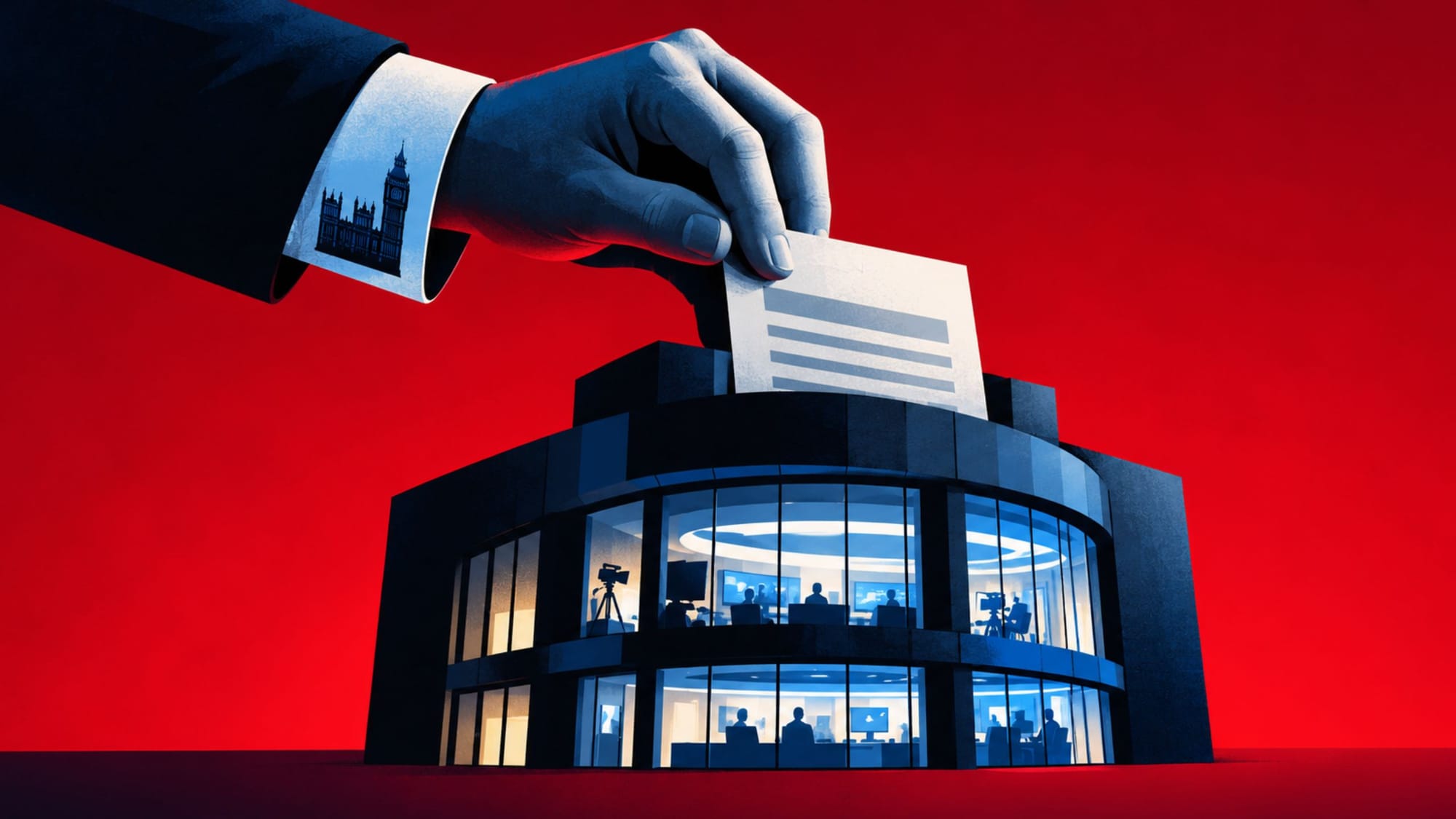
The UK government has decided that the watchdog meant to keep its dystopian national digital ID scheme honest will do its watching in private. Cabinet Office minister James Frith confirmed that the advisory group’s minutes will not be published, and he sidestepped questions about what the group costs and how its members were chosen. For a body sold to the public as “independent scrutiny,” that is a curious way to start.
The questions came from Andrew Snowden, the Conservative MP for Fylde and an assistant whip. He submitted three written parliamentary questions to the Cabinet Office. Would the group’s minutes, recommendations, and advice ever be published? What budget had it been given? What criteria decided who got a seat? Frith, with the creative range of a man photocopying the same sheet, returned the identical answer to all three.
“The running of the digital ID advisory group will be supported by the Cabinet Office’s existing digital ID task force. The group is not a decision-making body and minutes will not be published,” he said.
So it’s not a decision-making body, therefore nothing it does is worth showing you. The advisory group will shape how the state builds an identity system covering every adult in Britain. It will have a view on what gets harvested, how long it’s kept, and who gets to reach in and rummage. The label “advisory” does not change any of that. It just changes whether you’re allowed to know about it.
Snowden was not impressed. “The answer was disappointing to say the least,” he told The Register, before explaining why the secrecy bothers him.
“Digital ID was a deeply controversial policy when Keir Starmer announced it, causing one of the many U-turns that led to the situation we are in today. If the government are persisting with developing a system of digital ID then scrutiny of that policy by Members of Parliament is vital. To ignore key questions will not increase public support for digital ID.”
He’s right. Written parliamentary questions are one of the few working tools an MP has for prising information out of a reluctant government. Frith looked at that tool and decided the appropriate response was to whistle and study the ceiling.
We do at least know who some of these unseen overseers are: Security expert David Rogers, Mumsnet founder Justine Roberts, Victor Dominello, formerly digital government minister of New South Wales, which is in Australia, roughly ten thousand miles from Britain.
Chief Secretary to the Prime Minister Darren Jones convened the group, and it will meet quarterly for the life of the program. How those particular names were chosen, and whether anyone in the room fancied inviting someone inclined to tell the government no, stays unexplained, because the selection criteria were among the things Frith declined to disclose.
Last month the government barred journalists from a digital identity advisory panel event, since nothing soothes a nervous public quite like physically removing the people whose job is to report what’s happening.
Oversight you are not permitted to observe is not oversight.