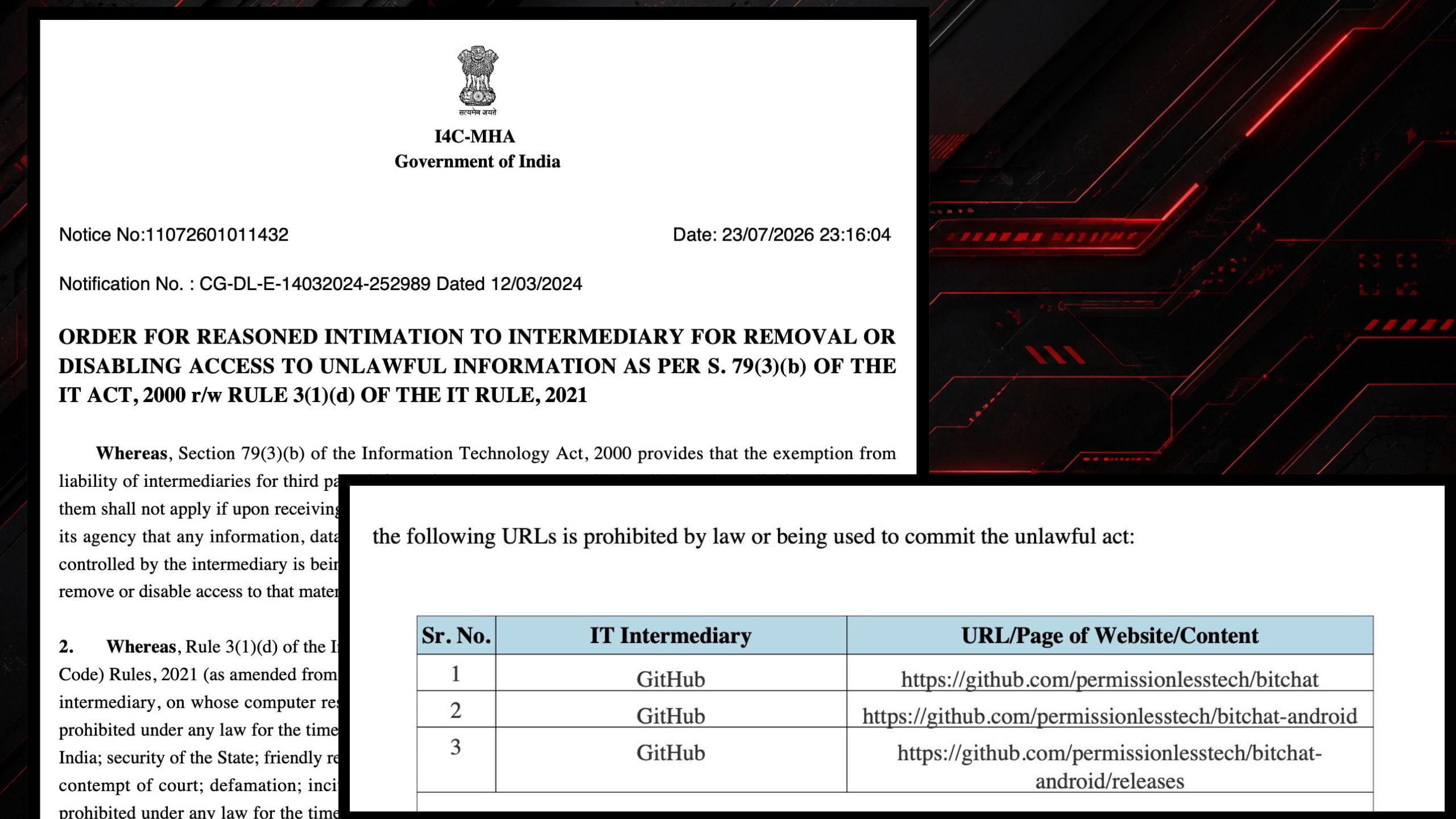
India’s Cyber Crime Coordination Centre last night ordered GitHub to disable access to BitChat, the peer-to-peer messaging app backed by Jack Dorsey. The order, Notice No. 11072601011432, went out at 11:16 pm under Section 79(3)(b) of the Information Technology Act, 2000, read with Rule 3(1)(d) of the IT Rules, 2021.
It named three repositories, including the Android application and its release files, and gave GitHub three hours to take them down. It warned that failure would cost the platform its safe harbor and open it to criminal prosecution.
The government did not publish the order. The public learned of it from a post by Jack Dorsey, whose team develops BitChat, who wrote that “the government of India does not like technologies like BitChat and wants it taken down.”
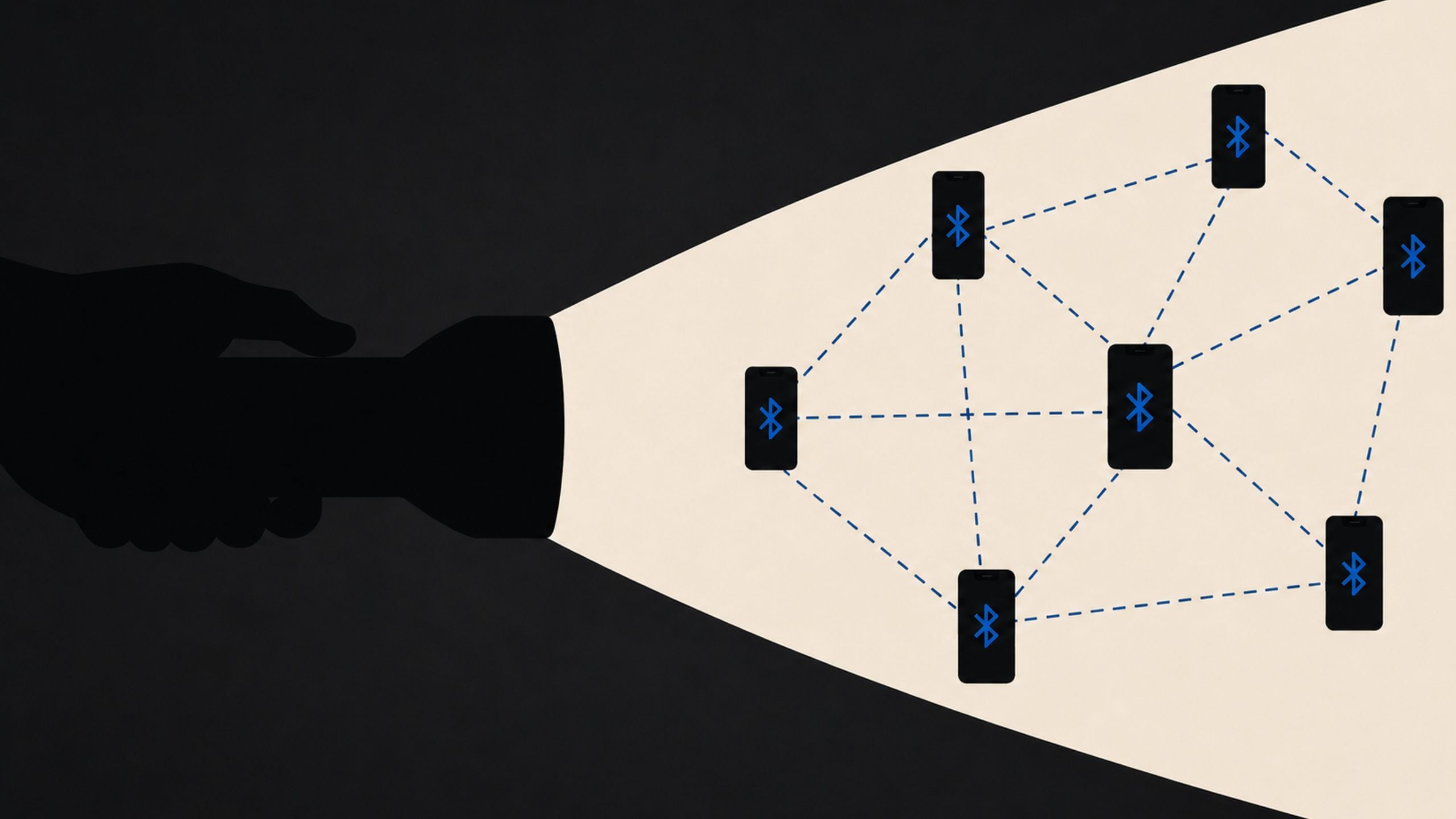
BitChat is open source and uncensorable, and is one of Reclaim The Net’s recommended messaging apps for situations where the internet may be cut off. It carries messages from phone to phone over Bluetooth, hopping between nearby devices, with “no internet, servers, phone numbers, or accounts.” It keeps working when the mobile network does not.
Around this protest, the government, getting increasingly brazen with its blocking orders, has switched the mobile network off. Since July 17 the Ministry of Home Affairs has suspended mobile internet around Jantar Mantar in New Delhi about five times.
The most recent suspension ran from 4 pm to midnight on July 23, inside a 1.5-kilometer radius that takes in Janpath and part of Connaught Place. People at the site reported signal jammers, and walking two kilometers before a phone found a signal.
Inside that radius, a student separated from her group during a detention sweep could not send a message to say where she was.
The protesters are students. Tens of thousands have camped at Jantar Mantar since June, demanding accountability for the leak of the NEET medical entrance exam and the resignation of Education Minister Dharmendra Pradhan. Their march to Parliament was refused. Metro stations near the site were closed.
When the shutdowns cut the network, protesters turned to BitChat and other Bluetooth mesh apps to reach each other inside the dead zone.
The order did not name a single message sent on BitChat. It just objected to what the app can do. In the agency’s words, BitChat “significantly impedes lawful interception, attribution, and investigation,” and could be used during “public disorder, riots, terrorism, organized crime, or internet shutdowns.”
The order lists internet shutdowns among the dangers. The government has imposed one at Jantar Mantar. BitChat kept working inside it.
The order used Section 79(3)(b) to demand the block. In 2015, in Shreya Singhal v. Union of India, the Supreme Court held that Section 79(3)(b) lets the government require a takedown only through a court order, or a notice confined to the grounds in Article 19(2) of the Constitution.
India has a separate law for blocking an app, Section 69A, which requires a hearing and reasons set down in writing. The order against GitHub used neither. It went out through the Home Ministry’s Sahyog portal, the channel Indian High Courts are now hearing constitutional challenges against.
The order says the repositories hold information prohibited under law. It names none. It points instead to what the app is “capable of” enabling.
It reaches into criminal law as well. Alongside Section 43 of the IT Act, a civil compensation provision, it invokes conspiracy and abetment under the Bharatiya Nyaya Sanhita of 2023, against a platform that hosts code.
The order set a three-hour deadline, close to midnight. In 2020, ruling on the Kashmir internet shutdown in Anuradha Bhasin v. Union of India, the Supreme Court required that orders like this be proportionate and open to review. This one went out at 11:16 pm with a three-hour clock.
The Internet Freedom Foundation, which is litigating the Sahyog regime, today called the takedown “unconstitutional and authoritarian.”
Deleting a repository removes nothing from the phones that already run the app, and a mesh that needs no server keeps passing messages whatever GitHub hosts. Within hours of the order, the BitChat code was mirrored to another site.