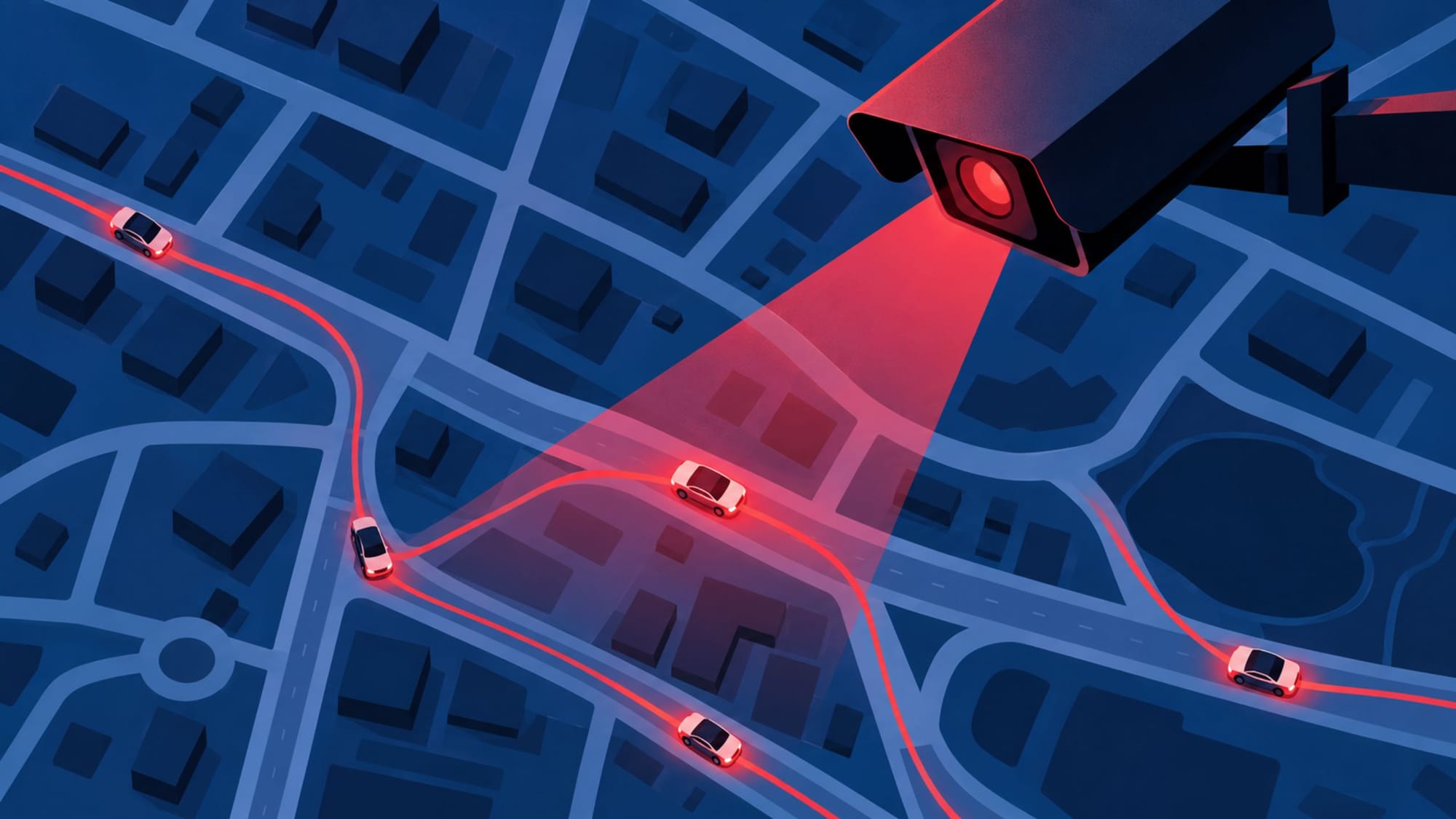
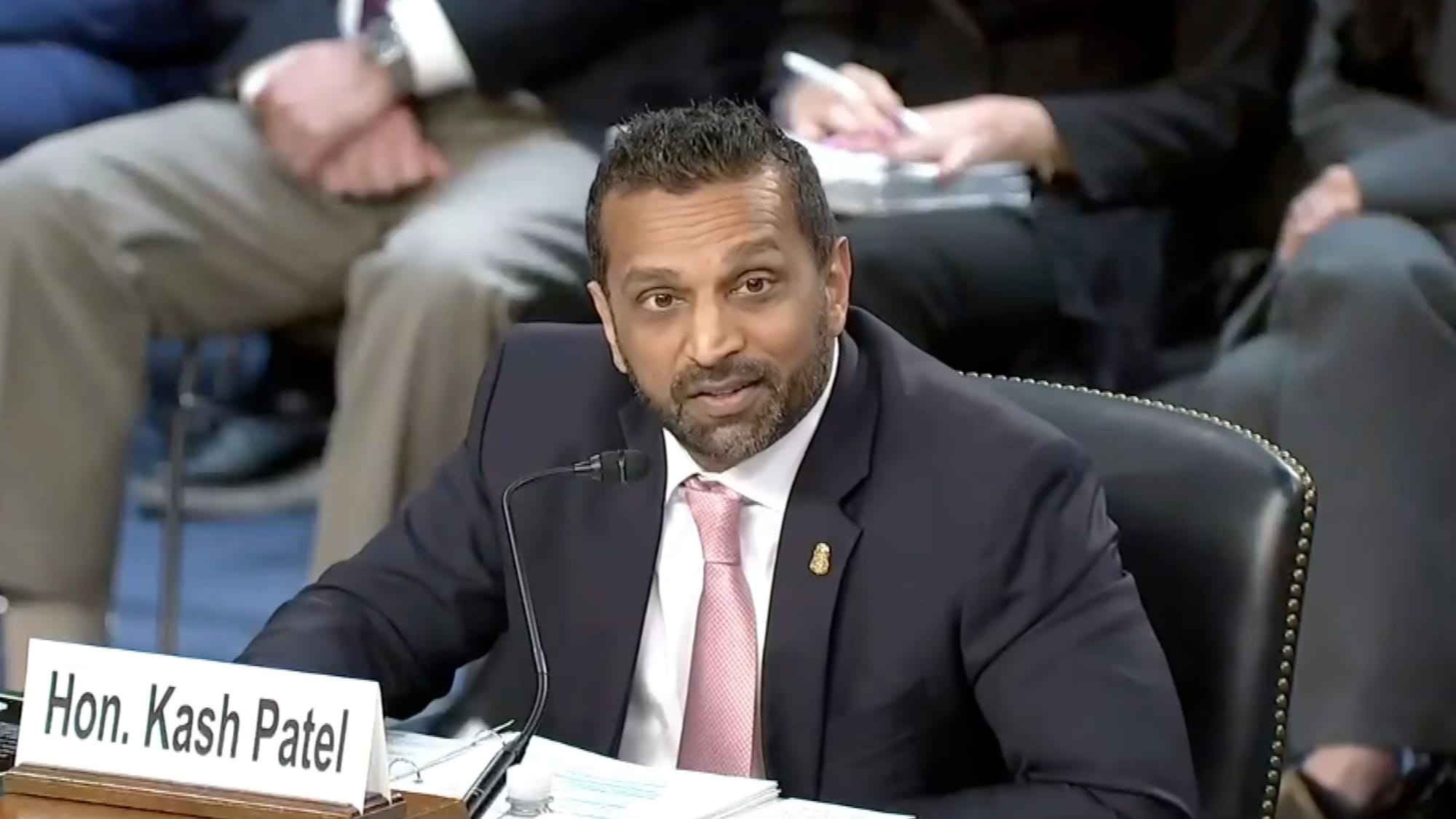
The FBI is not collecting data from license plate readers, it is merely looking at data that is already collected by somebody else. This is how FBI Director Kash Patel explained the use of this surveillance tool during a Senate Judiciary Committee hearing on September 15.
“They collect information, not the FBI,” said Patel, adding, “Private companies have and private municipalities and towns put up cameras around traffic circles in the neighborhoods and the like.”
He also said that this is information “where there is no reasonable expectation of privacy, basically publicly available information.”
As for the FBI, it “partners” with those who collect the data “on a case-by-case basis and not a rolling access basis.” And he repeated, “We have to use it lawfully, but we the FBI don’t continue to access that on a rolling basis.”
As examples of how this works, he mentioned the Brown University shooting, where “we weren’t able to get any facial recognition on the individual, but what we were able to get based on a Flock camera was a license plate,” which helped locate the suspect who “died of a self-inflicted gunshot wound in New Hampshire.”
And then there are kidnappings across state lines, where “we have saved children over and over again,” Patel said.
Senator Mike Lee (R-UT) brought up Section 702 of the Foreign Intelligence Surveillance Act (FISA), which has not been reauthorized and has been expired since June 12, but is still in use thanks to the existing Foreign Intelligence Surveillance Court (FISC) order, which runs out in spring 2027.
Lee’s concern is not that the government is allowed to collect data of non-US persons abroad, which is the purpose of 702, but what happens to the data of Americans who are in contact with those foreign targets and get swept up in the process.
Lee asked why the FBI cannot be required to go to the FISA court for a warrant before being able to query this data. He said that the current system, based on the government’s “internal procedures” is not sufficient to protect Americans’ privacy, and that the past abuses have shown this.
Lee said a query should have “nothing to do with an agent wanting to vet a potential tenant for his rental property, vet a romantic interest, investigate his father...for a suspected extramarital affair.” He added, “These are real-world examples.”
Patel’s response was that the FBI is “flying blind” and cannot establish probable cause for a warrant because it does not know what information it is looking for in the first place. “We don’t have access to that information. We don’t know what we don’t know. And we wouldn’t be able to establish a predicate probable cause because we don’t have access to the information,” he said.
He also said that “what the FBI does not do is collect on U.S. citizens. What the FBI does do is access pursuant to the federal statute already lawfully collected information.”
The FBI director also said the FBI is “responsible for three percent of 702 collection,” with the rest belonging to the intelligence community. He said 702 had produced “terrorist attacks that we’ve prevented, children that we found, on narco traffickers that we were able to annihilate and arrest.” He added, “Were that to go dark, we would have a lot of problems or we would have no ability to trace that information.”
Senator Cornyn asked if it is true that 702 makes up 60 percent of the President’s Daily Brief (PDB) and Patel confirmed this.
Senator Marsha Blackburn (R-TN) asked about how the FBI uses private sector partnerships, specifically to catch predators. Patel said that the FBI must work with the private sector.
He also said that the FBI is “utilizing the fact that this great information has been collected and sitting on the shelf,” referring to data harvested by private companies, and that the FBI is now “professionally partnered and officially partnered” with more private sector companies in social media and AI than ever before.
He spoke about a 600% increase in AI investment, and then a 605% increase “since I hit the seat,” and credited these partnerships with “the largest reduction in violent crime in American history.”
But Reclaim The Net has been reporting about the flaws in the system that the FBI is so eager to utilize. For example, the data collected by Flock cameras is not always accurate, as shown by the case of Joel Feder, who was stopped by four squad cars in a Kohl’s parking lot in Plymouth, Minnesota in July.
The stop was based on a license plate misread by Flock’s cameras, and the same mistake was made by the police. The system cannot read the middle characters of New Jersey plates, and so 34 03 DTM was logged as 34 DTM, while the camera read 34 10 DTM on the car Feder was driving, and matched it with the lost plate report.
Nothing in the process “malfunctioned.” It all worked as designed, but it was wrong.
The Flock-Off Act, H.R. 10221, was introduced by Representatives Thomas Massie of Kentucky and Eric Burlison of Missouri on September 2, thirteen days before the hearing. The proposal seeks to cut federal funding for Flock cameras.