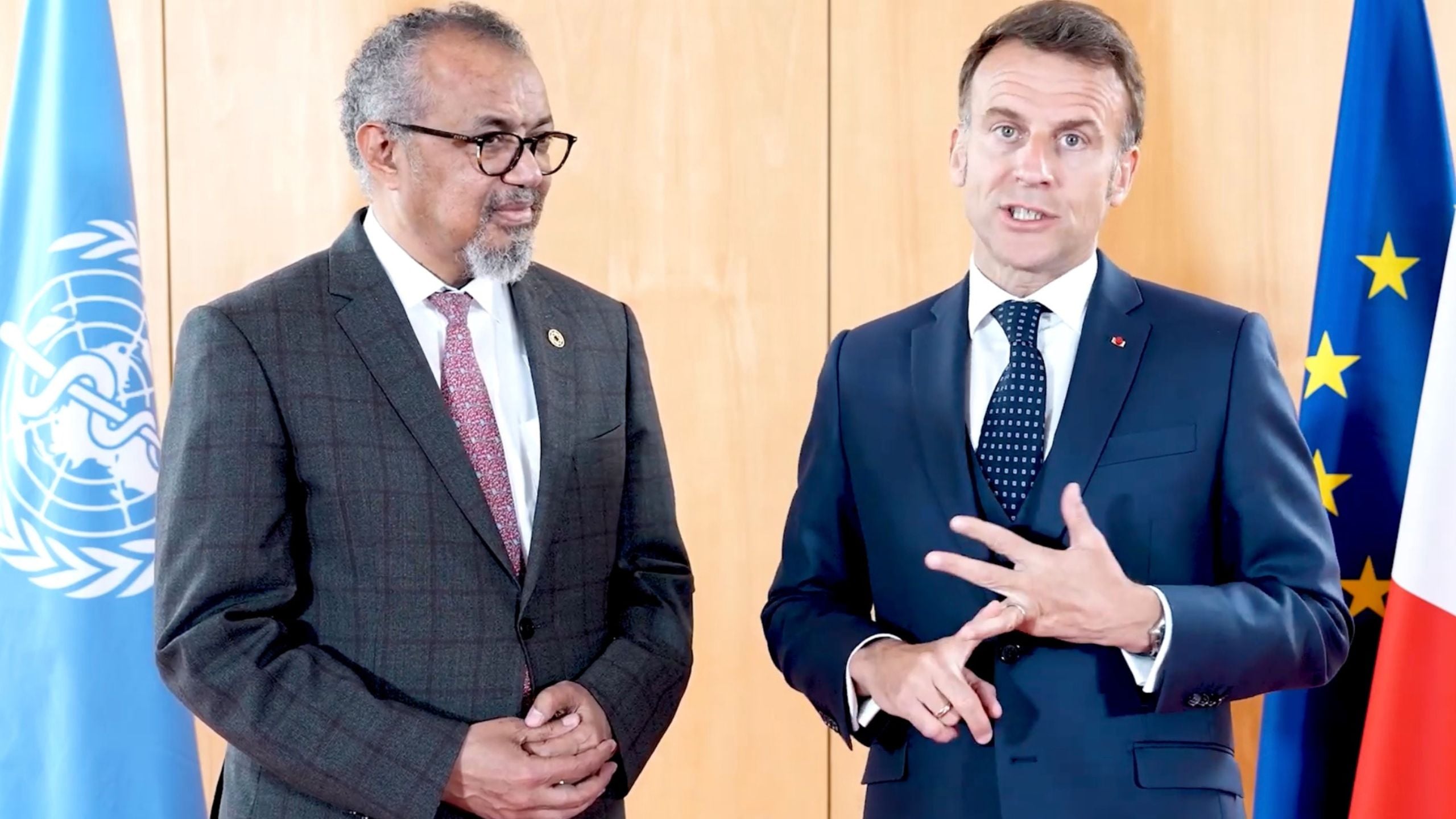
Governments now have a template for policing who gets online, and it arrived dressed as child health advice. French President Emmanuel Macron and World Health Organization Director-General Tedros Adhanom Ghebreyesus published a joint statement on July 1 that recasts social media, gaming, and generative AI as forces acting directly on children’s bodies and minds.
The two men want mandatory age checks (which means ID checks), mandated platform redesigns, and safety-by-design rules written into law across much of the democratic world.
Their case rests on the idea of an emerging agreement between nations. “these measures reflect a growing global consensus that digital environments require effective governance, age-appropriate design, and stronger safeguards to protect child health,” they wrote, gesturing at the wave of national restrictions now spreading from Canberra to Ottawa.
Consider what age verification actually demands. To confirm that a user is old enough, a platform first has to confirm who that user is. Matching a claimed birthday against a face scan, a credit record, or a government ID converts an ordinary login into an identity checkpoint.
Systems built to keep children out end up cataloging the adults who stay in, since no platform can gauge the age of its teenage users without also weighing the age of everyone else who shows up.
Like most of this ilk, the statement frames this as protection, not surveillance. Macron and Tedros describe digital spaces as determinants of health on par with clean water or safe housing, and they warn that infinite scrolling, autoplay, and push notifications are engineered to hook young users. “Solutions are needed because digital environments are not neutral,” they wrote. The remedy they reach for runs straight through identity.
Their own text names the danger. “The collection and use of personal data, particularly for profiling and targeted marketing, raise concerns about privacy, manipulation, and well-being,” the statement reads.
The leaders then prescribe age-assurance regimes that require platforms to harvest more identifying data from more people, handing companies and governments a fresh reason to know exactly who sits behind every account.
A roster of governments is already building these gates. Australia now bars anyone under 16 from holding a social media account, the first national ban of its kind. France is pushing legislation to lock out users under 15.
Indonesia has banned access for children under 16, Spain has announced plans to follow, and Ireland is working with European Union partners on age-assurance systems aimed at under-16s. The United Kingdom intends to stop platforms from serving under-16s while adding limits on livestreaming and contact from strangers, and Canada has introduced its own bill to restrict access for children under 16 and force stronger safety-by-design duties onto platforms.
Generative AI gets the same treatment, and here the two invoke caution as a governing principle. They argue that the technology multiplies the risks facing young people and that its long-term effect on empathy, self-regulation, and children’s expectations of real relationships remains unclear.
“…a precautionary approach is not anti-innovation. It is pro-child,” they wrote. Caution aimed at machines becomes surveillance aimed at users once the enforcement mechanism is a mandatory identity check.
Macron and Tedros insist they are defending children’s dignity. “Our children and young people are not experimental subjects, a captive market, or a commodity,” they wrote. That principle cuts both ways. An internet that demands your legal identity at the door treats every user as a suspect to be screened, and it hands that screening power to the same platforms and states that it claims to distrust.