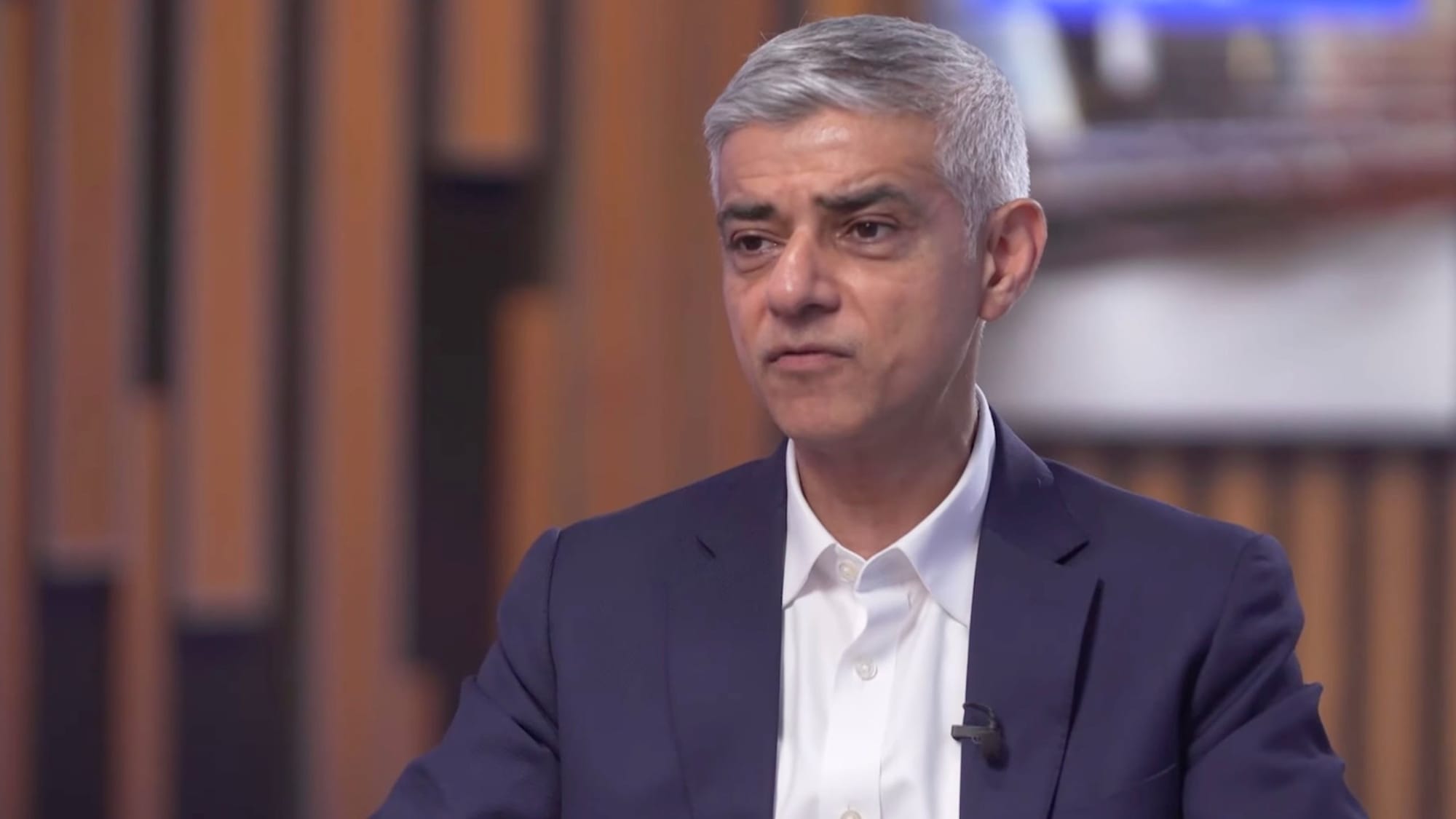
"We're a scrutiny body," Susan Hall, a member of the London Assembly, reminded the chamber back in July. "That means that we ask difficult questions of the Mayor to get him to answer questions." She said it near the end. By then the Assembly had spent most of a morning holding London Mayor Sadiq Khan to account by agreeing with him, warmly.
The subject was live facial recognition, which is coming to Oxford Street when the street is pedestrianized. "I've asked the team to move at pace with plans to pedestrianize Oxford Street this summer," Khan had said, "so we can deliver a vibrant, world-class, accessible destination."
The cameras are expected to go on street infrastructure such as lampposts rather than the vans used until now. Permanent fixtures. One of the first permanent deployments in the country, on one of its busiest streets, reading every passing face against a watchlist.
The Met says each watchlist is built no more than 24 hours before a deployment and deleted immediately afterwards, and that when it piloted fixed cameras in Croydon, more than 470,000 people walked past for a single false alert. Facial recognition, it adds, is "one of the most revolutionary technology advances in policing in recent years," and "around 80 per cent of Londoners support its use. That backing reflects a simple truth: it works."
The sort of thing a scrutiny body might still have questions about.
Marina Ahmad went first. A Labour member, she opened by thanking the mayor for the patience he shows in putting up with "some of the nonsense that we hear in this chamber." The nonsense being, as far as anyone could tell, the questions. Then she invited him to describe how well the rollout was going.
She had one strong card, and she played it straight. At Denmark Hill last year, she told the chamber that the technology picked up a man on the sex offenders register for child abuse at the station with a six-year-old child he could reach because he had befriended the mother. He was stopped because of LFR. It was the best argument made for the cameras all day, and it arrived gift-wrapped from the mayor's own side.
Khan accepted the gift. Two hundred years of policing, he said, "from the advent of the fingerprint to the police car to CCTVs," and now this, with over 2,000 arrests "leading to charge, prosecutions, convictions" by his own count. Then the line the morning existed for. "The Met Police are working really closely with the Oxford Street Development Corporation about how we, when we pedestrianise that street, how we use LFR in a sensible way. Using the opportunity of new CCTV to use LFR." And, reassuringly, "What we don't do is do a big bang, and it'd be a disaster."
A sensible way. Good to know one exists.
Then the opposition rose, and here, surely, the difficult part would begin. Hall opened by reminding the Labour members what the room was for, and that handing him "easy, oh tell us how great you are today, Mr. Mayor" questions "isn't actually what we're here for."
Her difficult question. "Do you approve of live facial recognition?"
He does. He is, he pointed out, "the only police commissioner who's brought this in."
"Good," said Hall. Then, "Excellent. So we can find that we do agree on some things, Mr. Mayor." She is, she said, "a massive supporter of live facial recognition," and was "thrilled to bits" about its expansion. Her scrutiny consisted of asking whether it could also be pointed at protest marches, and at the Notting Hill Carnival, "where there's quite a bit of crime going on." Not whether the watching should happen. Whether her preferred crowds could go first.
An operational matter, said the mayor.
So she tried drones. Would he approve of drones over "these dreadful hate marches in London or indeed the Notting Hill Carnival"? Part of an additional £4.5 million this year had gone on drones and e-bikes, he said, and "the technology is amazing." Drones "can be easily deployed from the roofs of a couple of police stations." Sometimes overtly. Sometimes covertly, "for reasons that are obvious." An operational matter, again.
"Yep and I approve of all of those," said Hall.
The objections did exist, but they were coming from outside the building. Ruth Ehrlich of Liberty said the prospect of permanent cameras on Oxford Street "marks a significant expansion of surveillance in public spaces," and that "the Government has promised a legal framework for live facial recognition. The Met should not be rolling out more of this technology before that framework is in place."
Jasleen Chaggar of Big Brother Watch also weighed in. "Innocent Londoners who are not suspected of any crime by the police should be able to wander around public spaces without identifying themselves to the authorities." The mayor, she said, "should abandon the plans to roll out Orwellian biometric software which would instead place London in the company of authoritarian regimes."
Neithe of them has a seat in the chamber and, it seems that on the morning's evidence, a seat would not have helped.
The hardest question the mayor faced all morning was whether he approved of a policy he had introduced himself.
The rollout is expected before the end of 2026.