NSW Parliament has passed a bill that adds to the Australian state's controversial facial recognition and biometric digital ID systems, and introduces new police powers, including the ability to access images from toll cameras and to compel people to hand over their devices and passwords.
The three main strands of the legislation: face matching, toll cameras, and access to devices, are found in the Crimes and Other Legislation Amendment (Further Organised Crimes Reforms) Bill 2026, that was passed on 25 September and is now awaiting assent.
The face-matching part is contained in Schedule 7, which amends the Road Transport Act 2013, and concerns the use of driver license photos.
The bill allows an "authorised government agency" to "collect face-matching service information for an authorised purpose," "use face-matching service information for an authorised purpose," and "release or disclose face-matching service information to a participant or the Commonwealth."
The "authorised government agency" here is defined as the Transport for New South Wales (TfNSW), its agents, and other government agencies participating in a face-matching service, while the "authorised purpose" is that "another lawful purpose in connection with the exercise of the authorised government agency's functions."
The definitions of "collect" and "release" are also noteworthy, as they include downloading and uploading of data, while the "national agreement" referred to in the bill is the Intergovernmental Agreement on Identity Matching Services, and the "Commonwealth Act" is the Identity Verification Services Act 2023.
The "national agreement" is a 2017 pact between the federal government, states, and territories, that allowed for the sharing of citizens' identity information, while the "Commonwealth Act" was passed last year, and is a part of the country's digital ID scheme.
The facial recognition system that NSW is building, that the state's premier Chris Minns has said is not mass facial recognition, will now include driver license photos, as well as information from documents issued by states and territories that contain a person's photo and can be used to prove their identity. And the data will be made available to the National Driver Licence Facial Recognition Solution (NDLFRS).
This is how NSW's parliament is choosing to use the photos of people's faces that it has in its databases. The photos were submitted as part of a process to obtain a driver's license, a right that allows citizens to operate a vehicle. The state is now changing the terms of that deal, turning the photo into a biometric record that is part of a national system.
The purpose test, as noted, is weak, and the bill spells it out in full as: "for an authorised government agency, means (a) for the purpose of a face matching service, or (b) another lawful purpose in connection with the exercise of the authorised government agency's functions."
The second part of this definition is what makes the test so weak, any lawful function of the agency qualifies.
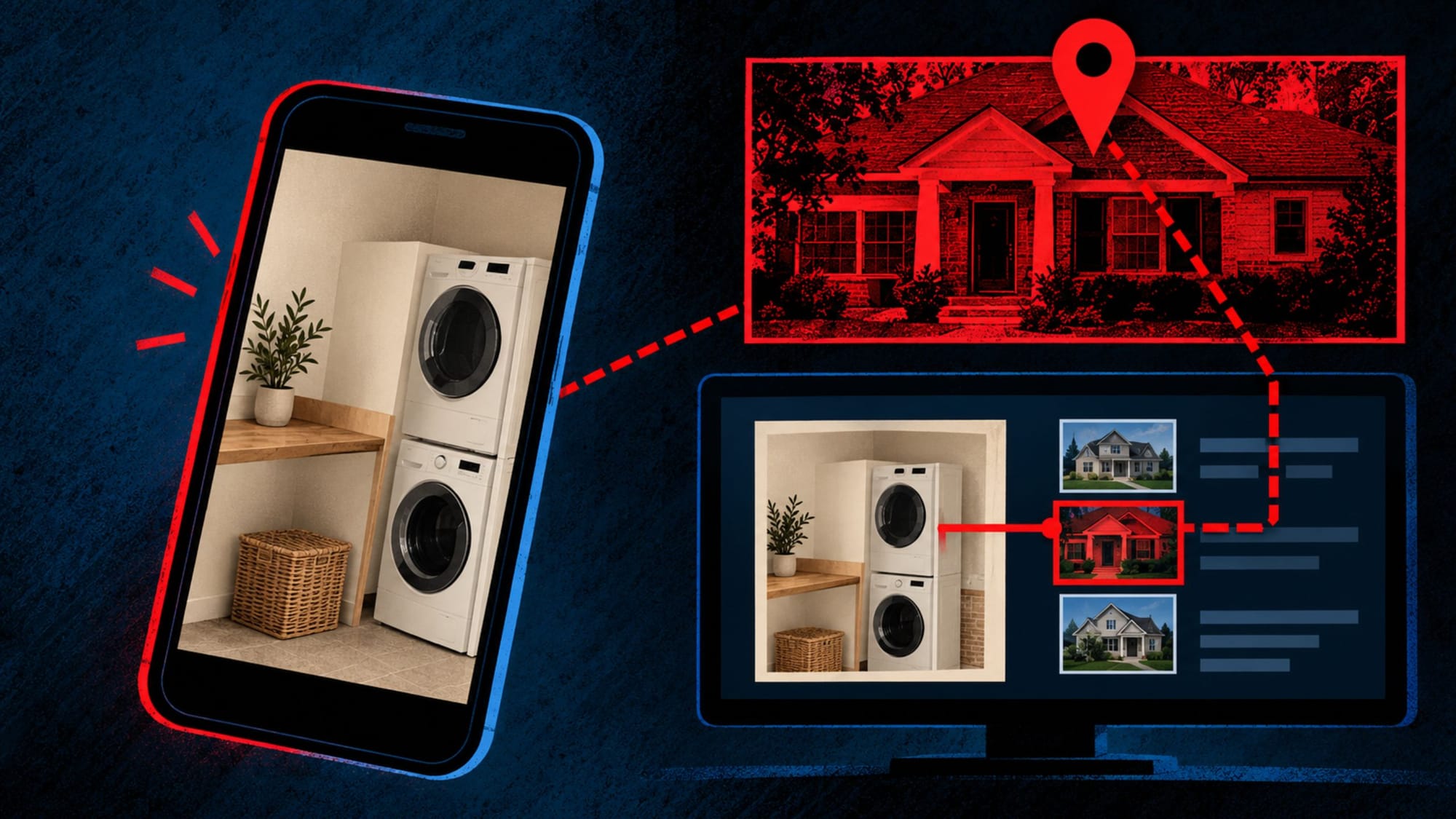
The bill's provisions regarding toll cameras are contained in Schedule 8, which amends the Roads Act 1993. A new Part 15B is inserted, and it deals with "Collection, storage and disclosure of toll camera images."
A new section 261D is particularly notable for its broad scope: "An approved toll camera is permitted to take a photograph of the following - (a) a vehicle, (b) the driver of a vehicle, (c) a passenger in a vehicle, including a passenger who is less than 16 years of age."
The bill was accompanied by a media release from the government, that revealed it was allotting an additional A$15 million to the police to break into encrypted devices. This is on top of A$4.5 million already spent on that.
The media release did not mention the bill, but the money is clearly part of the same package, and the new law gives police powers to compel people to hand over their devices and passwords.
NSW has been in the news lately for a series of incidents and decisions that have not exactly inspired confidence in its ability to handle the new powers and technologies it is so eager to acquire. This includes the huge privacy breach that happened in the wake of the devastating floods, when a contractor uploaded to ChatGPT the personal information of thousands of people who were receiving flood relief.
The state's parliamentary scrutiny committee warned that the bill would give the government too much administrative discretion to affect people's privacy rights.
NSW is not alone in this; other Australian states have also been expanding their facial recognition and digital ID systems, which this publication has been reporting on.
NSW Premier Chris Minns has also been in the news for comments he made about free speech, essentially, he said that the government sees it as a liability and an exposure, and that was the reasoning behind passing new hate speech laws, that followed a security incident in Sydney that turned out to be a hoax.
At the time, Minns also admitted that a new security bill restricts civil liberties, but he saw nothing wrong with that, because, according to him, that is the price to be paid for living in a democracy.
Australia's encryption-busting law, passed in 2018, was one of the first of its kind in the Five Eyes intelligence network, and was widely criticized as undermining digital rights. And now the state of NSW is putting more money into this effort, and combining it with new laws that compel people to hand over their devices and passwords.