The New York Police Department (NYPD) is negotiating a three-year contract with Cognyte, an Israeli surveillance company, for a portable cell-site simulator.
The New York Daily News reported about the $750,500 sole-source deal on October 24, noting that the system, called FalcoNet, comes with “undisclosed AI capabilities that analyze people’s behaviors” – this according to the New York Civil Liberties Union (NYCLU)’s Daniel Schwarz.
The City Record first carried an Intent to Award notice on December 8, 2025, stating that the NYPD “intends to enter into sole-source negotiations with Cognyte” for FalcoNet software and hardware, as well as on-site training, warranty and support. The justification for not opening the process to other bidders was that the NYPD “believes that all products and support services are exclusively provided by Cognyte.”
A public comment period followed, and closed at 2 pm on October 15. The maximum value of the deal was given as $750,500.
The NYPD’s Technical Assistance Response Unit (TARU) would be the recipient of FalcoNet, and City Hall said in a statement, “We are reviewing the proposed contract.”
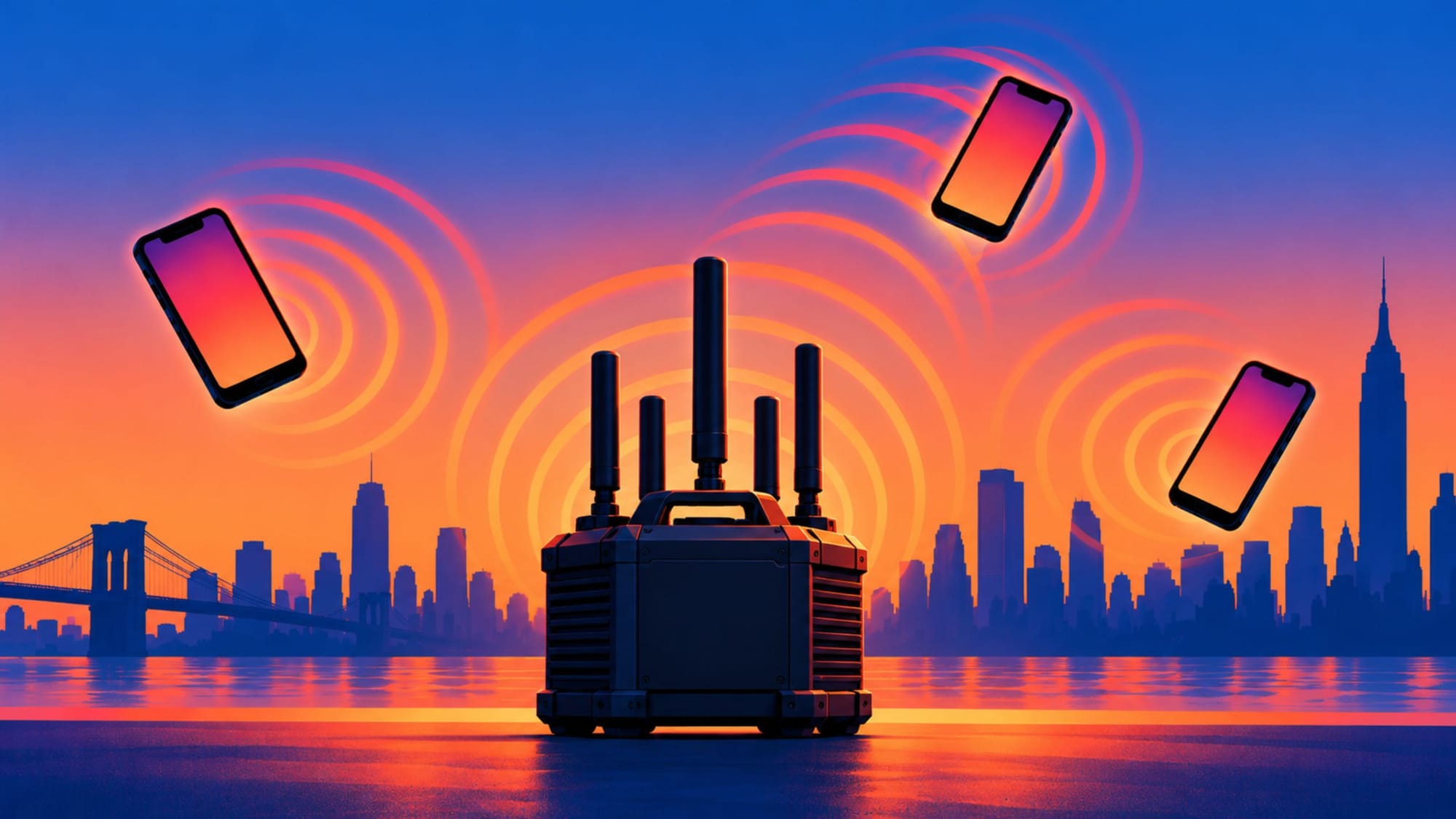
An NYPD spokesperson said that the department “explored different cell-site simulators and determined that this device best met the needs of the NYPD.” The police already have other cell-site simulators, but this one is portable and will be mounted on NYPD vehicles. It can also be attached to drones or carried in a backpack.
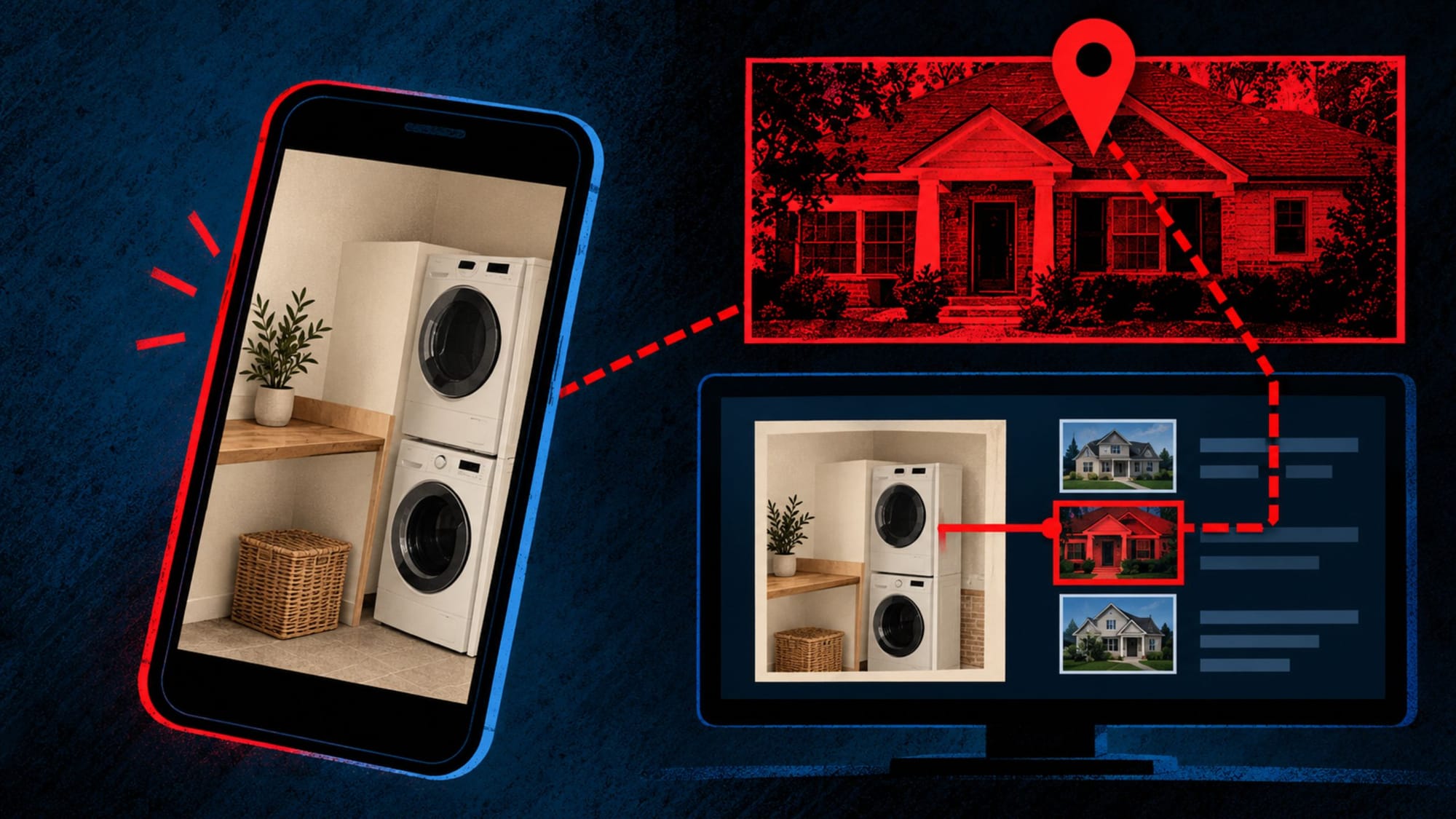
What the device does is act as a fake cell phone tower, to which every phone in its range connects, giving up its unique identifying number, which can then be traced to a person. As the vehicle carrying the simulator moves through a neighborhood, it picks up every phone in range, and those in buildings, and in other vehicles. The NYPD’s own policy says that nearby phones “identify it as the most attractive cell tower in the area.”
A Cognyte brochure from 2025 said that FalcoNet can set up in three minutes and force thousands of devices to connect every minute. Albuquerque’s 2024 tender said the system it was buying from Cognyte was an IMSI (International Mobile Subscriber Identity) and IMEI (International Mobile Equipment Identity) handset identification and location system. An IMSI is associated with the SIM card, while an IMEI is tied to the handset itself.
In 2026, the NYPD changed its cell-site simulator policy, dropping the statement that these devices “do not use artificial intelligence and machine learning.” The reason given was that “public comments highlighted a lack of industry-standard definitions for artificial intelligence and machine learning.”
Schwarz is not convinced. “Cell-site simulators require warrants because they are highly intrusive, dragnet surveillance,” he said. And the contract “raises serious concerns about the [Police Department’s] commitment to transparency and to New Yorkers’ privacy rights.”
Cognyte told the SEC that its border work relies on “advanced analytics, behavioral pattern recognition and real-time intelligence.” The company also sells NEXYTE, a platform that uses “AI-powered models and natural language search to uncover hidden connections.”
Demos of NEXYTE have surfaced that give people a “threat score” and link them to “known accomplices” – in one case flagging a person as a “drug mule” over an Instagram post about expensive perfume. However, contracts obtained by Responsible Statecraft did not show if NEXYTE comes with the simulators.
As for warrants, the policy states that in most cases, police will have to obtain one, but there are exceptions: in emergency situations, the warrant can be obtained up to 48 hours after the surveillance, while if the police are looking for a missing or suicidal person, no warrant is required at all.
The NYPD has promised that it will not use the new device to listen to or intercept calls or collect texts from phones not involved in investigations, or share data with other agencies. But Legal Aid Society’s Jerome Greco said that “the NYPD says in their policies that this isn’t being used for intercepting content,” and “there’s no way for us to absolutely know that.”
The police will also not be reporting on how and when the device is used, so “we can’t hold them accountable for whom they target,” said Eleni Manis of STOP.
Other US law enforcement agencies have also bought FalcoNet. In March 2026, Texas DPS spent $4,487,500 on four Tahoes, with $3,887,500 of it going to Cognyte for the cell-site simulator, in a deal filed as an emergency purchase. The Department of War spent $400,000 the same month for a FalcoNet backpack. In December 2023, Florida’s governor’s office signed a $793,000 order for the system, also as an emergency procurement, during what was described as a mass migration operation.
In 2024, operatives with links to then-Brazilian President Jair Bolsonaro used Cognyte’s phone tracking tools to spy on political opponents.
In October 2025, the NYPD told the City Council that the Public Oversight of Surveillance Technology (POST) Act did not apply to the wiring of thousands of cameras in public housing into its citywide surveillance system – because no “new” technology was being introduced.
In 2016, it was revealed that the NYPD had used cell-site simulators about 1,016 times between 2008 and May 2015 with no written policy, and relying on lower-level court orders instead of warrants.
In August 2026, a federal judge in Mississippi ruled that “tower dumps” – a technique used to collect data from all phones in a certain area by contacting cell phone towers – is unconstitutional.
The judge said that the technique reaches “countless individuals, the vast majority of whom were merely passing by a location at the ‘wrong’ time.”
Just weeks before that, the US Supreme Court ruled that a person “has a reasonable expectation of privacy in records about his cell phone’s location.”
A cell-site simulator is essentially a tower dump done live, on the street, and in real-time, and it is indiscriminate in that it targets every phone in a given area. The courts are only now getting around to stating the obvious – that this type of collection is unconstitutional – and yet, New York is about to acquire a faster, more portable version of it.
The police department has dropped its previous claim that cell-site simulators are not using AI, while the vendor, Cognyte, advertises that it sells behavior analysis. Nobody outside the NYPD will be told when and where the new device is switched on, and the people who will know least about it are the New Yorkers whose phones it reads.