
A federal judge in San Diego has mostly rejected a request to stop the City of Poway from using a Meta (Facebook) tool that censored comments of one of its critics, Reza Ray Jalisi, as if he were a bot.
The court found that the tool, Meta Moderation Assist, was “content neutral” and that the city had no alternative but to use it to prevent “bots” from flooding its page.
The court did, however, order the city to make sure that this tool is not used to censor speech based on its viewpoint, and to restore all of Jalisi’s previously hidden comments within 24 hours.
In other words, the City of Poway can continue to use a tool that guesses whether a user is a person or a machine and prevents them from being heard on the city’s page based on that guess – but it has to make sure the tool doesn’t guess that people with unwanted opinions are bots.
This is how the city of Poway, California, is allowed to continue to “moderate” comments on its Facebook page, according to a decision published on October 22 by the US District Court for the Southern District of California, and signed by Judge Ruth Bermudez Montenegro.
Jalisi, a resident of the city, has been critical of it for years, attending council meetings and expressing his opinions on its Facebook page, where, as the court noted, city staff “appear to recognize Plaintiff as a critic.”
Some of his comments were “hidden” – i.e., visible to him, but not to anyone else – and the critic suspected that the city was behind it. However, the city said its employees had not done it, but rather Meta’s tool, which flagged Jalisi as a “non-human ‘bot’ account.”
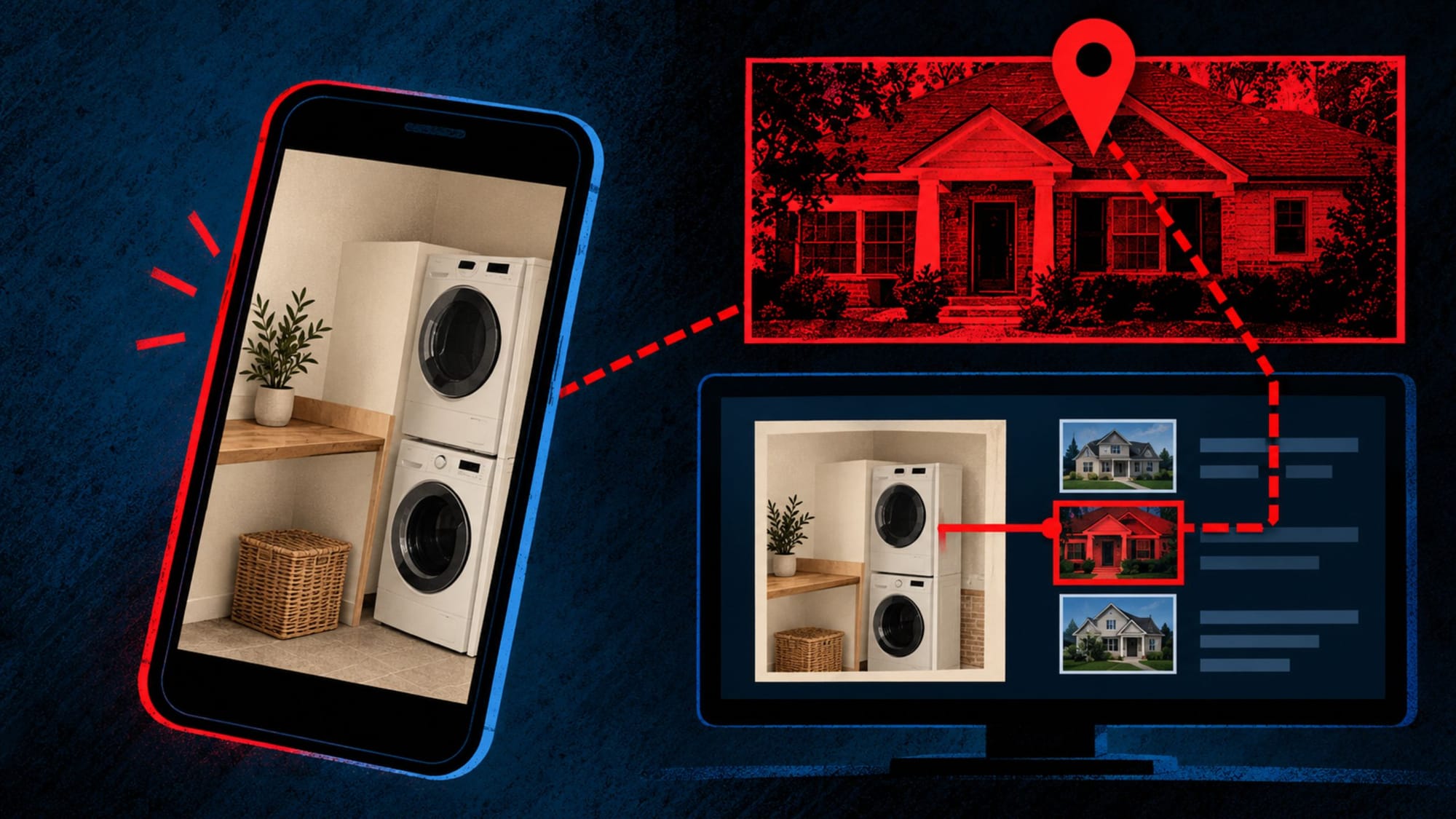
The city’s declaration to the court said that the tool will “automatically hide a post if (1) the commenter does not have any friends or followers, (2) the comment has a link, or (3) the commenter does not have a profile picture.”
Since Jalisi has no profile picture, only one friend, and has not posted anything on his own profile, the city said that these “are typically strong indicators that the account is a non-human bot.”
The city said it uses Meta’s tool because it “does not have the resources nor ability to actively monitor each and every comment made in real time in order to manually hide bot comments.”
The judge was convinced that the tool was “content neutral” because the decision to hide comments is made based on signals such as the absence of a profile picture, and “determining whether a comment may be hidden has nothing to do with the content of the comment.”
The judge also found it important that when Jalisi’s wife posted the same question as one of those hidden by Meta’s tool, it was not censored. This, according to the judge, “actually strengthens the finding that the restriction is content neutral; critical speech is clearly tolerated by the City.”
The court also observed that bots are not protected by the First Amendment, citing Justice Barrett in Moody v. NetChoice.
As for people being flagged as bots, the court said this was merely an “incidental restriction”.
The order states that the city must “restore the public visibility of every comment by Plaintiff that has been hidden” within 24 hours, and stop suppressing his comments “on the basis of their viewpoint.”
The city did not oppose this, but the court also noted that it is “likely that Plaintiff’s comments were hidden not by a City policy, but by the Meta Moderation Assist Program.”
The court also left open the question of whether Meta’s filtering can be considered as the government (and thus subject to the First Amendment) since neither party briefed it. The two sides must now file a joint status report by October 30.
The case is not the first time that Poway has been involved in a controversy over free speech on Facebook. Two Poway school board trustees were previously found by a federal judge and the Ninth Circuit to have violated the First Amendment when they blocked parents who were critical of them.
That case eventually reached the Supreme Court, which in 2024 decided in Lindke v. Freed to establish a test to determine when a government official’s social media account can be seen as state action.
In other cases, a federal judge in Pennsylvania ruled that a local resident’s comment was unlawfully deleted by officials, while in Washington state, a judge stopped the city of Sammamish from enforcing an off-topic rule on its Facebook page. In Colorado, the city of Woodland Park had to pay $65,000 to settle a lawsuit over deleted comments on its Facebook page and that of its police department.
Now, the city of Poway can continue to use a tool that does what it cannot do – hide a critic’s comments without showing him any due process – i.e., without him ever even realizing it, unless he sues the city.
The next person who has no profile picture and few friends will be treated the same way, without ever finding out – unless they too go to the trouble of suing their city.
The big picture here is that a person’s right to be heard by their own city is now dependent on their willingness to make their life an open book on the internet. The absence of a profile picture, or few friends, is taken as proof that a person is a machine – and this is used as a legitimate reason to censor them.