
"The Bill is practicable and realistic, drawing as it does on the UK's Age Appropriate Design Code (AADC)." That was a joint statement by two authors of California's Age Appropriate Design Code and 5Rights Foundation, the British NGO that reportedly helped write it.
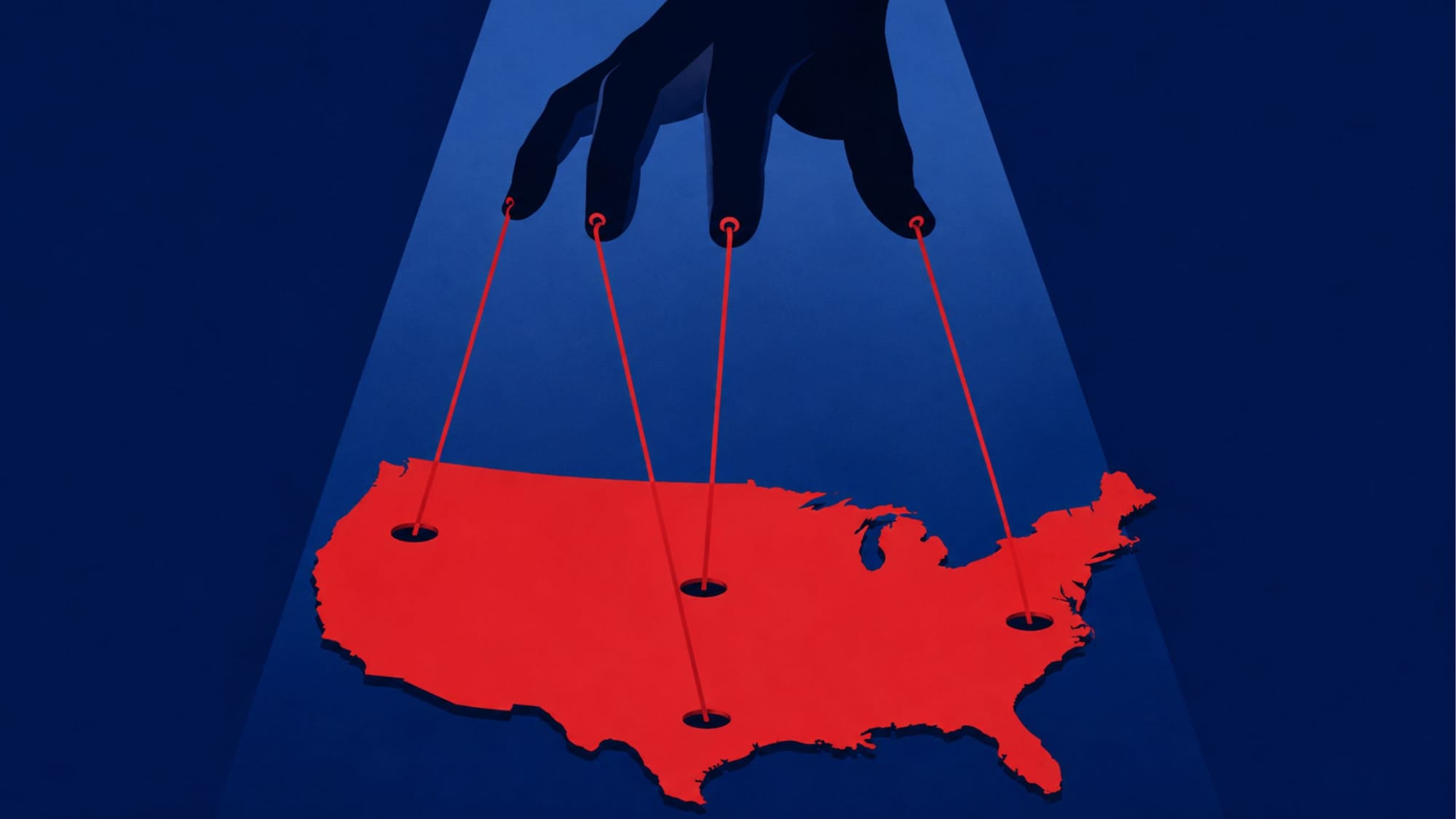
5Rights is one of five organizations named this week by the investigative outlet Effort as having backed Britain's Online Safety Act and now pushing age verification or digital ID legislation in 21 US states and in Congress. Four are British. The fifth, Reset Tech, is a global consortium with a UK branch.
One of the five sells the checks. The Age Verification Providers Association is a British trade association whose members supply age verification and estimation technology. It supported the Online Safety Act, and it has pushed for sites within the Act's scope to run age checks on VPN users — treating the tool people use to escape the checking as grounds for another check.
How many of the legislatures voting on these bills know that one of the five represents the companies that get paid when a mandate passes?
Reclaim The Net readers will be familiar with much of this already, but the new report has brought these groups back into the conversation.
5Rights, chaired by Baroness Beeban Kidron, sponsored the California code in 2022 and has engaged on 42 bills across 18 states, 11 of which became law. It is registered under the Foreign Agents Registration Act, and paid Capitol Connection $50,000 to lobby the California Legislature in 2022. That work was not disclosed as lobbying for a foreign principal until 2024, more than a year after the bill passed. The disclosure denied that 5Rights was "supervised, owned, directed, controlled, financed, or subsidized by a foreign government, foreign political party, or other foreign principal", and left blank the item that would have clarified how much control Kidron, the founder and then a director, had over it.
Kidron wants the VPN gap closed too. Social media bans without VPN bans, she has written, are "for show and headlines, not for children."
The Center for Countering Digital Hate has been open about its record at home. Its chief executive, Imran Ahmed, told Baroness Jones of Whitchurch that CCDH had "championed the Online Safety Act since its inception," and said he was the "first witness before the draft bill committee" that reviewed it.
Its reach ran further than Westminster. The European Commission's handbook on borderline content, the House Judiciary Committee found, "contained platform 'policy recommendations' from the biased, left-wing pseudoscience group Center for Countering Digital Hate."
The Institute for Strategic Dialogue has received US State Department funding — to "advance the development of promising and innovative technologies against disinformation and propaganda" — and sits in Spotify's Safety Advisory Council and YouTube's Trusted Flagger program, which Google says "prioritizes flags from Trusted Flaggers." Effort puts ISD's contracting with the State Department, the EU and several UK ministries at more than $17 million.
Congress has since taken an interest. "In July 2025, to gain a better understanding of how European regulators interact with third party organizations to censor online speech, the Committee requested and obtained documents from two CSOs, Access Now and the Institute for Strategic Dialogue," the Judiciary Committee reported.
What ties Reset Tech to the British law is its own submission to Ofcom, which said super complaints "must become a meaningful structural accountability tool." Its US affiliate, Reset Tech Action, spent $1,352,800 lobbying Congress and state legislatures from 2024 through the middle of this year. Four of the six bills it lobbied on are bills 5Rights also engaged with.
The law all of this began with is not regarded in Washington as a neighbor's domestic business. It is "perhaps the most notable foreign attempt to imitate the Digital Services Act," the Judiciary Committee wrote, one that "paves the way for Ofcom, the UK's relevant regulatory authority, to regulate how social media platforms 'should deal with [so-called] disinformation and misinformation.'"
Twenty-one states is not twenty-one separate local demands. It is one small, portable lobby, arriving with a law it already wrote once, and one of its members invoices for the remedy.