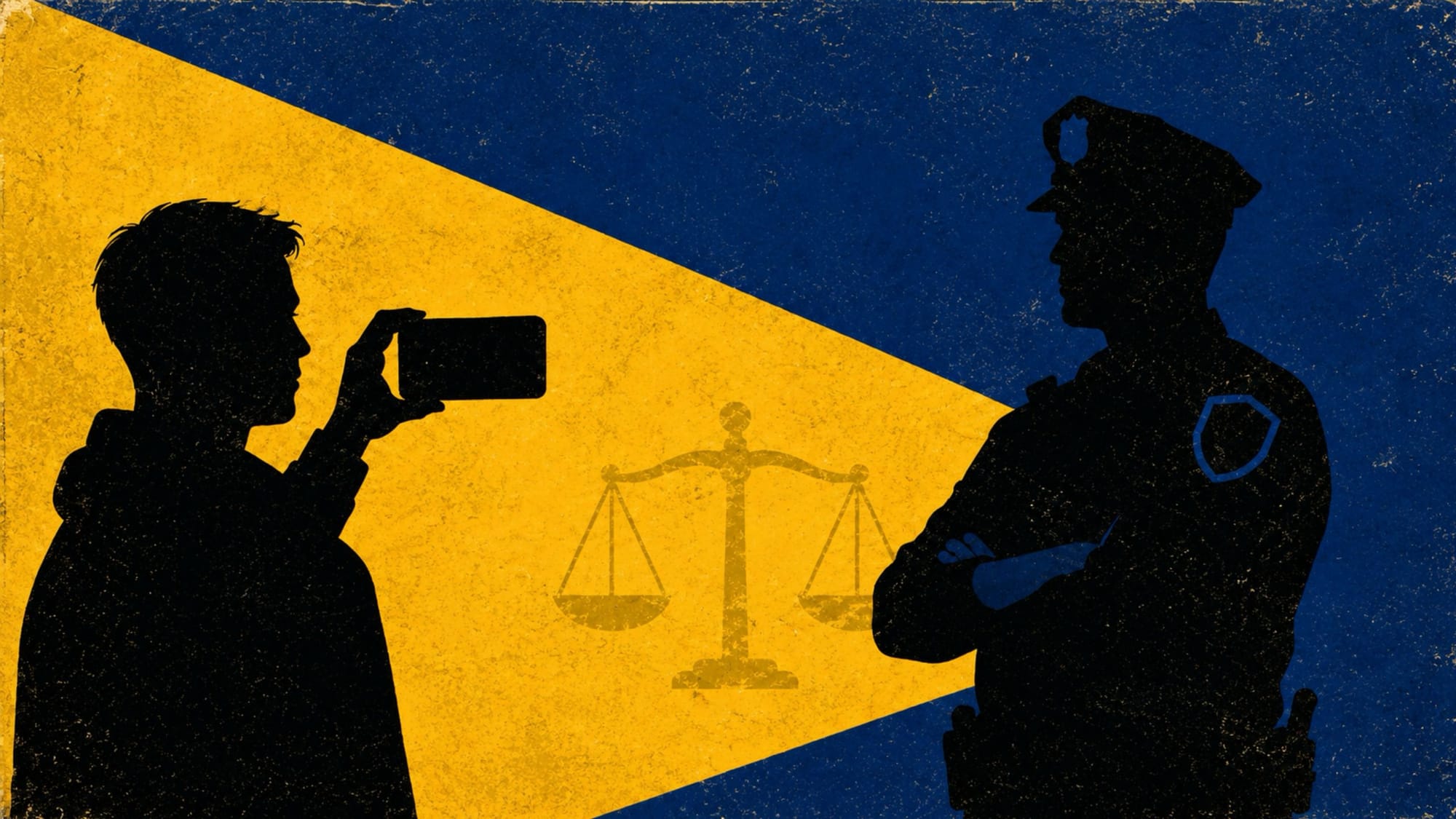
Here's a ruling that is at the same time a major victory and a disappointment for digital and civil rights. The US Court of Appeals for the Second Circuit has for the first time recognized that the First Amendment protects the right to record law enforcement activity in public.
This is the ninth US federal circuit court to do so, and as an appeals ruling it is binding in Connecticut, New York, and Vermont.
But the same ruling, issued on Monday, upheld the qualified immunity of the officers who made the arrest, which means the plaintiff, Keith Massimino, loses his case despite the court establishing the principle in his favor.
Massimino was arrested on October 30, 2018, for filming the outside of the Waterbury Police Department from a public sidewalk. The incident was far from an isolated one, as the man, represented by the ACLU of Connecticut, describes himself as a "First Amendment auditing hobbyist."
During the 2018 incident, officers Matthew Benoit and Frank Laone confronted him, and Massimino gave them vague responses about his purpose, and refused to show his ID, which the officers said was a "lawful order."
He was arrested for obstruction under a Connecticut statute (obstructing, resisting, hindering or endangering a peace officer), held for several hours, and released. The charge was dismissed in May 2021.
In August 2021, Massimino sued the two police officers with three claims: a First Amendment claim (right to record police), a Fourth Amendment claim (unlawful detention and arrest without probable cause), and a malicious prosecution claim.
But even though the Second Circuit panel recognized the First Amendment right, they upheld the district court's decision to grant the officers qualified immunity because the right had not been "clearly established" in the Second Circuit at the time.
And although the right is now clearly established in that circuit, thanks to this ruling, that came too late to help Massimino in his case.
The ruling is a victory of sorts, as it means that going forward, police in Connecticut, New York, and Vermont may no longer expect to have qualified immunity if they arrest someone for filming them in public.
The court also rejected Massimino's Fourth Amendment and malicious-prosecution claims, finding that the officers had reasonable suspicion to stop him and probable cause to arrest him after he refused to show his ID.
But in the opinion written by Judge Myrna Pérez, the court held that the right to record "encompasses Massimino's recording of the exterior of a police station from a public sidewalk," and had this to say: "When the government wants to preserve its privacy, it may build a fence or close a door – but not ban speech."