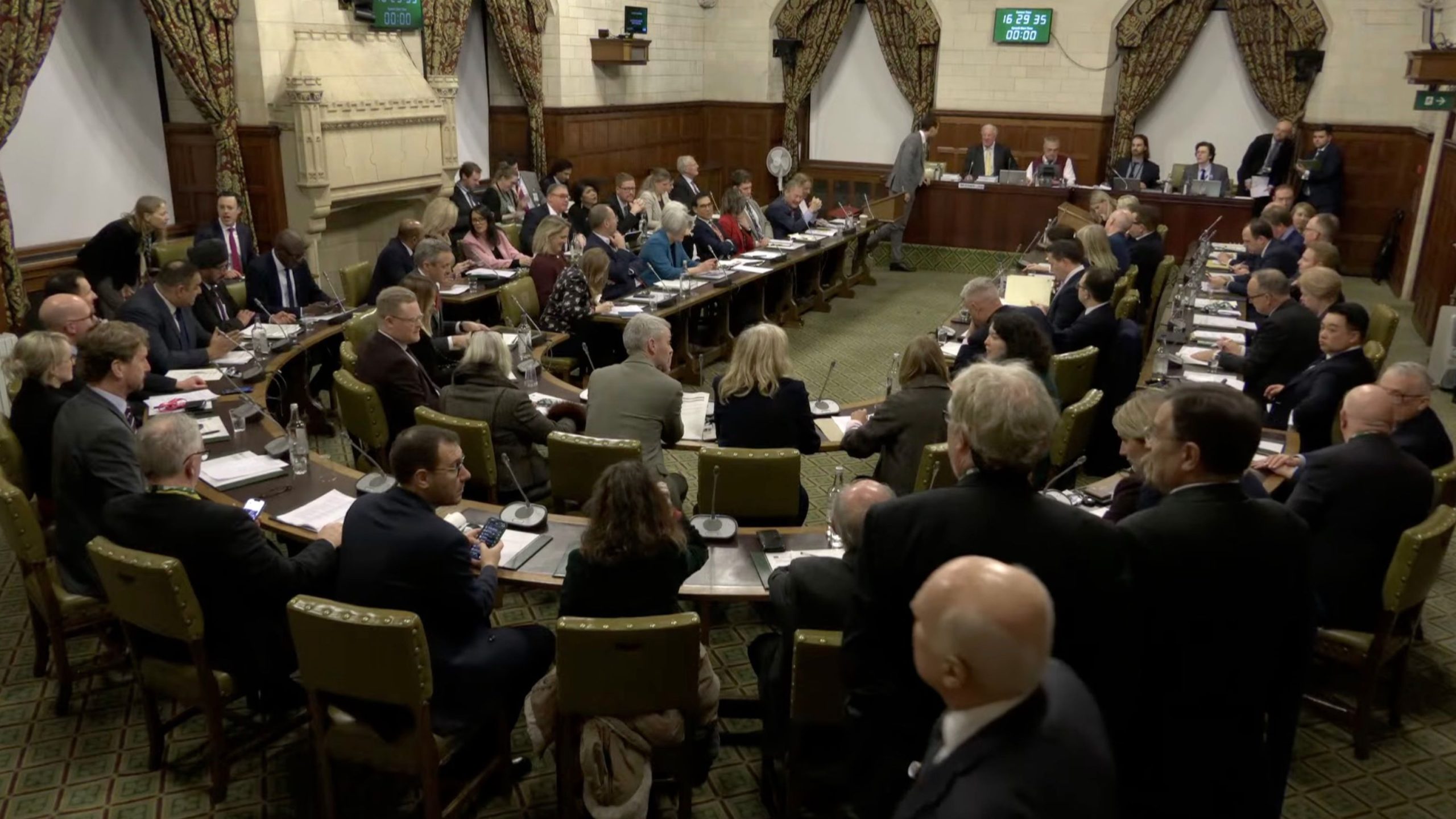
A petition opposing the UK government’s proposed digital ID system, signed by nearly three million people, prompted a packed parliamentary debate in Westminster.
MPs from across the British political spectrum voiced deep concerns that a national digital ID would endanger privacy, centralize state power, and shift Britain toward a surveillance-driven society.
Keir Starmer entered Downing Street on a promise of stability and professionalism. Yet the direction of travel since then points to a government that treats civil liberties as expendable. Police have leaned on sweeping public order powers to detain people over “offensive” tweets, even as no one can define with confidence what “offensive” is from one political moment to the next.
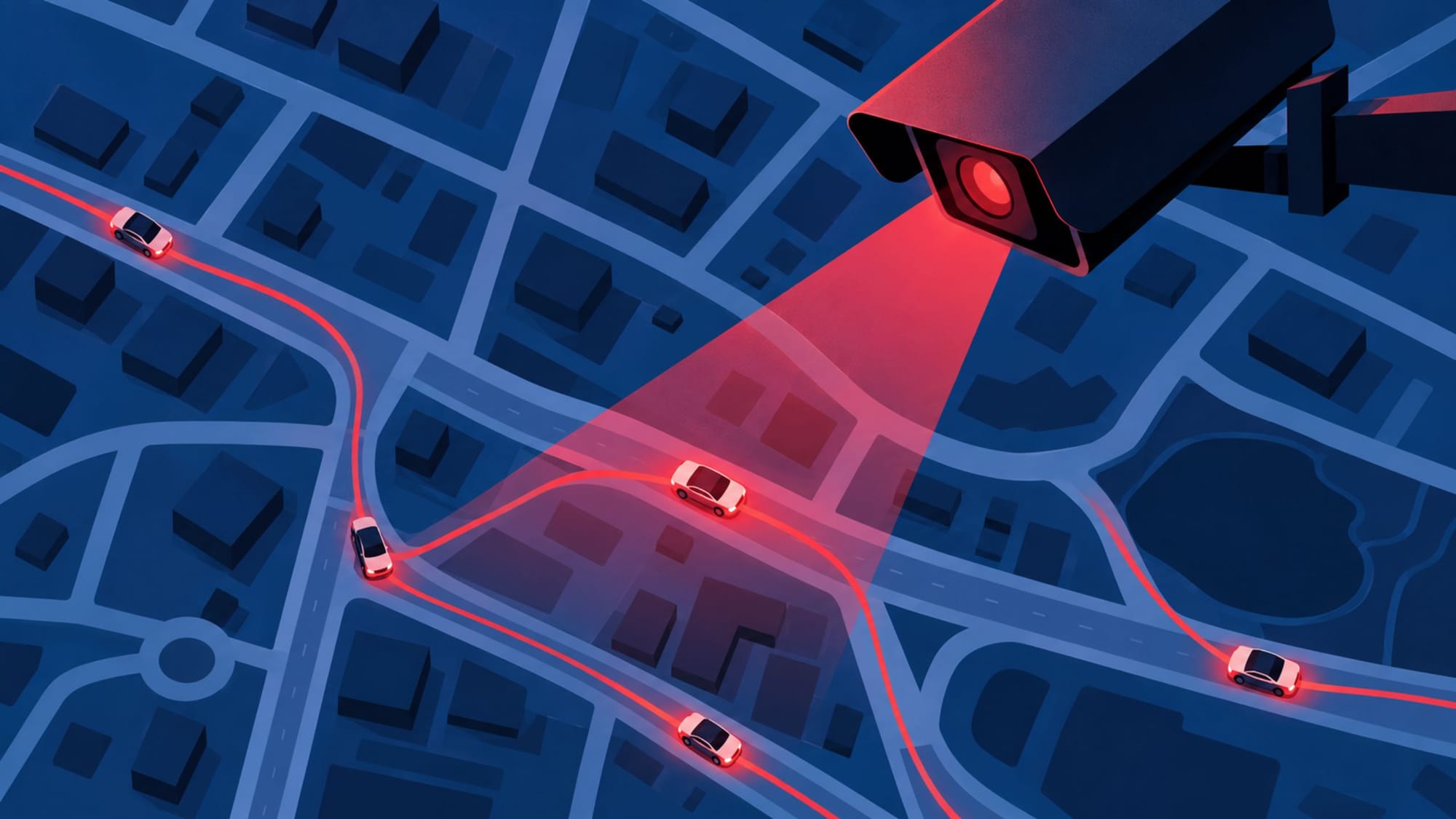
This has unfolded alongside the installation of mass facial recognition cameras in public spaces. The pattern is straightforward: widen surveillance, narrow dissent, and reassure the public that it is all necessary.
Within that climate, digital ID was not an accidental addition to the political agenda. It has become Starmer’s organizing project, the missing component that ties together the broader expansion of state monitoring. A mandatory identity wallet, tied to work, renting, banking, and access to services, functions as the connective tissue in a system that already leans heavily on data collection and algorithmic judgment.
Once that infrastructure exists, every adult becomes legible to the state in a way that no previous government has attempted.
Yet, as was evidenced by this week’s hearing, the public and some lawmakers are pushing back against it.
Robbie Moore (Conservative, Keighley and Ilkley) delivered one of the strongest rebukes to the policy, asking, “Who is actually in favor of these [digital ID] proposals, other than the Prime Minister?” He said the government was using “any excuse, however unjustified and unevidenced” to push its digital ID plans.
Moore questioned the logic behind the scheme: “If the real target is people who are here illegally, why on earth do 67 million British citizens who already have national insurance numbers, passports, driving licences and birth certificates need to be dragged into a brand new compulsory database as well? What exactly is it about stopping the crisis of inflatable dinghies in the channel that requires your son, your daughter, your dad, or your 90-year-old grandma to hand over their data and facial geometry to the Home Office server?”
Moore warned that digital ID hands the government “the key to our life” and that “once that digital infrastructure is set up, we cannot go back.” He said it “gives the state permanent control.”
Drawing a comparison to China, he said, “Just look at the social credit system in China. Facial recognition linked to ID penalizes people. Blacklisted citizens cannot buy train or plane tickets, book hotels or apply for certain jobs. This Government have already indicated that migration work and renting will be tied to ID, but how long will it be before future Governments push further and accessing state services is brought under the control and monitoring of digital ID? We are already seeing signs of such a framework in the Children’s Wellbeing and Schools Bill, the Online Safety Act 2023 and the One Login system. Combined with a formal digital ID, those frameworks would create a world of control for Whitehall and a soulless dystopia for the rest of us. Together, they replace the honesty and decency of human-to-human interaction with an opaque, mechanical ‘computer says no’ future. The scary truth is that control and ID cards hold an appeal for anyone who has access to power. It takes a conscious effort by every one of us to resist the temptation. Power does corrupt, and absolute power corrupts absolutely.”
He called the proposal “terrifying” and “a true honeypot for hackers all over the world,” pointing to Estonia’s 2021 breach in which “Estonia’s Government lost 280,000 digital ID photos.”
He also referred to a One Login security incident where “cybersecurity specialists were able to infiltrate and potentially alter the underlying code without being noticed by the team working on the project.”
Moore concluded, “Digital ID is an ever more intrusive evolution of traditional ID cards, one that promises to be more oppressive. Coupled with the powers of digital databases, increasing widespread facial recognition, digitalized public services and the looming prospect of a central bank’s digital currencies, digital ID threatens to create an all-encompassing digital surveillance state that even George Orwell’s ‘Nineteen Eighty Four’ could not predict. In every aspect of public life, we give over our data with consent. Yet digital ID turns that notion on its head, insisting that we hand over data to simply function in society, and potentially for reasons to which we cannot consent in advance.”
He branded the digital ID scheme “a disaster waiting to happen.”
Dame Chi Onwurah (Labour, Newcastle upon Tyne Central and West) said “the level of digital hygiene across Government is not such that it could support a mandatory digital ID scheme, in my view.”
Dr. Neil Hudson (Conservative, Epping Forest) said the digital ID system “risks wasting billions on a complex, intrusive and potentially very insecure system that will not help anyone” and called for it to be scrapped.
Greg Smith (Conservative, Mid Buckinghamshire) asked, “We have a Government who could not even keep their own Budget under wraps. What hope do they have with our personal data?”
Cameron Thomas (Liberal Democrat, Tewkesbury) warned that the scheme “could put constituents’ most sensitive data into the hands of private, perhaps overseas, individuals who might have neither our constituents’ nor our country’s interests at heart.”
Louie French (Conservative, Old Bexley and Sidcup) said the Labour Government was “trying to push through something that was not in their manifesto” and urged that “this House must therefore do all it can to stop it becoming a reality.”
Jamie Stone (Liberal Democrat, Caithness, Sutherland and Easter Ross) remarked that the turnout for the debate was so high that there was “not enough space in this Chamber for everyone who has turned up.”
Sarah Pochin (Reform UK, Runcorn and Helsby) said over 5,400 of her constituents had signed the petition against digital ID and that she had received many emails opposing it. She said her constituents understood that digital ID “will not solve the problem of illegal working in this country.”
Rachael Maskell (Labour and Co operative, York Central) said digital ID “is about data, big, augmented data from different places and different sources, intersecting someone’s health records with their records in the Department for Work and Pensions, or Home Office records with HMRC or local government, about where we live, where we work and where we are.”
She warned that it would allow a future government to “mix data together with facial recognition technology” and “run the algorithms” against it.
She added that the current Labour government “would not dream of doing such a thing, but a future one might, indeed, a future one would.”
Maskell cautioned that “of course there is interest in digital ID. We see the revolving door of those from the Tony Blair Institute for Global Change and people from his former office; there is Larry Ellison of Oracle; after all, he already has 185 contracts with the Government. He recognizes the power, the money and the opportunity, which is why we cannot afford to go there.”
She pleaded with ministers to drop the plan, saying “this was not in the manifesto is enough to tell us all that it does not have public consent and therefore should not proceed.”
Jeremy Corbyn (Independent, Islington North) argued that the debate should have been held in the main chamber given the level of public concern. He read from a constituent’s message: “digital ID is a deeply illiberal idea that threatens privacy, autonomy, and the open society” and “risks creating a two-tier Britain, where access to basic services, healthcare, housing, employment, even voting, depends on whether someone has the right app, paperwork, or digital trail.”
Corbyn said, “ID cards are one thing; restricting jury trials is another. Facial recognition at tube stations and now even in supermarkets is something that people find deeply disturbing.
Across the country there is a whole vein of thought where people are feeling a quite reasonable sense of paranoia about the levels of surveillance that they are under at the present time. Members of Parliament would do well to try to understand that.
This attack on civil liberties, that is what it is, means that utterly vast amounts of information on all of us will be stored, as they are already in the health service. Unfortunately, the Government are now making that available to private healthcare interests at the same time. There is a huge issue here about our data, our information and our privacy, which we would do well to remember.”
He added that digital ID is being pushed by those “who will make a great deal of money out of providing the necessary technical equipment to set up this surveillance system.”
Sir Iain Duncan Smith (Conservative, Chingford and Woodford Green) cited a constituent who said digital ID reverses the presumption of innocence so that “almost everybody on an ID card is assumed to have guilt until they have discharged themselves as innocent.”
Lee Anderson (Reform UK, Ashfield) warned that the government is trying to create a “Big Brother Britain” by “ramping up facial recognition, arresting people for social media posts, getting rid of jury trials in most cases, and trying to force digital ID on to us all.”
Rebecca Long Bailey (Labour, Salford) rejected the claim that digital ID would curb illegal immigration, noting that “across Europe, nations with long standing ID card systems, Germany, Spain, Portugal, Belgium, Greece, have not seen reductions in irregular migration as a result of ID cards” and that “Estonia, the poster child for digital ID, actually has a bigger underground economy than Britain.”
She said the government’s push “does not arrive in a vacuum” and “sits alongside a worrying pattern, the accelerated roll out of facial recognition, attempts to weaken end-to-end encryption, and data laws that strip away privacy protections.” Long Bailey warned that “Britain has no constitutional right to privacy,” meaning future governments could abuse the system and “we would have very little power to stop them.”
She also noted that “UK Governments, of all stripes, do not have a good track record of keeping our data safe. The number of serious cyber incidents is rising year on year. Critical institutions from the British Library to the Legal Aid Agency to the One Login platform have already been criticized for major security flaws.”
Rupert Lowe (Independent, Great Yarmouth) said, “Digital ID is the biggest step towards a surveillance state that this country has faced in my lifetime. If any Government want access to every detail of our lives, they are the ones who should be feared. We live in a country where the state cannot even run a basic IT system without losing data or leaking personal details. Digital ID will not last a week before a mountain of sensitive personal data is left at a bus stop in Kent again.”
He added, “I do not trust any Government. I certainly do not trust this Government. Let us remember, once the Government get a new power, they never give it back. It expands and evolves. Digital ID will not stop at proving who we are. It will creep into travel, banking, housing, benefits and even voting. Today, it is voluntary; tomorrow, it will be required for security reasons. The day after that, we will not be able to access basic services without it, all for our own good, remember.”
Lowe said that Britain “is supposed to be a country in which the Government serve the people, not the other way around. It is a country built on privacy, liberty, and trust. British people just want the Government to leave them alone and get out of their lives, to build a business, raise a family and live in peace. Digital ID treats every citizen as a suspect. It assumes that the state has the right to look over our shoulders. We defend against it by severely limiting the power of the state, not radically expanding it. Abolishing jury trials, cancelling elections, implementing facial recognition, and now this. This incoming dystopian future must be resisted.”
He declared, “I will simply not comply. I will not be downloading a digital ID and I urge other MPs to commit to doing the same. The solution is obvious, I will just have to reinvest in a Nokia, I preferred the simplicity of that anyway. The sound people of Great Yarmouth do not want digital ID.”
Brian Leishman (Labour, Alloa and Grangemouth) warned that digital ID creates the possibility of “some sort of dystopian future Government in power, one that looks to use technology for its own end.”
A smaller group supported the proposal. Samantha Niblett (Labour, South Derbyshire) praised Estonia, Denmark, Belgium, Germany, and the Netherlands’ systems, saying, “If done well and offered for free, digital ID could make employment checks and even voting more accessible.”
She acknowledged, however, that “roughly two thirds of responses from my constituents expressed serious concerns” but said this had been “intensified by fearmongering, some of which we have heard today from certain parliamentary colleagues.”
Peter Prinsley (Labour, Bury St Edmunds and Stowmarket) said that opposition was “about the practicalities of how we implement digital ID, as opposed to the principle of whether we should have digital ID in the first place.”
He said, “It is entirely possible for a great country like ours to modernize the way in which its citizens interact with the state while preserving civil liberties and privacy, and that is entirely the Government’s intention.”
He added, “Nevertheless, I know some Members will think this is a slippery slope, but that, again, is a practical argument. It is up to us, as legislators and as a Government, to ensure that digital ID is implemented with safeguards against bureaucratic creep. But we should not forgo the incredible benefits of digital ID because of the hypothetical chance that something we are against, and that we can prevent, might happen.” Prinsley said the benefits “would be incredible.”
Across the chamber, the sentiment remained overwhelmingly wary. MPs questioned whether a state that routinely mishandles data, outsources security, and expands surveillance powers can be trusted with a single system linking the personal records of every citizen. The mood in Westminster was clear, a free society cannot outsource liberty to a login.