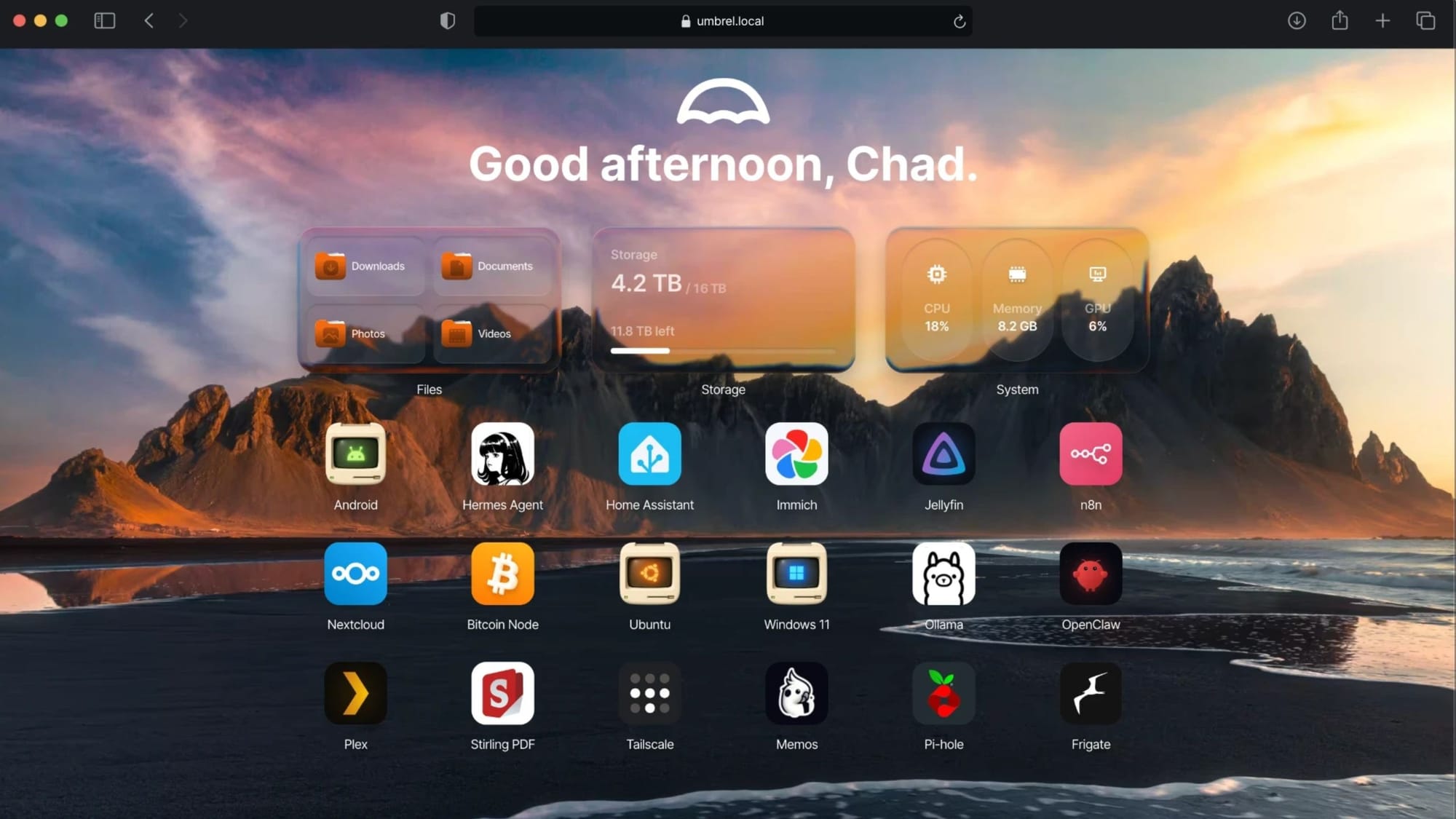
umbrelOS, the free and open-source operating system for self-hosted server apps, is trying to make using a home server as easy as using a cloud service, with the key difference being that the user is in control of the hardware and the data.
With the announcement of the upcoming version 2.0 of the operating system that powers the server, Umbrel, the company behind the product is stressing the ease of use that is on par with mainstream consumer cloud services, but with the benefits of having full control of the data, and hardware.
The public beta of the new version is out now, and the final release is expected on September 22.
In a blog post, the company said that the new version turns a small computer at home into a personal cloud for files, photos, media, local AI, and more than 300 apps.
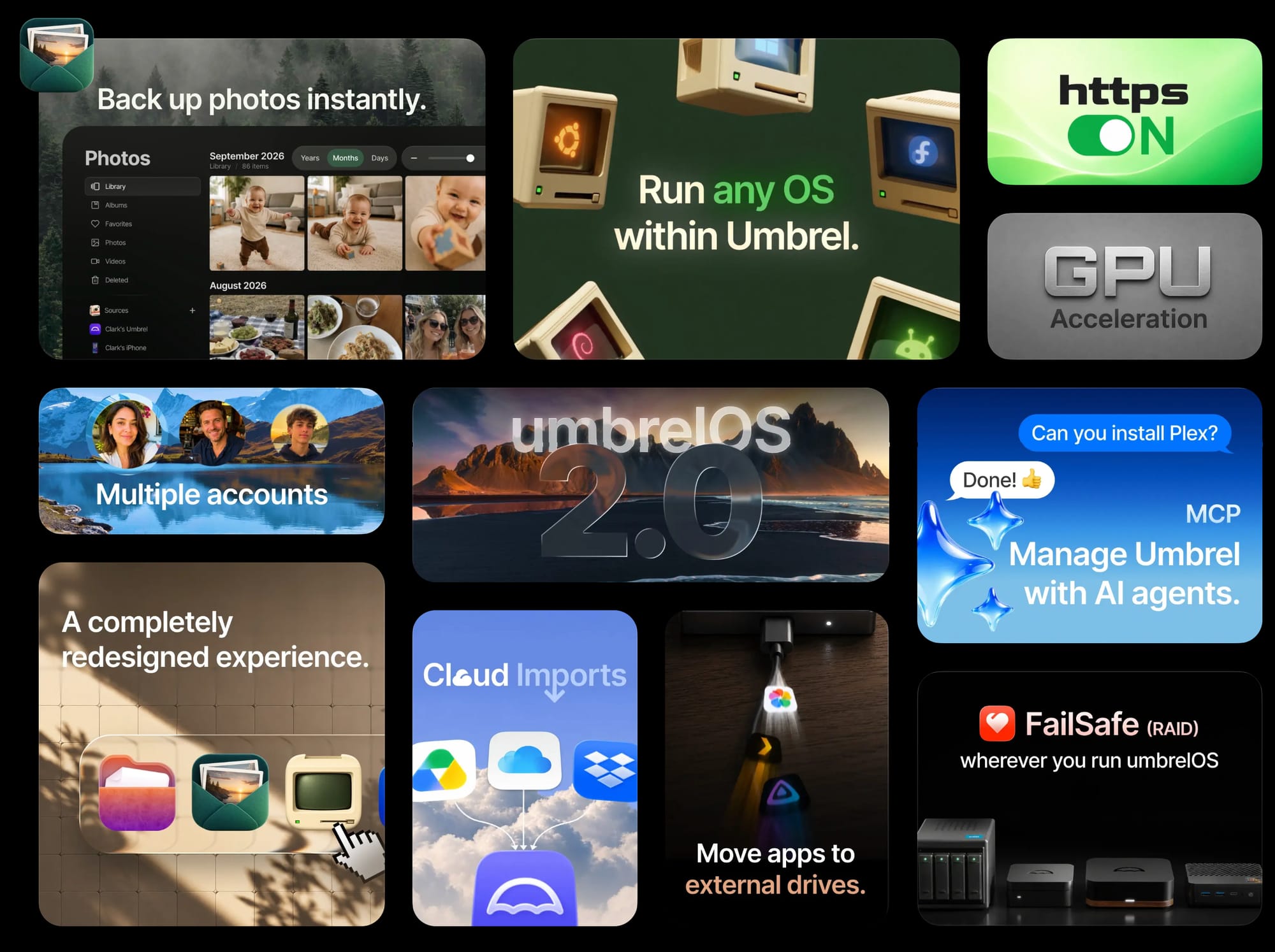
The new version is a major upgrade that brings a number of new features and improvements, including a new Photos app that automatically organizes media by year, month, and day, with albums, favorites, Live Photos, panoramas, and screenshots.
The new iPhone app, currently available through Apple’s TestFlight beta program, can be used to back up the entire camera roll automatically in the background, including when the app is closed. The company said that the app can connect to the server both on the local network and remotely, using Tailscale, a service that provides secure connections between devices.
For Mac users, there is a new app that adds the server as a drive in Finder, and the same network/remote connection principle applies here as well. Windows and Android apps are listed as “coming soon.”
The new version also brings multi-user support, with separate accounts, home screens, and private home folders. Users can choose which apps and folders to share with others.
Another new feature is the ability to run full operating systems – including Windows, Ubuntu, Debian, and Android – inside the server, with access to the desktop via a browser.
On the storage front, umbrelOS 2.0 brings a Storage Manager that can combine internal SSDs or HDDs into one space, while FailSafe uses a redundancy scheme similar to RAID to make sure data remains available even if a drive fails.
FailSafe also supports drive replacement, health checks, and on NAS hardware that has both HDD and SSD slots, SSD acceleration.
umbrelOS can also import data from Dropbox, OneDrive, iCloud Drive, Nextcloud, ownCloud, and WebDAV, with Google Drive listed as coming soon in the Beta 1 notes, although the company’s website currently includes it among the supported cloud services.
The new MCP server is described as a way for AI agents to interact with tools and data on the server. The agents can be either local or cloud-based and users can decide which permissions to grant them, and revoke access at any time. The company says using this feature is optional.
The interface allows users to connect AI agents such as Claude Code, Codex, OpenClaw, and Cursor to install apps, organize files, or troubleshoot services. Each agent gets its own token, and receives only the access the user grants.
The server’s GPU capabilities have also been expanded to include automatic detection of NVIDIA, AMD, and Intel GPUs, including Thunderbolt eGPUs, which are then made available to apps that can use them, such as Ollama and Jellyfin. The usage of GPU and VRAM can be viewed in the Live Usage panel.
There are also a number of improvements and new features in the way apps are installed and run. The new App Store has a Discover interface, categories, featured collections, search, sorting, update shelf, and release history.
Apps can now be restricted to only access specific folders, and moved to an external drive. The Files app gets background indexing, instant search, continuous thumbnail generation, and safer uploads, while browser access to umbrelOS is now served over HTTPS automatically.
Umbrel also stressed that the server can be backed up to an external drive, another Umbrel, or a NAS, and that a feature called Rewind can restore previous snapshots.
umbrelOS 2.0 is now available to those enrolled in the beta program, while the full release is scheduled for September 22.