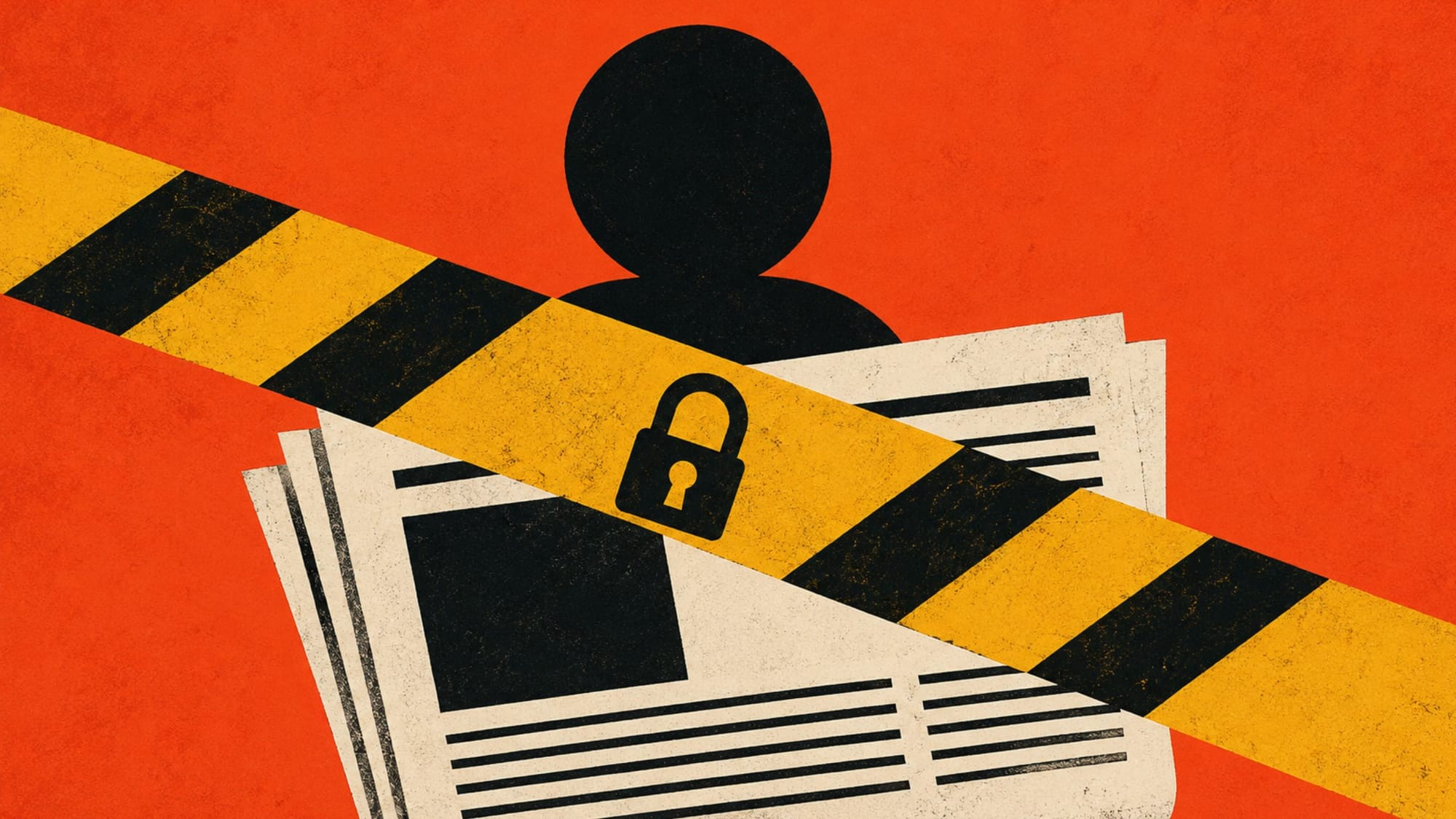
A campaign is underway in the UK to introduce a new law, dubbed "Arday's Law," that would let the state decide how many news articles can be published about a person within a certain time frame.
The goal, the petition says, is to "balance the public's right to information with an individual's right to privacy."
The petition was launched on Change.org after the death of Professor Jason Arday, and has received the support of Amnesty International's UK networks, among others.
What is being proposed here is prior restraint, a legal limit on how many articles can be published about a person, imposed before publication.
This would be a dangerous tool in the hands of the authorities, giving them the power to stop investigative reporting about public figures or those in positions of power, simply by invoking "privacy rights."
The case of Arday, a Cambridge University professor who was accused of plagiarism and had discrepancies in his personal history, and who died recently, is being used to build momentum for this new law.
Amnesty International's UK networks signed a statement backing the idea of capping the number of articles that can be published about an individual within a set time frame, and also called for a public inquiry into the role of the press in Arday's death. This is the same Amnesty International that once upon a time supported free speech and the free press.
The statement refers to Arday as "a victim of a brutal, racist witch hunt."
The UK branch of Amnesty was called out for this by broadcaster Andrew Neil, who accused the group of promoting the idea and called for Amnesty UK to be defunded.
But Amnesty is not the only one; the Good Law Project has an open letter with over 122,000 signatures, while 89 members of the Green Party supported a related motion.
Of course, several MPs also back the proposal, and the National Union of Journalists (NUJ), which you might expect to support freedom of the press, responded to Arday's death by calling for "strengthened independent regulation, better access to the industry, greater diversity in newsrooms, and reform of media ownership."
Before his death, Arday tried to stop the reporting about him by engaging the libel firm Carter-Ruck, whose claims that the allegations against him were "racially motivated" helped suppress publication.
A police complaint also led to a harassment investigation against journalist Jack Grove for sending three "polite" emails asking for comment.
The case was eventually dropped without Grove even being interviewed, and Metropolitan Police Commissioner Mark Rowley later said that the force "dropped the ball on that one" and that the case should have been dismissed from the start.