
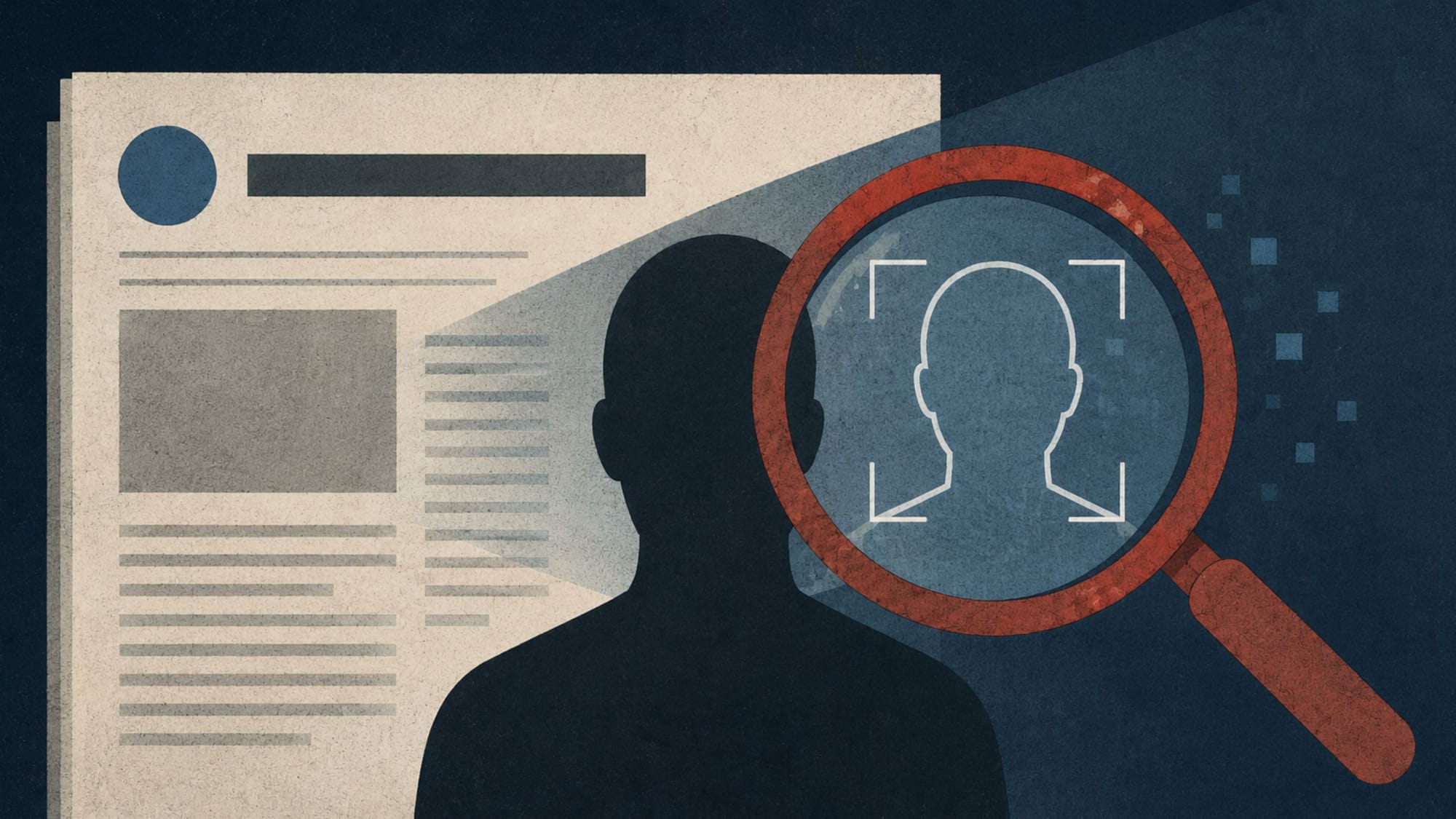
USA TODAY Co which owns more than 200 local newspapers and its national daily, USA TODAY, has told investors that it has hired Palantir to work on the data it holds about its readers, and the plan it described is a plan to end their anonymity.
Chairman and chief executive Mike Reed put it in the company's own language on the second-quarter earnings call. "Every visit, every session, and every moment of attention creates a signal," he said, and when the company connects those signals they become "actionable intelligence." He said the work with Palantir is meant to build "a common intelligence layer that connects our audience, content, and first-party data."
Read the rest of the same remarks and you find what the company thinks of a reader who only reads. Its focus is "shifting away from one-and-done traffic, because even though it contributes to our unique visitor count, it is ultimately our least valuable and least monetizable audience." A person who opens a story, reads it and leaves without handing over a name is, in this accounting, the least valuable kind of person the paper has, and the anonymity is the defect the money is meant to correct.
So where does a reader who wants to stay anonymous go?
Other publishers have made the same move. Axel Springer, which owns Business Insider, Politico, Bild and The Telegraph, has struck the same kind of deal, and Palantir says its software gave the German group "granular insights into readership behavior, advertising performance and their subscription models." Fox News has a Palantir arrangement of its own, and Thomson Reuters supplies the firm with data.
The company's answer to the obvious worry is that nothing leaves the building. "All of our data remains our data," Reed said, calling the arrangement a way to move faster with software that would take far longer to build in-house.
In a statement carried by Nieman Lab, which obtained the internal materials and the company's response, USA TODAY Co. said that it complies with data protection law, that it requires the same of partners, and that "our editorial decisions remain independent." Kristin Roberts, president of USA TODAY Media, told staff by email that the work could mean "better recommendations and offers based on what people actually care about."
Keeping the data in the building is a different question from what the company builds with it. In that reporting, Reed said the aim was to take "the anonymous interactions we have today and turn those into known relationships."
Some things about the deal are not public. The company has not put a price on it or said how long it runs, and its spokesperson declined to answer questions about the specifics.