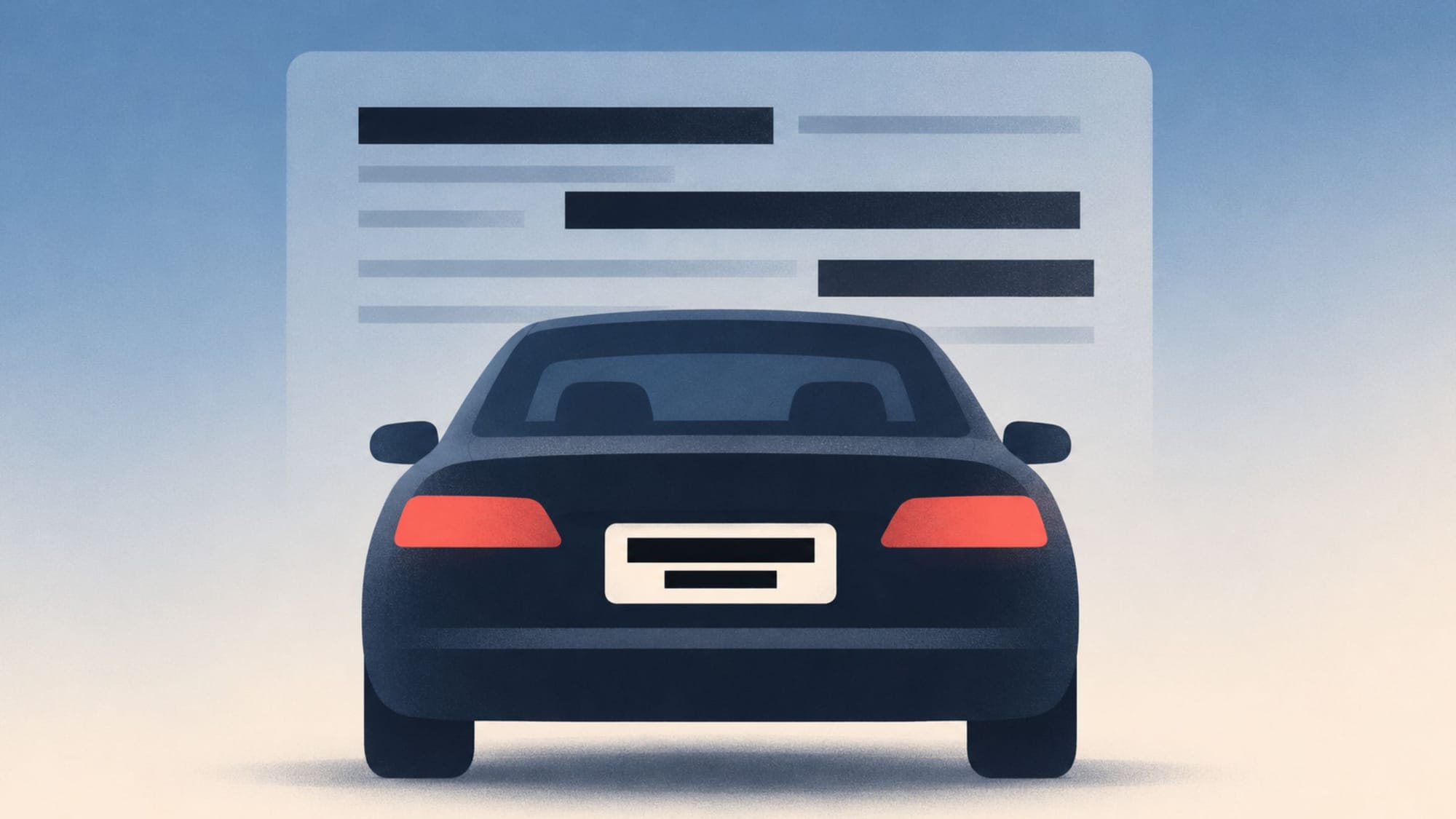
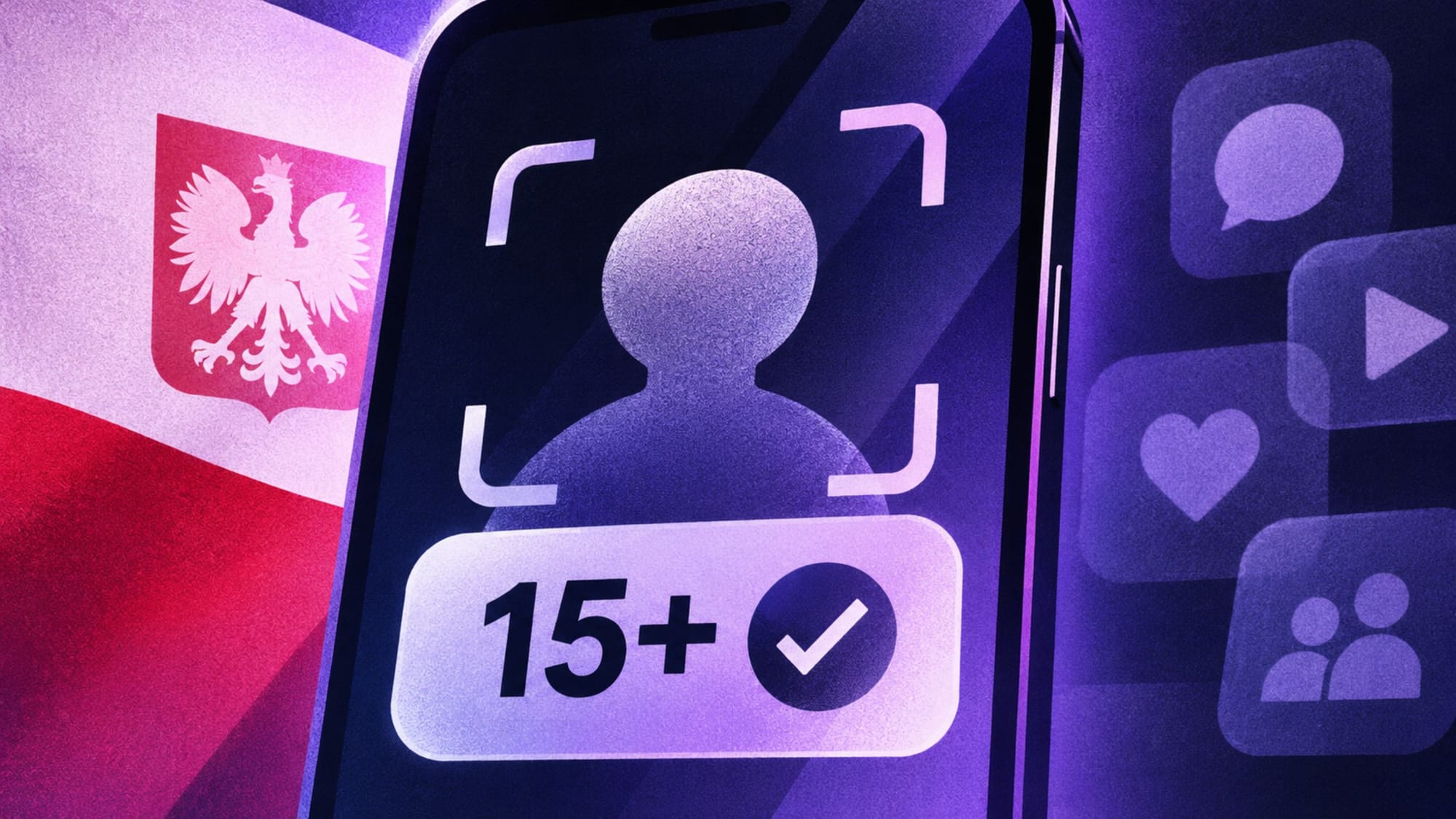
Poland’s government has presented a draft law that will make it mandatory for social media platforms to obtain proof of age from all users, and block anyone under 15 from signing up.
The project, dubbed UD492, has been prepared by the Ministry of Digital Affairs and the Ministry of Education, and was presented to the Sejm committee on children and youth on Wednesday.
According to the government’s legislative tracker, the goal of the proposal is “establishing a minimum age of access to online social networking services at 15.”
As the officials in charge of the bill, Dariusz Standerski (deputy digital affairs minister) and Katarzyna Lubnauer (deputy education minister), explained it to the committee, the age verification requirement will not be a simple, one-off tick-box.
Instead, the check will be done using one of three methods, with the EU Digital Identity Wallet being the first option, and a new feature in the state’s mObywatel app (used by about 13 million Poles) the second. A third option will be a tool that meets EU’s eIDAS standards and is certified by the digital affairs ministry.
Lubnauer has said that the wallet is the first choice, but expects it to be unpopular at first. “A function will be launched there that will make it possible to verify age without giving data,” she said of the mObywatel app.
The goal of the verification process is to send a platform only the information that the user is above or under 15 years old, as the draft’s justification states. “The point is to respect the principle of selective disclosure of the user’s information, that is, the user confirming that they have passed a given age threshold, but without additionally passing on other information, such as their name.”
Standerski said that this is “safe and private age verification, all privacy standards are maintained, and what matters is that it is one standard.”
The age verification process will not be a one-time thing either. According to a report from the hearing by the Polish Press Agency (PAP), if a platform has “justified doubts” about a user’s age, they will be asked to verify it again. Those doubts can come from “an algorithm tracking the content displayed” – i.e., the content you view on a platform can trigger a re-check of your age.
This was described at the hearing, but the draft has not yet been published to show exactly how this will work and what will count as “justified doubts.”
Lubnauer was asked if biometrics will be used in the process, and replied, “Biometrics is not envisaged. These three methods are much more effective than what Australia used; they are very much more watertight.”
The bill envisions the President of UKE, Poland’s electronic communications regulator, as the enforcer, but the amount of the fines that will be imposed is not yet known.
Only social media platforms will be punished if they don’t comply; users will not be sanctioned, Standerski said. “We cannot imagine an offence of aiding someone in setting up a social media account,” he explained.
Not all social media accounts will have to comply – messaging apps will be exempt, as will be services that can be used without logging in, as well as accounts created before September 1, 2017, and those where identity has been fully confirmed.
According to Lubnauer, the new rules will be introduced in stages, starting with new accounts, and then extending to existing users. She made this statement in a radio interview on October 28, adding, “We are counting on next school year being the moment when this law should come into force.”
The draft’s justification cites “radicalization” as a major threat that Poland and other EU countries are facing, and that is present in the online space, as one of the reasons why the law is necessary.
“Disinformation” is another, that has “been recognized as one of the most destabilising factors for European societies,” the document says.
Lubnauer said that the law is meant to make children safer online, and that the country has “created a shadow zone for children, and now it is high time to introduce rules that will make them safer in that zone.”
Meta’s Jakub Turowski, who was present at the hearing, reportedly backed the idea of introducing age verification, saying that “we all agree that young people should use the internet safely and in a way suited to their age.”
As for those who might try to bypass the rules by using VPNs, Standerski said that “there is probably no law in the world that has been 100% effective for centuries. That is why we have enforcement tools, to keep that effectiveness at a high level all the time.”
The government plans for the Council of Ministers to adopt the bill in the first quarter of 2027. A consultation draft is expected to be published in the coming days.
Poland’s proposal goes further than the EU’s KIDS Act, which introduces a two-tier system, with one age limit at 13 and another at 15. Lubnauer said that the country is going for one limit because “we start from the assumption that such a partial solution will not work.”
The KIDS Act, on the other hand, requires that every user’s age is checked with a certified tool, and that the EU wallet can be used for this purpose. Accounts whose age “cannot be established” will be disabled.
The European Commission has frozen some national laws that go into the same subject for 12 months, with a spokesman saying, “we will not fragment our internal market.”
Poland’s broadcasting regulator KRRiT has asked to be included in the consultations on the bill, and in an appeal on November 10 its chair warned of “the risk of arbitrary application of imprecise provisions.”
This was a reference to a separate, “restrictive measures” bill, but the regulator’s position on the age verification law is that it should be consulted on it as well.
The digital ID and online age verification agenda is very much alive in Poland, and this is not the first attempt to introduce such rules. In June, a separate bill was filed that would require adult sites to do away with the self-declaration checkbox – and instead verify age through a credit card, a bank account, or an official digital ID. The government would have the power to fine and block sites.
In January, President Karol Nawrocki vetoed the DSA enforcement bill that would have allowed UKE and KRRiT to order content blocked, saying, “As president, I cannot sign a bill that effectively amounts to administrative censorship.”
The same month, the Commission, whose job it is to build the wallet framework, had its own staff systems hit by an AI-assisted attack, which was detected on October 22.