In a country like the UK, a ministry of truth doesn’t announce itself as such – that would be too “on the nose.” Instead, it arrives as a defense unit, with a foreign enemy attached.
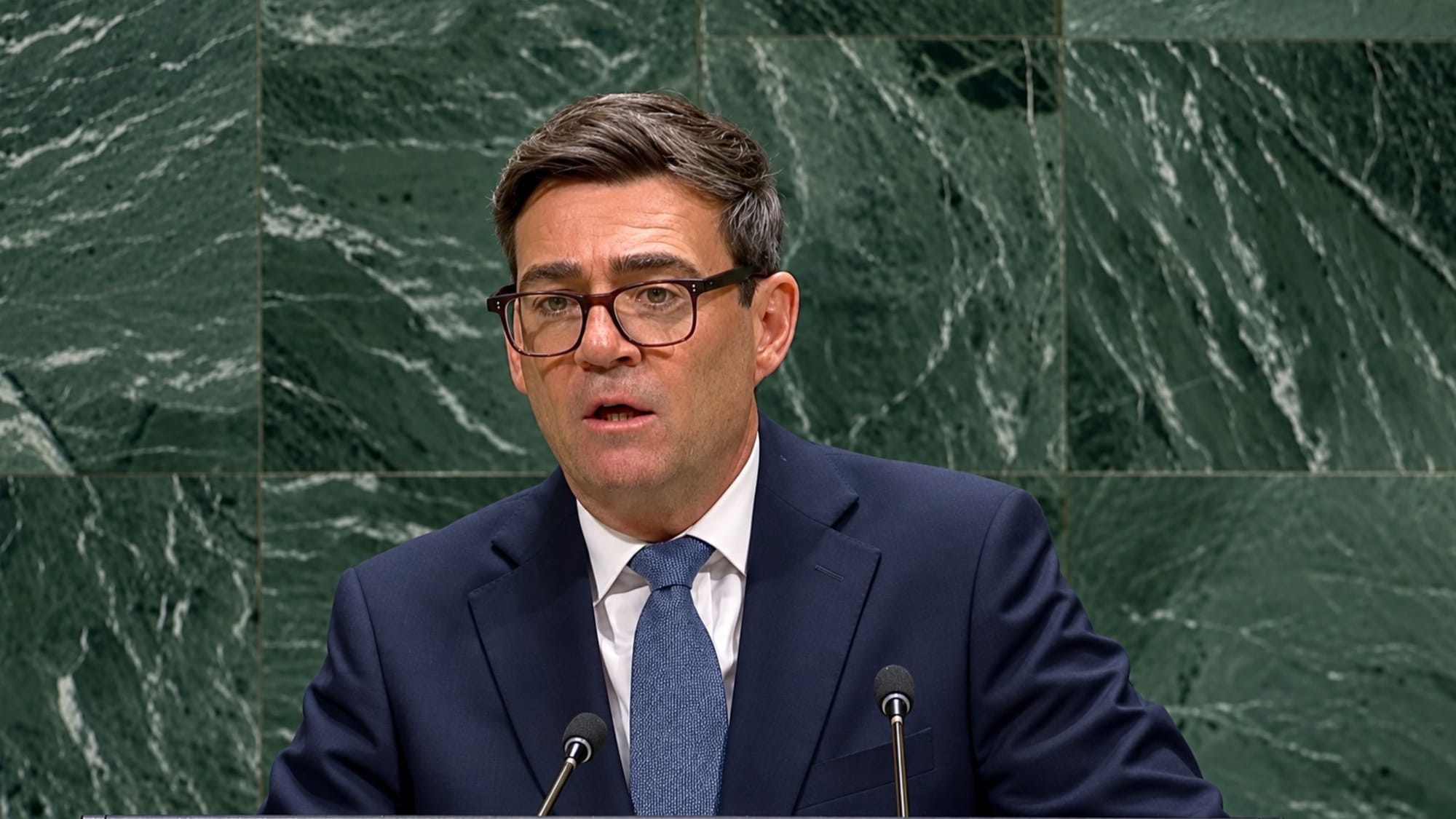
In his first speech to the UN General Assembly in New York on September 22, Prime Minister Andy Burnham said that a new, National Centre for Information Defence, will be set up on his order.
It will sit in the Office for the Prime Minister and Cabinet, and coordinate with the intelligence agencies, government departments, the police, and social media companies, to “detect, attribute and disrupt” what the premier said are “hostile information attacks” that use deepfakes to damage British interests.
He did not say what powers the new body will have, or who will review its work and “attribution” of attacks, nor did he explain what will happen to citizens or media outlets who are wrongly accused.
The Prime Minister did not say whether the centre’s work will be limited to foreign actors, or if it will also concern itself with British citizens and media who the government decides are spreading “disinformation.”
The announcement was silent on when the centre will be up and running, and what its budget will be.
According to the Prime Minister, the new centre is needed because “over the last decade we have given too much ground to those who want to run a negative, corrosive narrative about life in Britain, which bears no resemblance to reality.”
Burnham chose to treat this as an attack, rather than an opinion that might be based on facts, and one that a government might want to address by improving reality, rather than trying to suppress the opinion. But that would be a different speech.
Instead, the Prime Minister said, “We have tiptoed around this for too long ...Well, no more.”
The “narrative of decline” he is referring to is not something that can be easily attributed to a single foreign actor, but he tried, mentioning “Russian agencies” and their “insidious campaign that reaches into people’s homes and twists what they feel about their own country and community – creating a narrative of decline, stoking division and sowing despair.”
He also said that “Russian agencies” have used “every means at their disposal to spread lies and disinformation and prey on people’s fear.”
And he listed: “They’ve used bots and fake websites. Falsified newspaper articles. Forged the branding of 28 British organisations – including universities and the BBC. They’ve amplified far-right narratives.”
Burnham put Kremlin spending on this type of activity at about £1.3 billion a year.
As for who is susceptible to this “narrative of decline” – the Prime Minister said it was people who are “struggling with the cost of living and your life is not improving – or if you’re a young person not in employment, education or training – then you are going to be much more vulnerable to this kind of influence.”
So, what is the plan to do about the cost of living, and opportunities for young people? The speech did not go into that.
Burnham also said that “national security” depends on “a strong, cohesive society” – and that “we are going to be much prouder in standing up for our values and the rule of law.”
Reform UK leader, Nigel Farage described the idea as a "ruse," and warned that it's a "Ministry of Truth to clamp down on free speech."
Nile Gardiner, a former aide to former Prime Minister Margaret Thatcher, spoke for GB News to condemn the idea of the new centre as “Orwellian-style” – and predicted that it would lead to “a great deal of conflict with the Trump White House.”
This is because, in his own speech to the UN, the US President said that his administration will “only encourage super intelligence” and had no intention to “rein it in.”
The British Prime Minister’s announcement did not say what powers the new centre will have, how it will be funded, and who will review its work.
It did say that the Office for the Prime Minister and Cabinet will work with the intelligence agencies, government departments, the police, and social media companies to “detect, attribute and disrupt” what the government decides are “hostile information attacks.”
No further details were provided.