Federal officials set out to erase the online voices of Americans who said Covid vaccines had hurt them. A new appeal asks the Fifth Circuit to give those Americans their day in court.
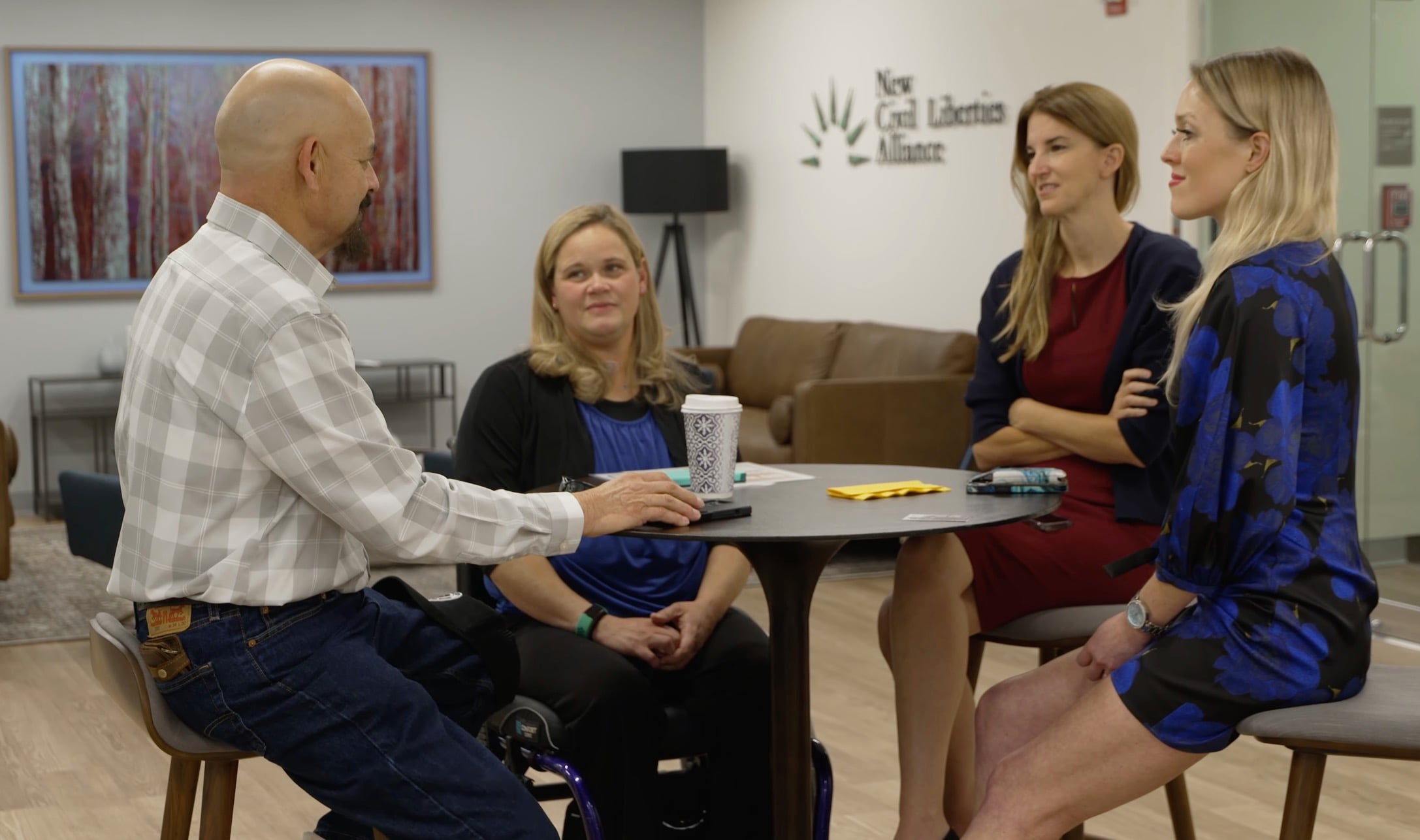
The New Civil Liberties Alliance filed its opening brief on July 7, asking the US Court of Appeals for the Fifth Circuit to revive Dressen v. Flaherty.
We obtained a copy of the brief for you here.
A federal judge in Texas had thrown the case out before a single document changed hands in discovery. The suit accuses the Biden administration of running a joint government and private censorship operation against people who went online to talk about vaccine injuries.
Brianne Dressen alleges she was injured after she volunteered for an AstraZeneca vaccine trial. Shaun Barcavage, Kristi Dobbs, Nikki Holland, and Suzanna Newell each reportedly suffered serious, debilitating injuries after Covid vaccination. Ernest Ramirez was vaccinated without incident and then lost his healthy 16-year-old son five days after the boy received his first Pfizer dose. The autopsy pointed to an enlarged heart and myocarditis.
They did what people in pain tend to do. They went to social media to trade medical research, look for treatments, share hopeful stories, and find others who understood. For many of them, closed online support groups became a lifeline.
The government treated that lifeline as a threat. The Surgeon General’s Office, the CDC, HHS, DHS, CISA, and the White House leaned on social media companies to flag this speech as “misinformation,” shadow-ban it, or delete it outright.
The operation reached across agencies and into the platforms themselves, coercing and colluding with the companies that decide who gets to be heard.
Stanford supplied the machinery. The now-defunct Stanford Internet Observatory and its “Virality Project” tracked posts and handed the platforms lists of speech to suppress.
The Virality Project targeted Covid-vaccine speech that broke from the administration’s preferred policies, whether or not that speech was accurate. Real accounts of real injuries got flagged because they were inconvenient, not because they were false.
The censors were specific about their targets. Their tracking called out Bri Dressen by name. A woman reportedly injured in a vaccine trial, describing what happened to her own body, became something a federal effort wanted the public not to see.
None of that was enough for the US District Court for the Southern District of Texas, which dismissed the case at the pleading stage. The plaintiffs had laid out a detailed factual account of a nationwide censorship conspiracy, and the court closed the door before discovery could begin.
NCLA’s brief says the district court got the law wrong in several ways. The judge set too narrow and exacting a bar on personal jurisdiction and used it to wave off the Stanford defendants and the individual government officials.
The court also misread the Supreme Court’s decision in Murthy v. Missouri, which weighed whether a different set of NCLA clients had shown enough to win a preliminary injunction. No injunction is being sought here, so that higher standard does not govern this case.
The brief argues, the court made a further error on the civil-rights conspiracy claim. It tossed the plaintiffs’ claim under 42 U.S. Code Section 1985(3) on the theory that they had not alleged racial discrimination. The statute never mentions race. It protects “any person or class of persons” stripped of their rights through an invidiously discriminatory conspiracy, and the Supreme Court has said the provision can reach non-racial classes.
“To call what happened to our clients ‘troubling’ is a massive understatement. After suffering devastating medical injuries following Covid vaccination, they turned to social media as a lifeline for support and connection with others who understood. Rather than compassion or aid, the Government responded with relentless censorship, maligning them as liars and conspiracy theorists and cutting off the lifelines that they depended on.
“Their only offense was that their lived experiences, pain, and even private conversations in online support groups contradicted the Administration’s preferred Covid-vaccine narrative. The cruelty and injustice are difficult to overstate,” said Casey Norman, Litigation Counsel at NCLA.
The appeal also presses a point the district court skipped over. Censorship harms more than the person silenced.
“We are confident the Fifth Circuit will correct the District Court’s numerous errors in dismissing the complaint, which included taking an inappropriately narrow view of personal jurisdiction and ignoring that not just speakers, but also potential listeners, suffer harm resulting from unlawful government censorship,” said Caitlin Moyna, Senior Litigation Counsel at NCLA.
The stakes reach past these six plaintiffs. If courts keep reading Murthy as a wall against every censorship suit, the government gains a template for silencing people with almost no risk of accountability.
“Lower courts are misapplying the Supreme Court’s Murthy v. Missouri decision, and the ruling below here is a prime example. The Murthy decision set a high bar for standing in the context of a preliminary injunction to stop future censorship. But no PI was sought here, so the Murthy standard is not applicable. If Bri Dressen cannot satisfy standing—when the defendants called her out by name in their censorship tracking—then no one will,” said Mark Chenoweth, President and Chief Legal Officer of NCLA.
According to NCLA, the campaign still burdens its clients’ ability to speak, to associate privately, and to exchange information with others in closed support groups.
The question in front of the Fifth Circuit is whether Americans silenced by their own government can even make their case to a jury, or whether the courthouse door stays shut before anyone looks at the evidence.