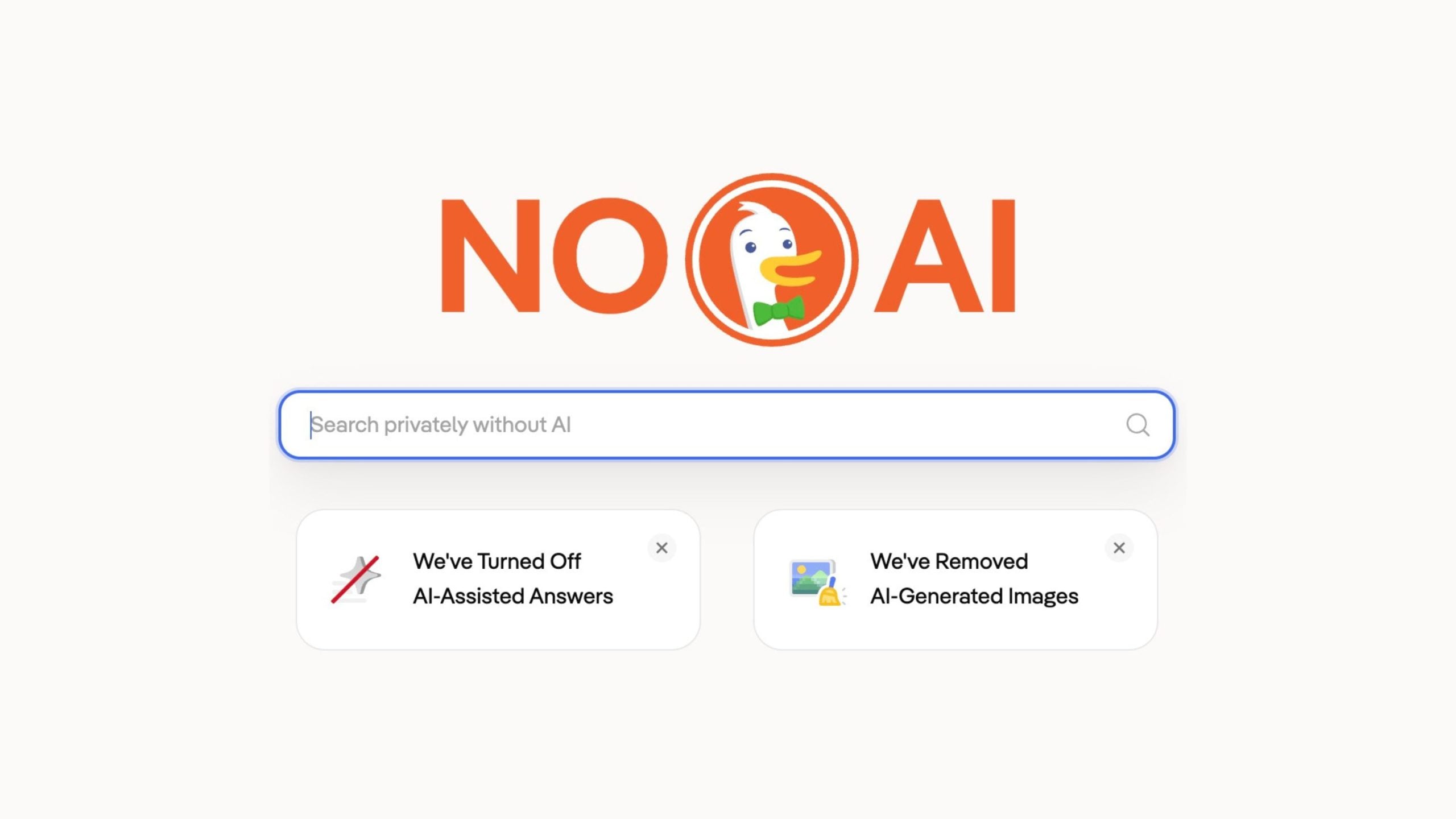
DuckDuckGo’s US app installs peaked at 30.5% week-over-week growth on May 25, six days into a sustained surge that the company says followed Google’s announcement at I/O 2026 that it would replace traditional search results with an AI agent. The agent answers queries, runs tasks, and monitors things in the background, all without asking whether users wanted any of it.
Between May 20 and May 25, DuckDuckGo’s US app installs climbed an average of 18.1% week over week, compared to the prior period of May 13 to May 18. On iPhone, growth averaged 33% and peaked at 69.9%. Traffic to noai.duckduckgo.com, a version of DuckDuckGo that disables every AI feature by default, grew 22.7% on average and hit 27.7% on May 24. DuckDuckGo even gained users over Memorial Day weekend, a period when the company says it normally sees traffic drop.
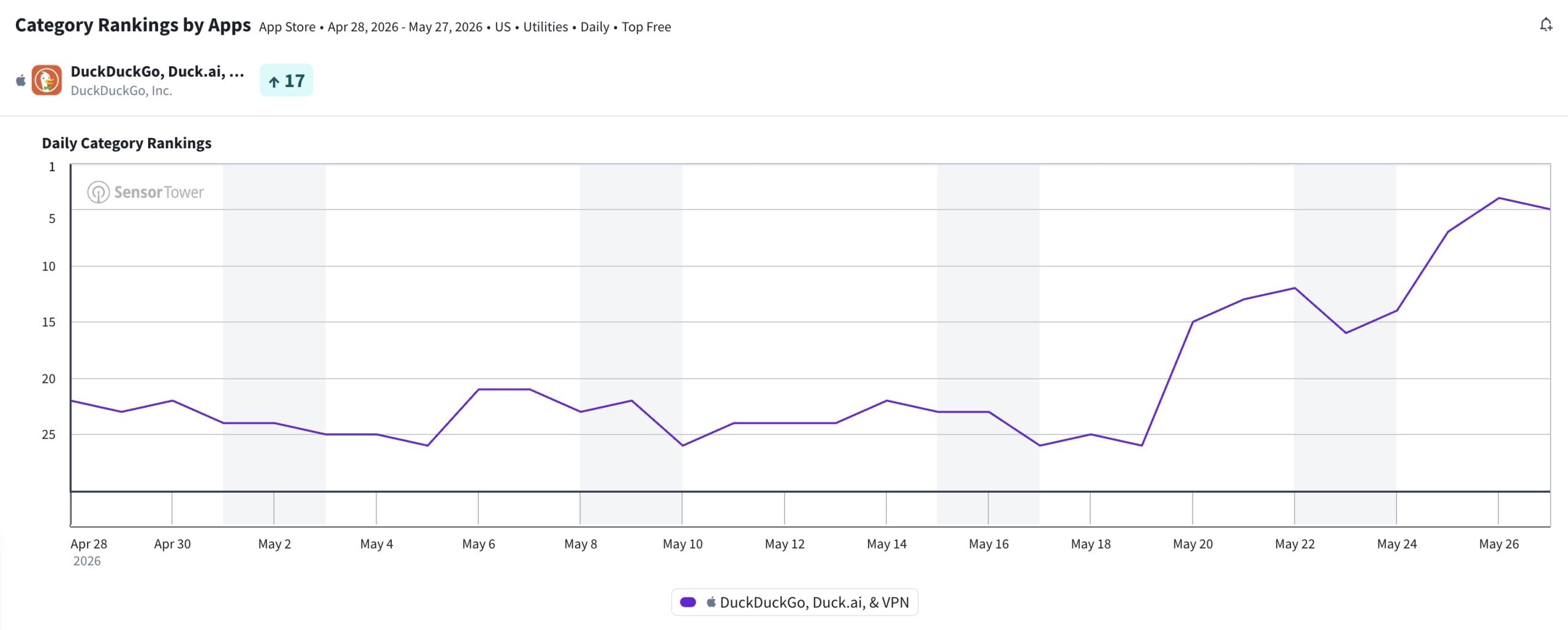
Sensor Tower data backs this up. DuckDuckGo’s iOS app climbed to number 4 in the free Utilities category on the US App Store, from a low of 26th earlier in May. Its Android app hit number 9 in the free Productivity category on Google Play, up from 20th.
These are small numbers relative to Google’s dominance. DuckDuckGo holds roughly 2% of US search. Google VP of Search Elizabeth Reid recently said AI Mode had passed one billion monthly users, with queries doubling every quarter since launch. But the direction of movement does say something. People are not passively accepting Google’s decision to put an AI layer between them and the web.
DuckDuckGo CEO Gabriel Weinberg said: “Google is force-feeding AI with no way to opt out,” he said in a statement. “As a result, their results are getting worse, not better. We want to be the place that puts users in charge and allows them to decide how much or how little AI they want.”
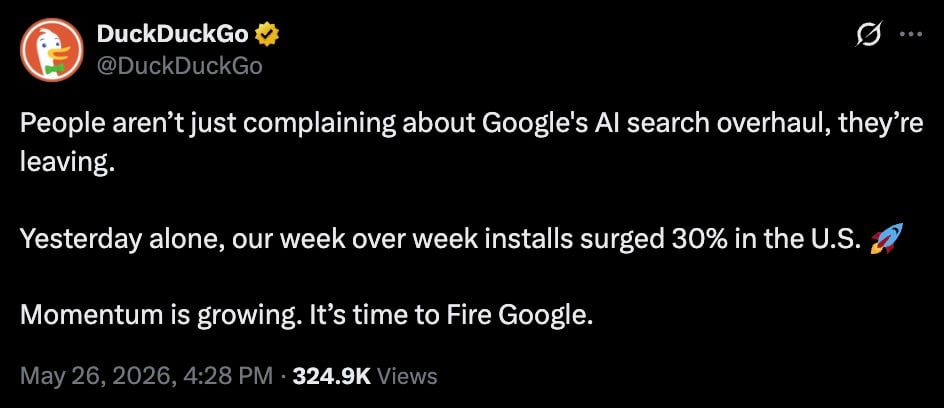
On X, DuckDuckGo posted: “People aren’t just complaining about Google’s AI search overhaul, they’re leaving,” the company posted on May 26. “Yesterday alone, our week over week installs surged 30% in the U.S. Momentum is growing. It’s time to Fire Google.”
The context here goes back years. Google has spent billions locking itself in as the default search engine on virtually every phone and browser that most people use.
At the 2023 antitrust trial, Weinberg testified that Google’s exclusive contracts made it nearly impossible for DuckDuckGo to compete for default placement. “We hit an obstacle with Google’s contracts,” he told the court. Changing your default search engine across all your devices required, he said, as many as 30 to 50 steps. Google argued users could switch “with a couple of clicks.” That friction is the gap between a theoretical freedom and a real one.
Now Google has used that captive position to push something its own users didn’t ask for. The company has replaced the familiar list of blue links with AI-generated summaries, conversational results, and what it calls “information agents.”
And here is the part that should concern anyone who cares about how information moves on the open web. Zero-click searches, where Google answers the question itself and the user never visits a source website, now account for roughly 60% of all queries. For searches that trigger AI Overviews, that figure climbs to 83%.
Google is more than ever deciding what users see, how they see it, and whether the original source of that information gets any traffic at all. Publishers, journalists, and independent creators are watching their referral traffic collapse as Google’s AI absorbs their work and presents it as its own.
The user revolt is real, if still small. DuckDuckGo ran a poll earlier this year asking its own visitors whether they wanted AI integrated into search. More than 175,000 people responded, and over 90% voted no. That’s a self-selected audience, sure. But when Google’s own changes start driving people toward the exits, it stops being just a niche preference.