
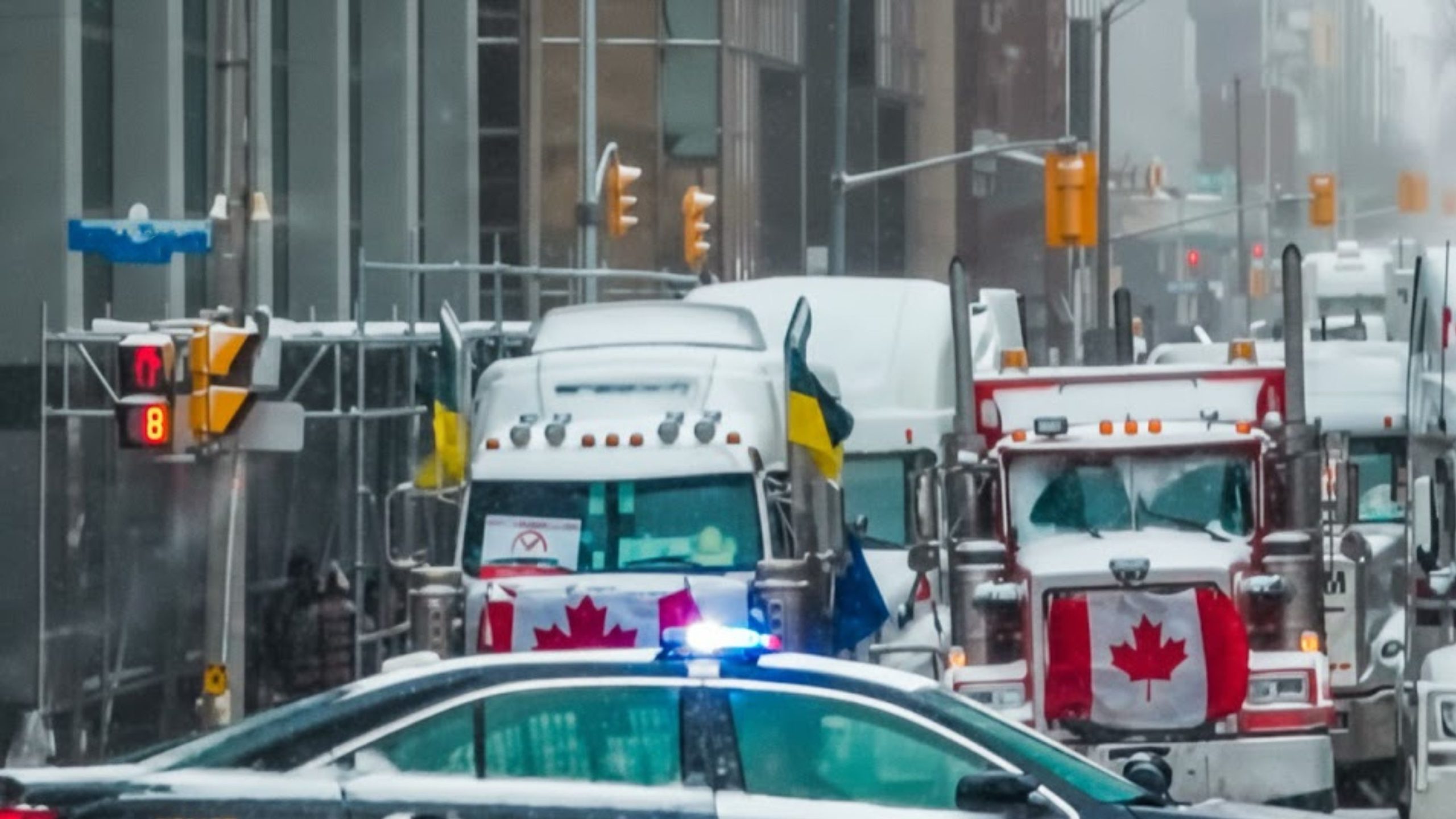
The Trudeau government has been handed a bruising from the Canadian Federal Court of Appeal, which ruled that the 2022 declaration of a national emergency to dismantle the trucker convoy was unlawful and unjustified.
After two years of official spin about “protecting Canadians,” the court has said what critics knew from the start: the Emergencies Act was never meant for angry truckers and honking horns protesting against the erosion of civil liberties.
The judges were blunt. Ottawa, they said, never had “the factual or legal foundation required” to declare a national emergency. “As disturbing and disruptive as the blockades and the convoy protests in Ottawa could be, they fell well short of a threat to national security.”
In other words, the convoy may have jammed traffic, but it didn’t topple the country.
The convoy started as opposition to vaccine and vaccine passport mandates, and became a rolling protest against government control. Trucks filled Ottawa’s downtown, and coffee shops ran out of patience. But none of that, the court said, amounted to a national crisis.
The court agreed with Justice Richard Mosley’s earlier conclusion that the government’s use of the Emergencies Act lacked “justification, transparency, and intelligibility.”
Mosley had already found that the cabinet violated Charter rights by freezing the bank accounts of people who weren’t breaking the law.
The appeal judges noted there was “no evidence that the lives, health or safety of the people living in Ottawa were endangered,” calling out the “lack of rigor” in how banks decided which accounts to freeze.
In some cases, financial institutions relied on media reports and social posts to decide who lost access to their money. The image of bureaucrats scrolling Facebook to decide who gets financially exiled says plenty about the chaos behind the scenes.
Howard Sapers of the Canadian Civil Liberties Association called the decision “a massive and historic victory for the rule of law and the rights and freedoms of all Canadians.”
He reminded the public that emergency powers are supposed to be a last resort, not a shortcut for bad policing. “While the extraordinary powers granted to the federal government through the Emergencies Act may be necessary in some extreme circumstances, they also can threaten the rule of law and our democracy,” he said.
The government, predictably, is now reviewing the ruling and weighing an appeal. Public Safety spokesperson Simon Lafortune said Ottawa “remains steadfast in its commitment to ensuring the safety and security of Canadians.” This is the same bureaucratic language that got them in trouble in the first place.
The Emergencies Act allows a declaration only when no other law can handle the situation and when there are threats “so severe” they amount to a national crisis.
David Vigneault, who led Canada’s spy agency at the time, testified that while he personally supported invoking the Act, he didn’t believe the protests met the legal definition of a security threat.
That didn’t stop the government from trying to stretch the definition to fit its needs.
The appeal judges warned that such a loose interpretation “could stifle all kinds of protests and demonstrations that blockade pipelines, nuclear plants, railway lines, and other kinds of infrastructure to advance a cause.” The subtext was clear: if Ottawa could call this an emergency, anything could qualify.
The ruling directly contradicts the 2023 Public Order Emergency Commission led by Paul Rouleau, who found that the government had met the “very high” threshold to invoke the Act.
Rouleau’s report said “lawful protest descended into lawlessness,” though he admitted his conclusion came “with some reluctance.” The appeal court showed less reluctance and more spine.
The judgment is a warning shot about the creeping use of executive power to crush dissent and financially deplatform critics. The Emergencies Act was written to restrain panic, not endorse it. By treating a political nuisance as a national threat, the government set a precedent that could have turned protest into a regulated privilege.
The court’s decision restores the idea that inconvenience isn’t the same thing as insurrection. For those who still believe in the right to dissent, this ruling isn’t just about truckers or vaccines. It’s about whether the government can decide, on its own terms, when democracy gets to take a time-out.