
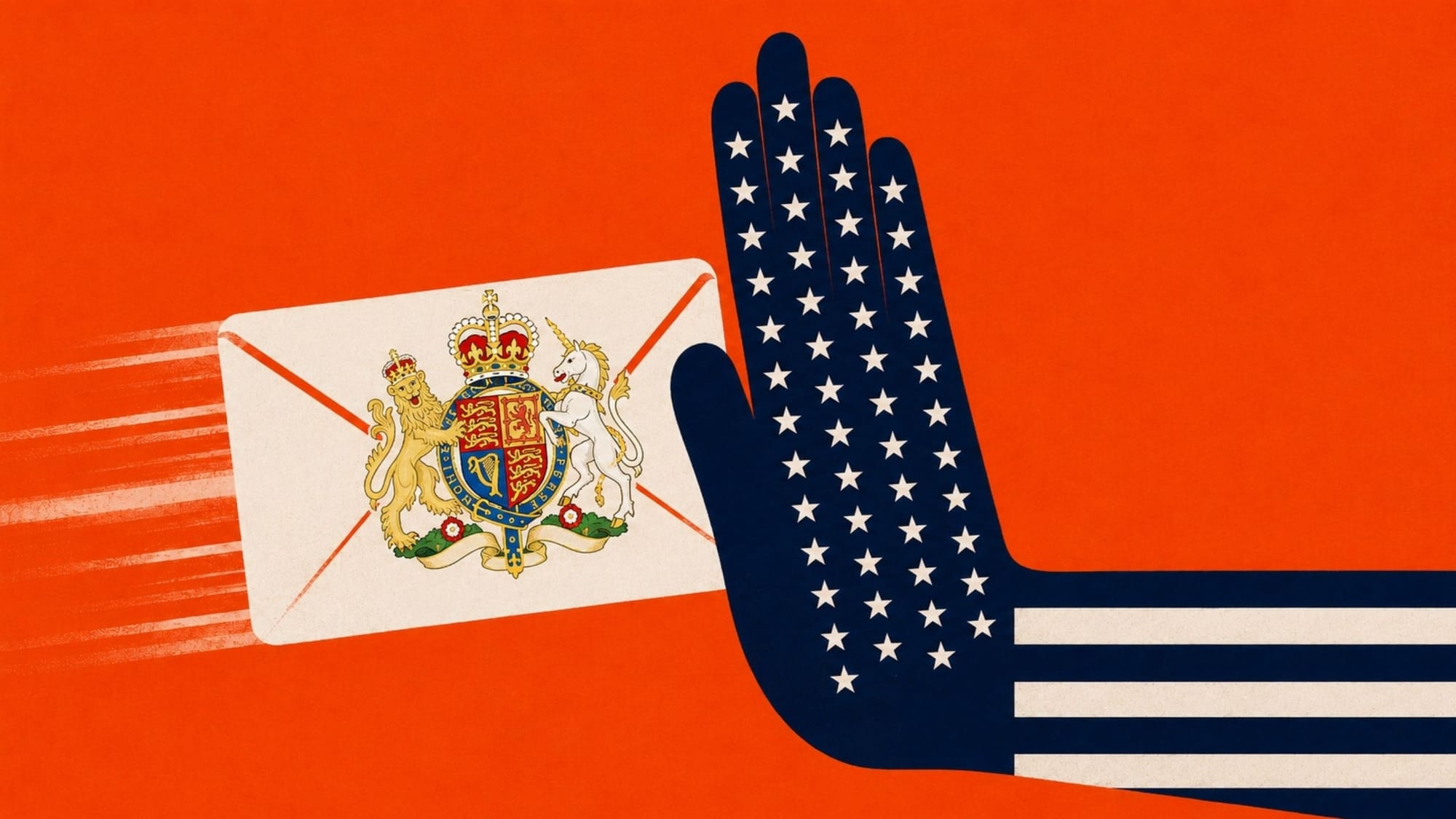
It’s not every day that the US Congress is moved to act by the UK’s speech regulators – but there’s a first time for everything, and that time is now. And that regulator is Ofcom.
But Ofcom – or rather, its overreach – has managed to bring about the introduction of a new bill, the first of its kind at the federal level, even if not the first attempt to produce legislation that would deal with this problem.
The bill is called GRANITE, and the full name is even more interesting: Guaranteeing Rights Against Novel International Tyranny and Extortion Act. The man behind it is Republican Rep. Michael Rulli of Ohio, who introduced it on August 27, 2026, as H.R. 10174.
We obtained a copy of the bill for you here.
Rulli explained the effort as a way to stop “foreign bureaucrats” from deciding what Americans can and can’t say. “My bill makes clear that if a foreign government tries to punish an American for speech protected by the First Amendment, that judgment is dead on arrival in our courts,” Rulli is quoted as saying.
“The constitution protects our right to speak freely. It does not bend to Brussels or London,” he added. Rulli has the support of senior White House figures.
The background to all this is the UK’s Online Safety Act, and Ofcom’s attempts to use it to go after American online services. Ofcom, for some reason, believes its censorship powers extend to the US.
Preston Byrne, who represents 4chan and helped draft the GRANITE proposals, and supports Rulli’s bill, says that between February 2025 and April 2026, Ofcom sent at least 197 notices to US companies – and only four were publicly refused, all by his clients.
4chan sued Ofcom in a federal court in Washington, invoking the First, Fourth and Fifth Amendments – and Ofcom tried to get the case dismissed, citing the Foreign Sovereign Immunities Act.
But in doing that, Ofcom also invoked British law as applicable on US soil, while at the same time claiming immunity from the US lawsuit because it is a foreign state. And Ofcom’s demands arrived in emails marked CONFIDENTIAL and threatened fines and prison.
In the best of worlds, that would be that. But there’s a good chance the foreign order will be obeyed anyway, because big platforms and internet services are generally risk-averse and may not want to pick a fight with a foreign government. That’s where the law comes in.
First, the shield: Proposed section 4106(a) says: “Notwithstanding any other provision of Federal or State law, a domestic court shall not recognize or enforce a foreign judgment, or a fine, order, or demand issued by a foreign court or a foreign state, enforcing a foreign censorship law.” The shield reaches judgments, fines, orders and demands, not merely court judgments; that matters because regulators often act administratively without judicial supervision.
Now, the sword: Proposed section 4106(b) lets a United States person served or purportedly served with a covered measure seek declaratory relief in federal district court that it is unenforceable: “A United States person against whom a foreign judgment described in subsection (a) is entered, or upon whom a judgment, fine, order, or demand described in subsection (a) is served or purportedly served, may bring an action in an appropriate district court of the United States seeking declaratory relief that such judgment, fine, order, or demand is unenforceable under subsection (a).”
The remedy is declaratory only: the federal proposal does not award damages or authorize seizure of foreign assets.
Finally, the Foreign Sovereign Immunities Act amendment adds an exception for cases “under section 4106;” those are the entire three words of the new paragraph. This is intended to prevent a foreign regulator from ending the suit at the outset by claiming sovereign immunity.
Byrne, Wyoming Deputy Secretary of State Colin Crossman and Wyoming Rep. Daniel Singh developed Wyoming HB 70, introduced in early 2026. The bill passed the state House 46-12 on February 23 but stalled in the Senate during the short budget session; it did not become law.
Wyoming’s proposal combined a shield with a private right of action and proposed statutory damages equal to at least $1 million or the maximum threatened fine. It also proposed blocking state enforcement and cooperation, including assistance with investigations, extradition requests and data demands tied to First Amendment-protected speech.
West Virginia introduced a sword-and-shield version in its short 2026 session, but it did not advance. On July 24, 2026, ALEC adopted shield provisions as national model policy, and a New Hampshire proposal following that model is expected for the 2027 session. Byrne says that by August 28, at least five public versions of the GRANITE blueprint existed.
Rulli’s federal bill is narrower than Wyoming HB 70 because it offers declaratory relief but no damages; on the other hand, its federal authority lets it directly amend sovereign-immunity law.
But even without the proposed bill, the First Amendment already gives strong grounds against enforcement of a foreign censorship order, Preston Byrne writes. The rules, however, are “judge-made” – and a first-instance court could misapply them.
Congress enacted the SPEECH Act in 2010 to block enforcement of foreign defamation judgments that are inconsistent with American free speech standards. The proposed GRANITE language would sit beside it in chapter 181 of title 28.
But the threat works even before enforcement. A service can comply, restrict content globally, add age assurance and data collection, leave a market, or fund a fight. A large platform with staff, assets or infrastructure abroad still faces action there even if an American court refuses to help.
Byrne estimates that Ofcom spent about 2,800 staff-hours on the 4chan matter, and obtained zero compliance, one federal lawsuit, and four emails featuring hamsters from 4chan’s counsel.
“An e-mailed demand costs a foreign regulator nothing to send today and is frequently cloaked in secrecy,” he wrote. The bill would make a covered demand capable of triggering public, expensive litigation in America. It has only been introduced.
And so the email sent by a regulator abroad that was once essentially free to send, and was ignored, or replied to with pictures of hamsters – might in the future return to them in the form of a US court date.