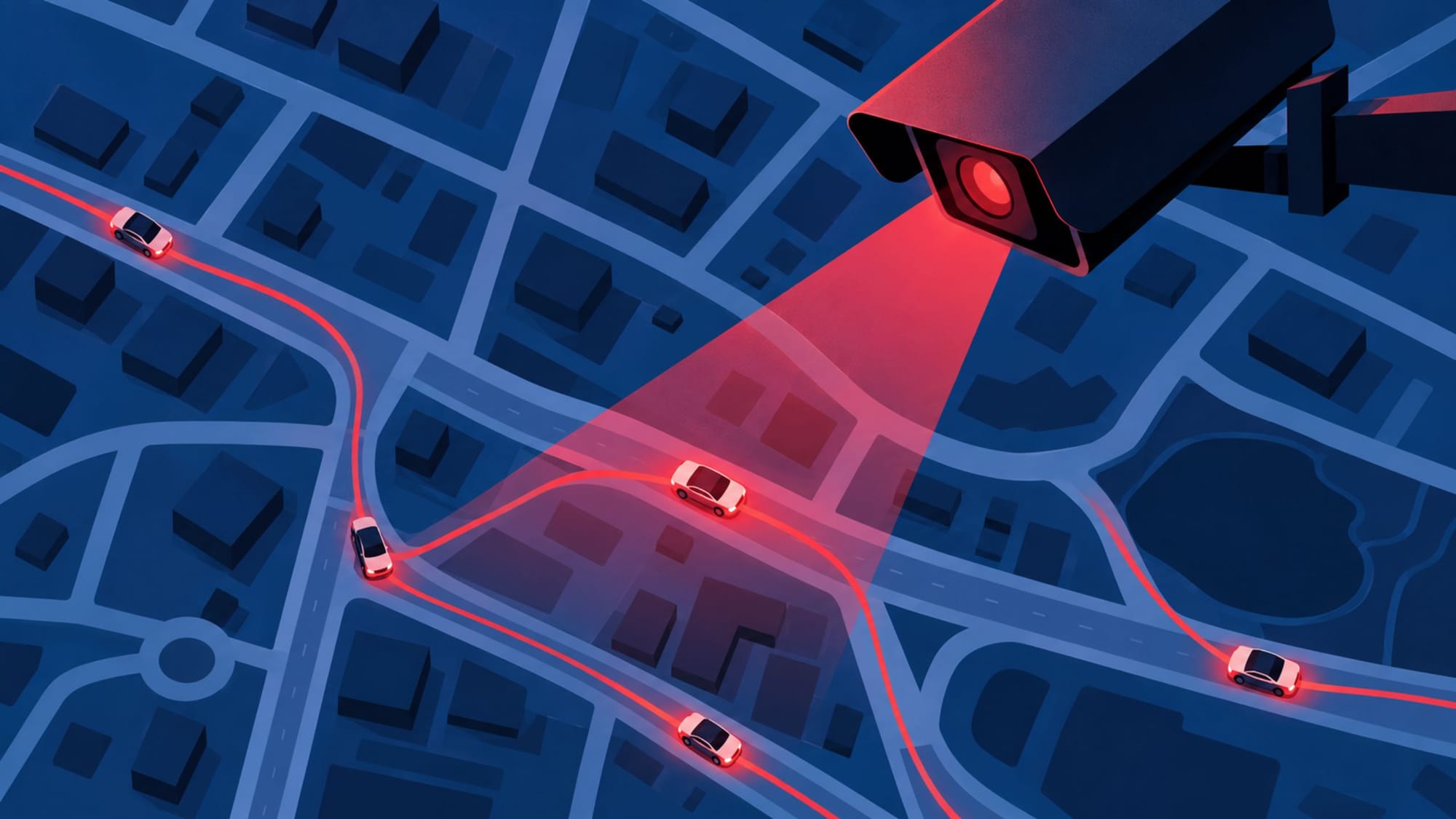
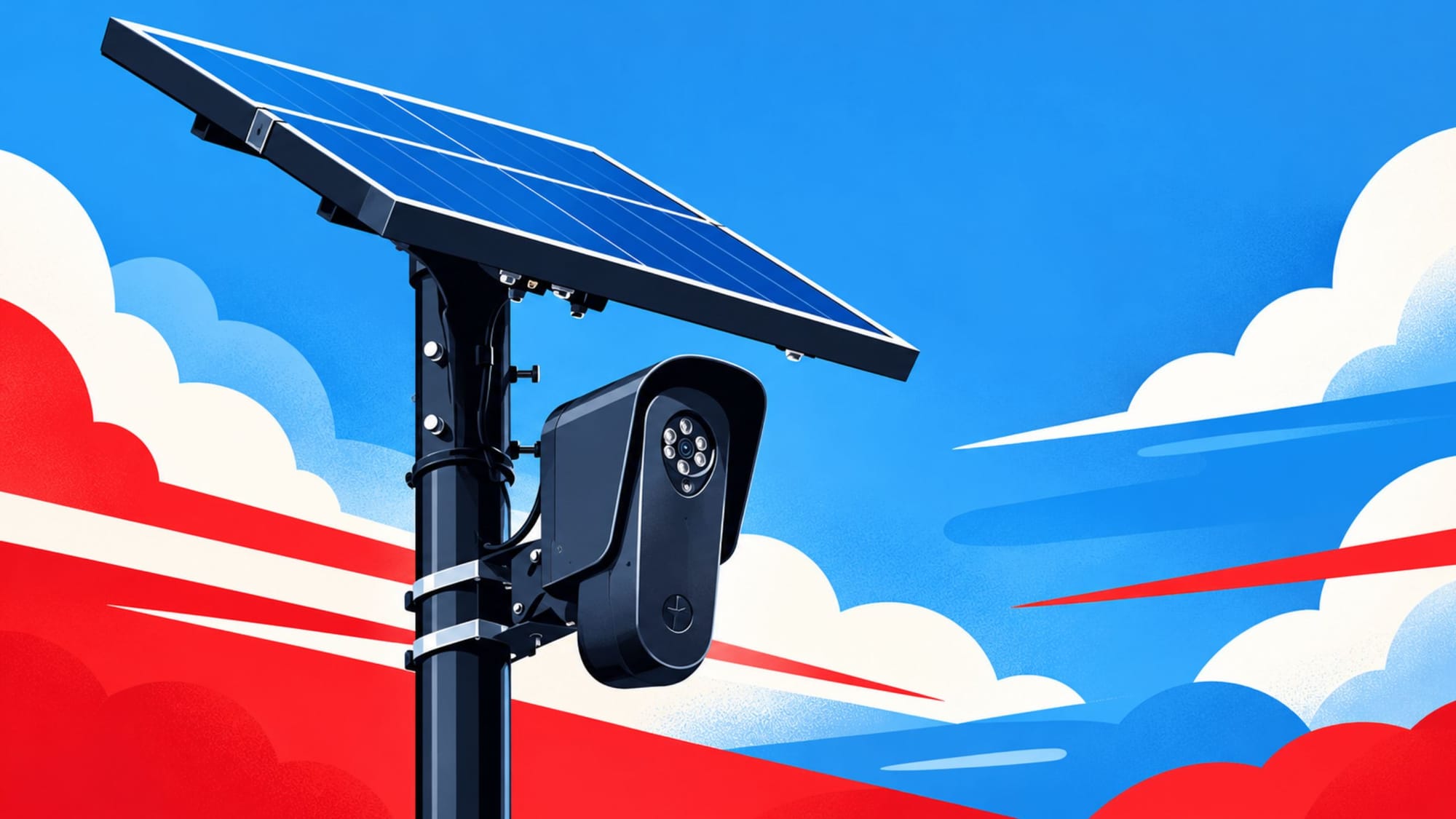
The US government has told a federal appeals court that data collected by Flock Safety cameras is not protected by the Fourth Amendment, because being watched on the road is "a reality of modern life" - and therefore, nobody can expect privacy there.
The argument was made by Justice Department attorney Michael Weisbuch during oral argument in the Fifth Circuit in the case US v. Brownlee. The panel of judges - Chief Judge Jennifer Walker Elrod, Judge Irma Carrillo Ramirez, and Judge Priscilla Richman - heard the case on October 5.
Weisbuch said there is a "general rule that publicly observable movements are not protected" - and that Flock cameras only enable "episodic" monitoring of cars as they pass by, as opposed to tracking them continuously.
Chief Judge Elrod asked if that rule still makes sense today, when there are cameras everywhere, and the data they collect can be easily analyzed. "Is that really the right rule in this day and age where everything is observed and it all can be analyzed instantaneously?" she asked.
Weisbuch maintained that "it's the pervasive regulation of cars when they're in plain view on public thoroughfares that diminishes any expectation of privacy."
He sought to differentiate between that and tracking people's phones, saying, "We all expect to be subject to intermittent surveillance when we're driving around. It's a reality of modern life. We don't necessarily expect our phone, which is essentially part of our body, to be tracked as we move in both public and private places."
Elrod kept asking if the rule that allows this type of surveillance is still valid when it becomes so pervasive. "What if it becomes not spread out and it's on every corner, which it's soon to be?" she asked. "Is it really episodic when it so permeates everything?" she also asked, and noted that finding in the defendant's favor would be "a big ask."
The defendant, Charles Brownlee, was convicted of a series of armed robberies of cash stores in the Dallas-Fort Worth area, and his lawyers are now trying to get his conviction overturned, arguing that police used Flock and another company, Vigilant Solutions, to track him down without a warrant.
Brownlee's lawyers argue that this is unconstitutional, while Weisbuch said that the technology is not "capable of following people into constitutionally protected areas" and that is why it is different from phones, which are tracked as people move "in both public and private places."
Weisbuch also dismissed the idea that the government could use the data collected by Flock and other companies to track people all the time, saying, "The political process is a serious check on that [hypothetical] ever coming to fruition, and I think a better check than an erroneous extension of Fourth Amendment."
Assistant Federal Public Defender Matthew Wright, who represents Brownlee, argued that the way the police used the databases in this case constitutes a search and that the data collected by Flock and Vigilant is "stunningly comprehensive."
He said that the initial collection of data is indiscriminate, and that it is collected from everybody, and that it can be used to "reconstruct your pattern of life."
Wright said the police can learn "when you go to work," "when you're out late at night stepping out on your partner, when you're going to church on Sunday. That's a search."
He noted that the police were able to use the data to find Brownlee's car in two and a half hours, "literally a needle in a haystack, but they didn't even know the needle they were looking for when they started."
The court has not yet ruled in the case.
The argument comes as there is a flurry of activity around the use of license plate readers and their data in the US. A federal judge in Oklahoma ruled that using this technology to track a woman's car without a warrant was unconstitutional, while in Texas, at least $30 million has been spent on Flock cameras alone, with the state's governor in August pausing funding of the purchase of these devices by state agencies.
Meanwhile, a bill has been proposed in the US Congress that would ban federal agencies from using license plate readers or their data.
The argument that this is not a violation of the Fourth Amendment because it’s “a reality” rings hollow, because it’s the government that has made it so.
Meanwhile, the rule that is supposed to protect citizens from this type of mass surveillance keeps shrinking every time another camera is installed, effectively protecting less and less.