A US Senate bill that critics say would censor constitutionally protected speech, including satire and parody, by allowing for the takedown of AI-generated content depicting people without their consent, has hit another roadblock.
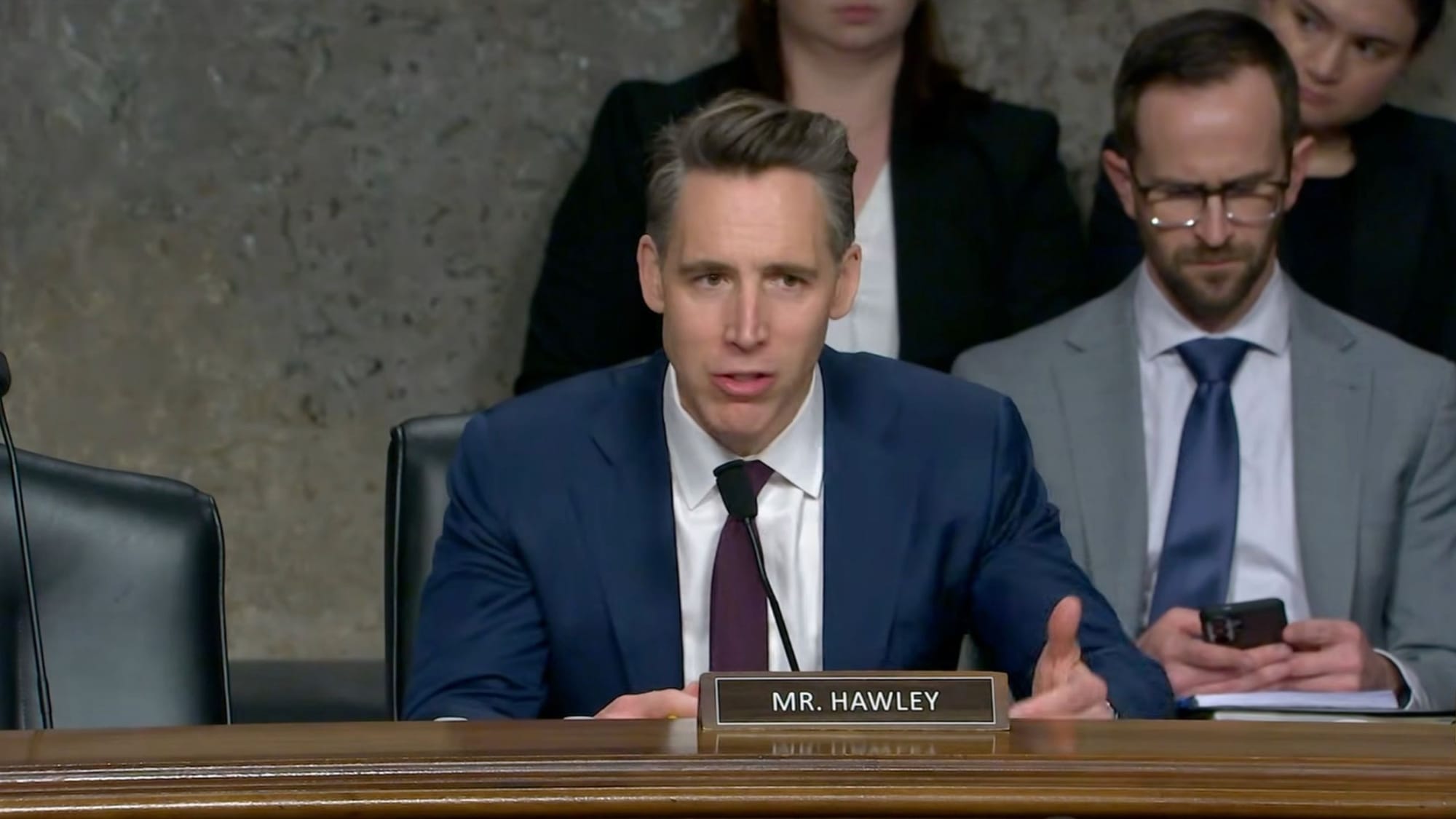
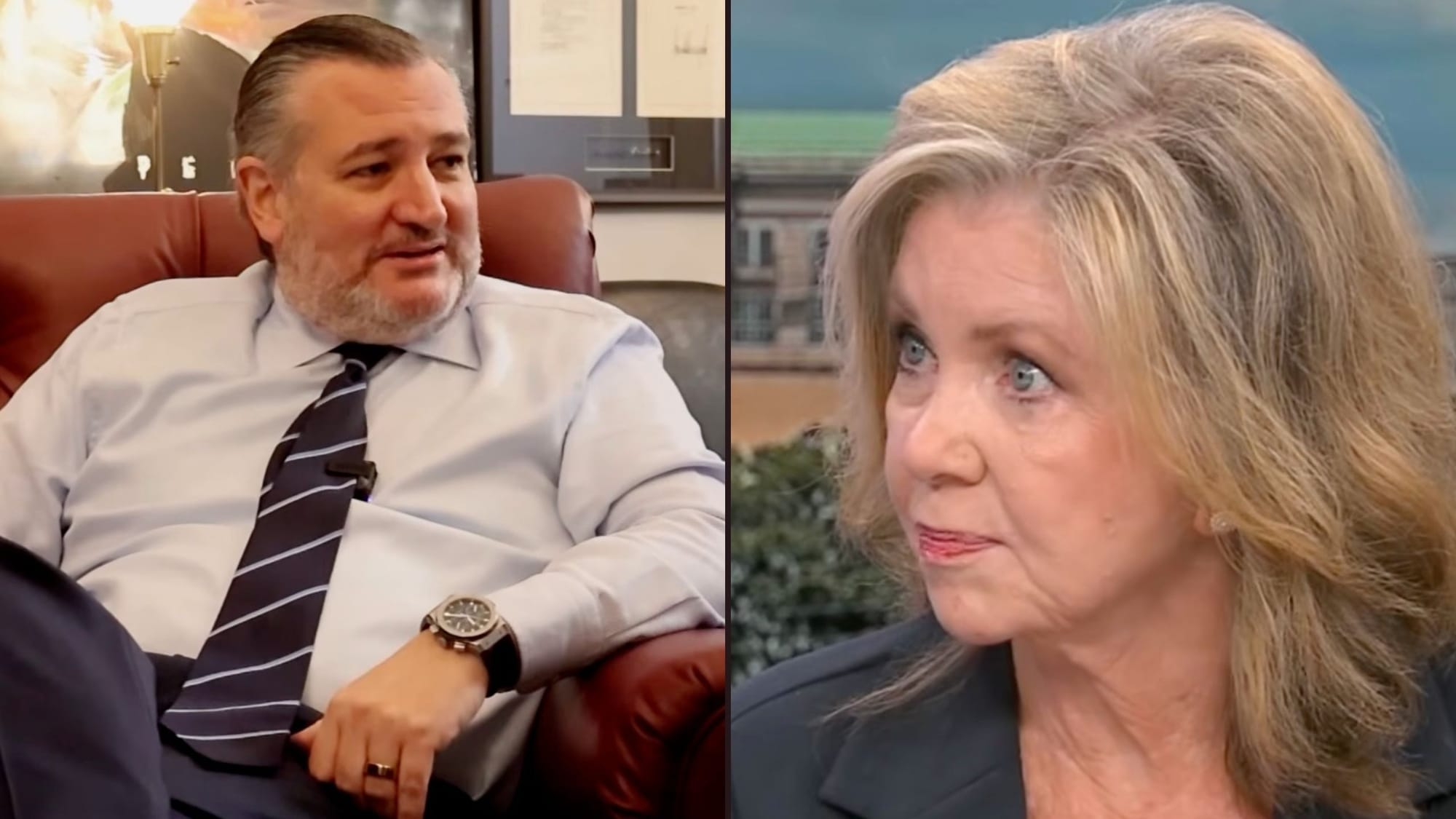
On Tuesday, November 17, Ted Cruz (R-TX) objected to Marsha Blackburn’s (R-TN) unanimous consent request, and since this Senate shortcut to passing legislation with no recorded vote or long debate requires the consent of all senators, the bill – for now – stays put.
Cruz said the bill “raises serious First Amendment concerns” and “has the potential of creating liability for legitimate satire and legitimate political speech.”
The Texas senator previously blocked the same bill on September 30.
Blackburn was not ready to give up, and on Tuesday she went to the Senate floor to try to get the bill through, and to respond to some of the criticism of it.
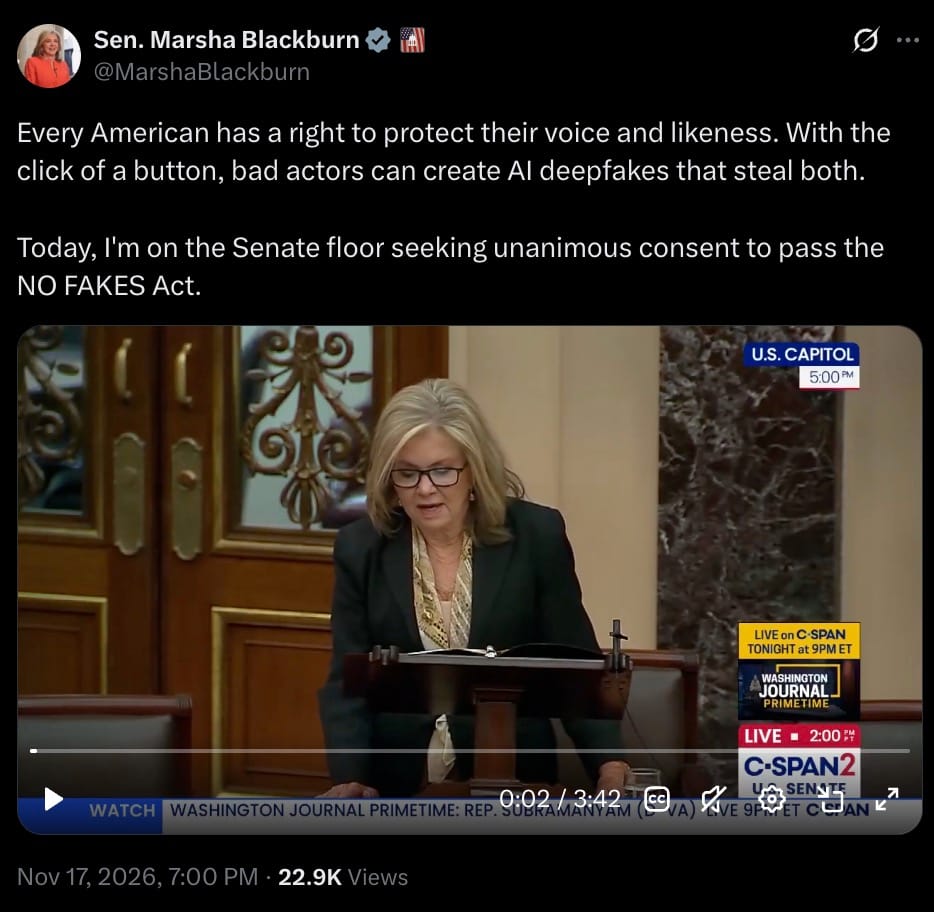
The NO FAKES Act (Nurture Originals, Foster Art, and Keep Entertainment Safe Act), S. 4591, would create a federal property right in an individual’s voice and visual likeness.
This would allow a person to sue if their digital replica was used in a deepfake without their consent. The bill also contains a notice-and-takedown system, where platforms would have to act fast to remove content that was flagged in this way, or lose safe harbor protections.
Blackburn explained that “when a platform receives proper notice of a deepfake, that platform must promptly remove or disable access to that harmful content. If they promptly remove the content, they won’t face liability under the bill.”
However, the bill also provides for fines to be imposed per each work – $5,000 for an individual, $25,000 for a platform that makes a good-faith effort to comply, and $5,000 for every copy, display, or transmission of a work for those who don’t, with a cap at $750,000 per work.
Another requirement for safe harbor is for a platform to have a policy of banning users who repeatedly violate the rules.
The order of events is important here: the removal of content happens first, and the question of whether it was a legitimate case of satire comes later, or not at all.
Cruz, while agreeing with Blackburn and co-sponsor Chris Coons that the problem of AI misuse is real, again expressed his fear that this bill is not the way to do it.
He used the example of the Los Angeles mayor’s race and a series of videos made by Spencer Pratt, which he said were “clearly protected First Amendment speech” but which California Democrats, he said, argued should be blocked under a law similar to this one.
“I doubt anybody watching those videos believed that Los Angeles mayor Karen Bass was actually the Joker from ‘Batman’,” Cruz said.
The senator is willing to work with the sponsors of the bill to improve its free speech protections, but said that at this point, “This bill does not currently do so, and so I object.”
Blackburn, on the other hand, insists that “We have included explicit First Amendment protections in the bill.”
After the objection, she said, “The NO FAKES Act does not chill free speech. It does not chill the First Amendment.”
According to Blackburn, her staff received Cruz’s redlines “just as we came to the floor” – after, as she said, waiting for “over 6 weeks.”
Blackburn also said that the bill provides for an exception for satire, and that it is not up to platforms to decide what qualifies as such – “The platforms are not the arbiters for making First Amendment decisions. This is particularly helpful in preventing censorship of conservative speech online.”
She then explained the process of submitting a counter-notice, saying that a user “can submit a counternotice, triggering judicial review within 14 days if the victim wants the material to stay down. Otherwise, the content would go back up.”
The bill itself lists a number of exceptions, including news, public affairs, sports, documentary, biography, and – “consistent with the public interest in bona fide commentary, criticism, scholarship, satire, or parody.”
However, the exception for news, public affairs, and sports broadcasting is only in place if the replica is “the subject of, or is materially relevant to, the subject of that broadcast or account.”
The documentary exception is lost if the work “creates the false impression that the work is an authentic sound recording, image, transmission, or audiovisual work in which the individual participated.”
The bill also states that after a counter-notice is submitted, the service provider restores the content only if it “opts to replace” the removed material.
The counter-notice must include “a physical signature, witnessed or attested to in person by a licensed notary public” – and give an address, telephone number, and email address.
The bill states that labeling a deepfake as such “shall not be a defense” to liability.
The Foundation for Individual Rights and Expression (FIRE) reacted to the latest attempt to push the bill through by saying that it “could expose everyday Americans to costly lawsuits over protected AI-generated speech” and could put “documentaries, political jokes, and other creative works at risk of lawsuits while pushing platforms to take down lawful content rather than risk being sued.”
FIRE’s John Coleman wrote that the exceptions are “so narrowly drawn that they offer no real protection,” and that the takedown rules will result in platforms that “delete first and ask questions never.”
This is “a digital heckler’s veto whereby one complaint can erase lawful speech,” Coleman wrote.
In June, Reclaim The Net reported about the bill passing the Senate Judiciary Committee with a voice vote, with Cruz and two other Republicans, Mike Lee and Eric Schmitt, flagging its First Amendment problems, but voting for it anyway.
Cruz at the time mentioned Pratt’s videos, calling them “hysterical, and I think are a good example of what should be protected and not fall within a bill like this.”
In January, Hawaii’s “deepfake” law (Act 191) was struck down, as a result of a lawsuit by The Babylon Bee. In May, the state agreed to pay $118,237.47 in fees and costs.
In July, California Democrats Adam Schiff and Ro Khanna reintroduced the AI Ads Act, which, unlike the NO FAKES Act, does not have an exception for parody.
The bill has the support of the RIAA, Motion Picture Association, SAG-AFTRA, OpenAI, and YouTube, who in 2024, together with CAA, announced a tool to help talent flag AI likenesses for removal.
Cruz is right to keep objecting to this poorly written and dangerous bill until it is amended to actually protect legitimate speech before removal, not after. As it stands, the NO FAKES Act is a censorship law that will stifle jokes and satire first, and then, maybe, a court might rule that the joke was legitimate speech.