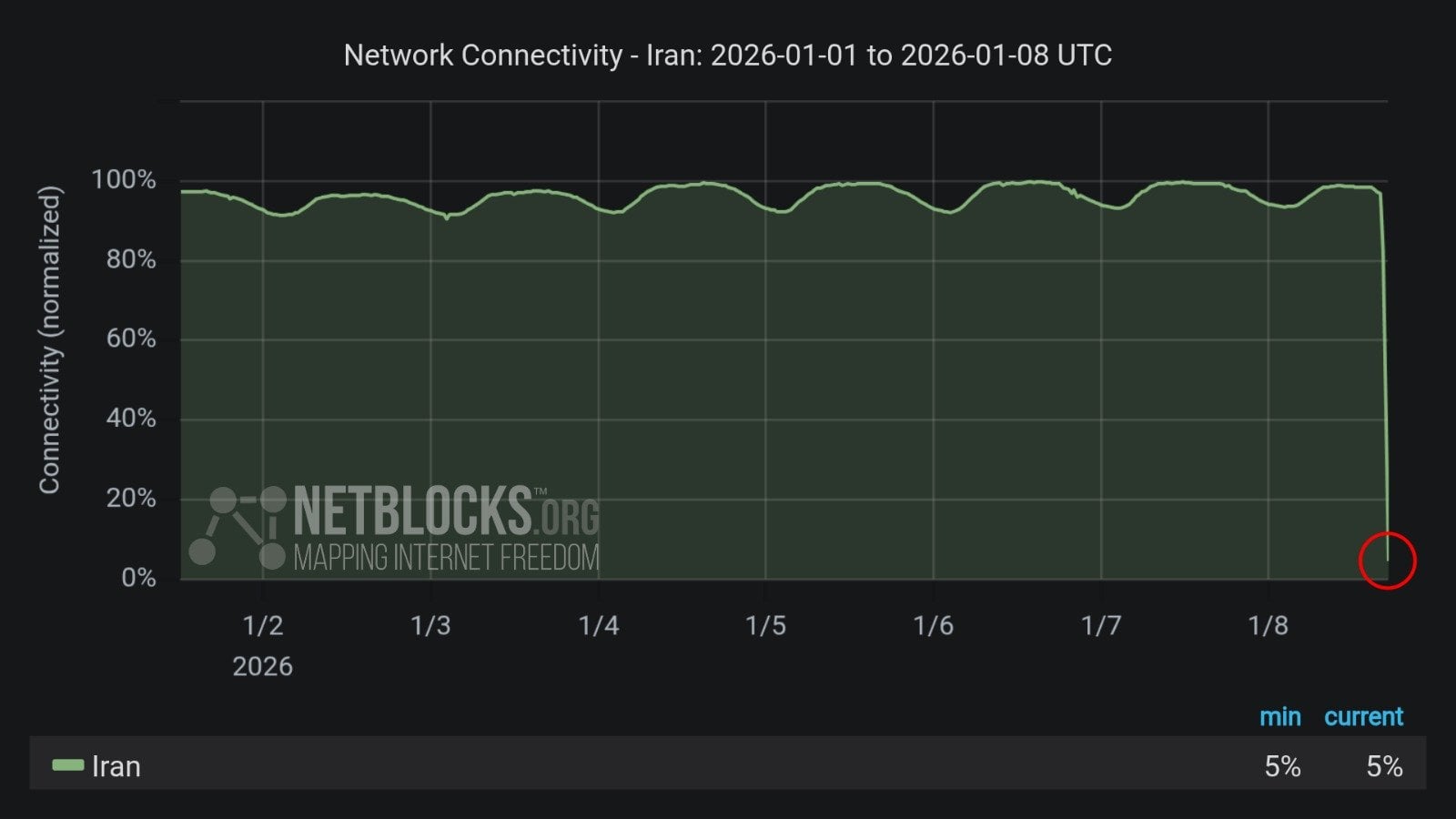
Iran’s connection to the global internet largely collapsed on Thursday as nationwide demonstrations intensified, according to several organizations that monitor online traffic.
Independent data showed that the country’s digital links to the outside world dropped almost to zero within minutes, leaving citizens unable to communicate or share updates as protests spread.
NetBlocks, Cloudflare, and Georgia Tech’s Internet Outage Detection and Analysis system all recorded the same sudden plunge in connectivity. “We continue to see a small amount of traffic, but the country is effectively completely offline,” said David Belson, Cloudflare’s head of data insight.
The mass outage follows renewed unrest triggered by a severe decline in the value of Iran’s currency, which has driven up prices and emptied store shelves.
By late December, strikes and protests had erupted in multiple cities, and many merchants in Tehran’s traditional bazaar kept their doors closed for over a week.
Iranian officials have a long record of turning off the internet during political flashpoints.
The current disruption appears to mirror tactics used in June during Iran’s brief conflict with Israel, when authorities blocked access nationwide, claiming it was necessary to prevent “Israeli infiltration.”
Street protests have expanded across major cities, including Tabriz, Mashhad, Isfahan, Kerman, and Tehran.
Security officials have promised severe punishment for anyone participating in the unrest.
Iran has restricted digital freedom since at least 2005, maintaining long-term bans on platforms such as Facebook and Instagram.
Millions of Iranians have relied on VPNs to bypass those restrictions, but a full nationwide blackout leaves those tools useless.
The latest disconnection not only prevents coordination among protesters but also blocks the flow of independent reporting. With state-controlled media offering little information, the blackout conceals both the scale of dissent and the government’s response.
The outage shows how censorship now operates as a technological weapon. When access to communication itself becomes conditional on political obedience, public truth and private liberty vanish together.