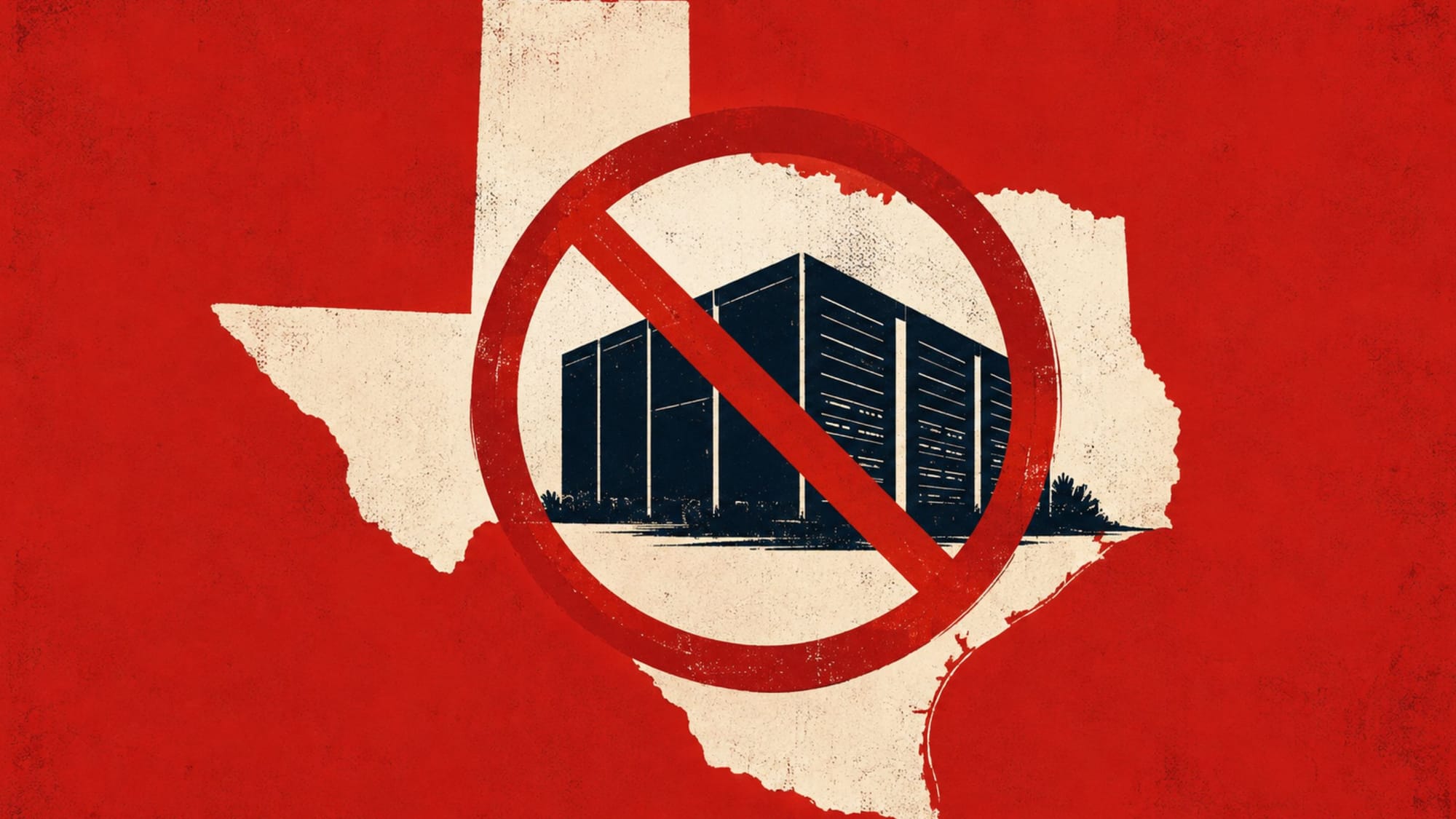
Texas Attorney General Ken Paxton, who is currently running for the US Senate, and pushing online digital ID age verification checks in the name of "online safety," has announced a data center plan that, among other things, vows to "protect children" by making data center companies criminally liable if the centers they operate "empower AI chatbots that undermine children's safety."
Paxton is effectively promising to author legislation that would introduce a novel form of liability, aimed at data centers – the physical and hardware part of the internet's infrastructure – for the content that is generated by software running on their servers.
This is a clear departure from the principle, enshrined in Section 230 of the Communications Decency Act (CDA), that internet infrastructure is not liable for third-party, user-generated content.
And, while Paxton's plan speaks of chatbots that "undermine children's safety" – a broad and vague term that can easily be abused to censor speech – the actual target could be any chatbot, and any speech.
And the liability would be criminal.
Paxton is quoted as saying in a post on X: "My Texas First Data Center Plan will protect our grid, our communities, and our children while ensuring America beats Communist China in the AI race," he wrote.
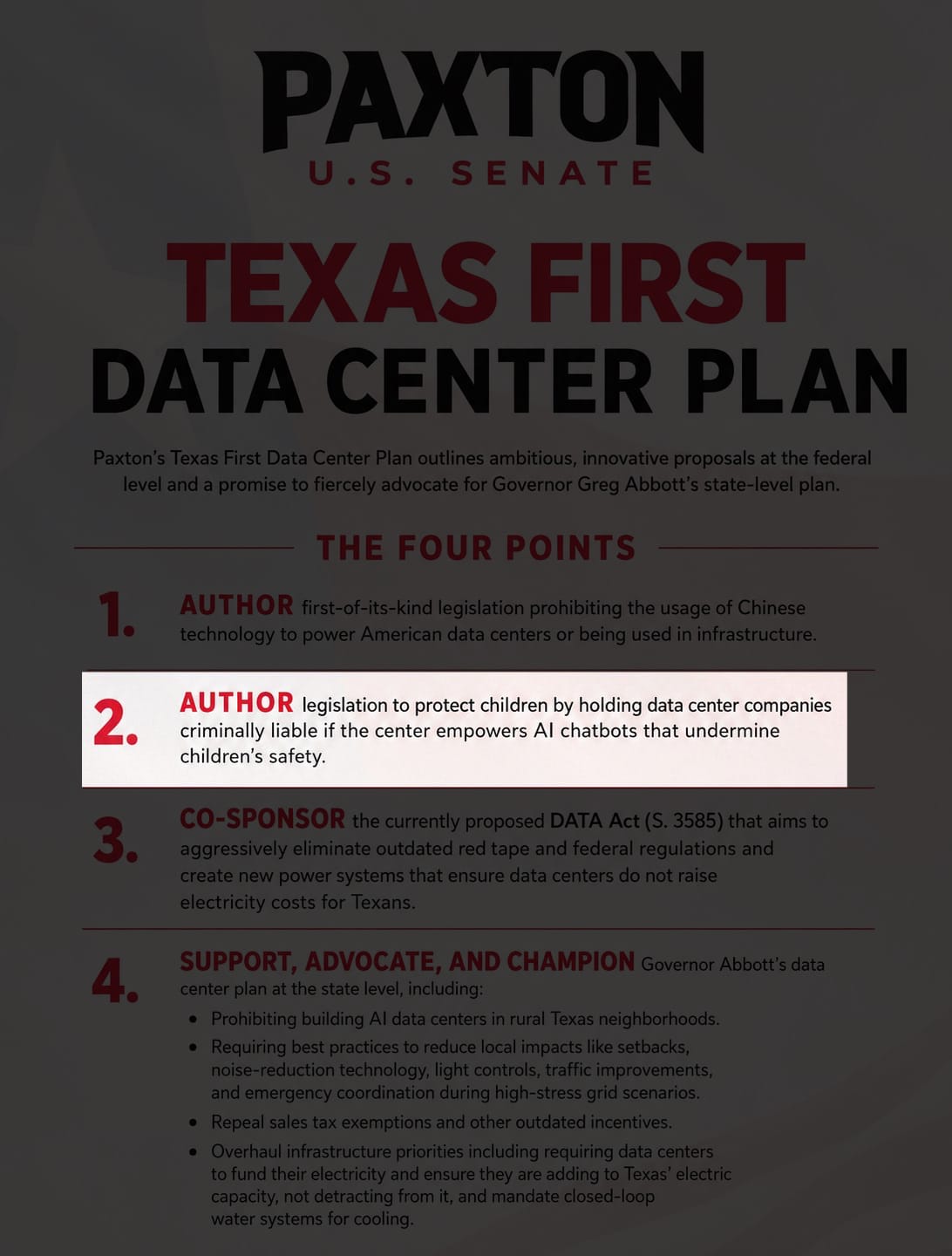
The issue with Paxton's plan is that data centers don't talk. They provide the power, space, and cooling for the companies that host it. If you make the infrastructure provider criminally liable for what the end user says, then infrastructure providers will begin to pull platforms and companies that host controversial speech, for fear of punishment.
Criminal liability makes it less likely for an infrastructure provider to stand up for free speech because they'd have to pay for it with a prison sentence.
And then once you add in vague terms like "undermine children's safety," the operator doesn't have any way to know in advance what's safe to host.
First Amendment-protected speech would get kicked off the machines that house it, and platforms would be forced to introduce digital ID checks or surveil all users closely in order to avoid liability.
Section 230 exists to stop exactly this form of speech suppression. Paxton is proposing to route around it by pushing the liability down to the infrastructure level.