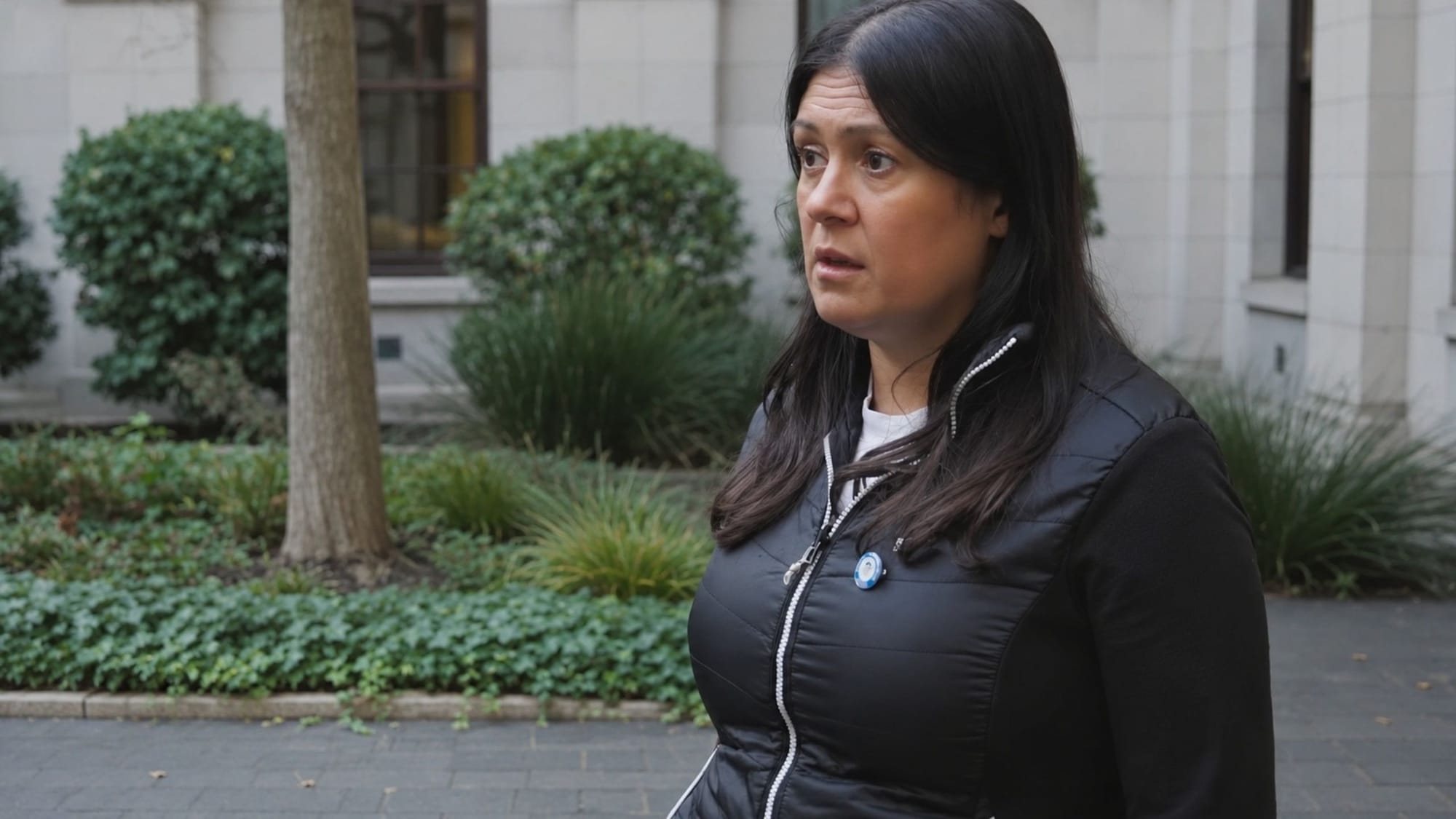
UK’s Culture Secretary Lisa Nandy has announced that the government is “looking seriously” at banning under 16s from using second-hand selling sites like Vinted and eBay – and the Sunday Times reports that Depop and Facebook Marketplace could also be added to the list.
“We are looking seriously at doing so in order to keep children safe,” Nandy said.
And what, pray, is the evidence for this? A three-year-old submission by The Children’s Society to a parliamentary inquiry into human trafficking, that mentions children being asked for “indecent photos in exchange for money” on Facebook Marketplace or Vinted.
No doubt this is a serious problem, but it’s hard to see how preventing 15-year-olds from selling their old jumpers on eBay would solve it.
The Sunday Times report says the government is worried about the messaging services on these platforms allowing “grooming” of children by strangers.
It’s not clear how the government plans to stop that, since the idea of the ban is to prevent under-16s from accessing these sites in the first place.
These are sites that already have their own rules in place – eBay says you must be 18 to use it, while Vinted requires users to be at least 18, and even asks for a document to prove it – a passport, driving license, student ID, public transport pass, or bank statement.
Depop allows 13-year-olds to sign up, and if they are under 18, they may be asked to provide “photographic ID and taxpayer information” in order to use PayPal and Depop Payments.
Facebook Marketplace says only adults can use it, and checks age with “a video selfie” or ID through Yoti.
eBay’s response to the latest news has been to say that “while the details of the proposed legislation are not yet clear, we look forward to understanding more.”
The government’s proposal is not new – it was first announced in June as part of a broader push to keep under-16s off social media, and at that time, the list of “user-to-user platforms” that would be covered by the ban did not include “educational services, e-commerce platforms or music streaming.”
But now eBay is in the crosshairs, even though back in June, the government was assuring everyone that e-commerce sites were safe.
In September, Nandy promised “proper, comprehensive legislation” that would cover not just apps, but “the features that we believe are not safe”.
At the time, Nandy also said it was “uniquely wrong” that online spaces had been “policed and regulated only by the private sector” – and that seems to be the underlying message here: we don’t like the way you’re regulating, so we’ll take over.
The absurdity of the situation is not lost on observers, given that the rules that will apply to under-16s have not even been published yet – and the list of sites and services to be covered by the ban is already expanding.
While the government is not explaining its logic, it’s easy to follow – if the goal is to age-check everyone, then every site and service that allows messaging between users will have to be included.
To achieve this, every site will have to check the age of every user – which means that an adult selling a pram on eBay will have to have their age verified, just so that the site can be sure that no 15-year-old is selling their old bike.
There’s also “scope creep” – a term used by the Computer and Communications Industry Association’s Matthew Sinclair, who warned that the plan to restrict messaging between under-16s on social media “would not stop at social media and would reach into the services families depend on to stay in touch.”
Ofcom has approved various methods that sites can use to check users’ ages, and these include photo ID matching, digital ID services, banking-based checks, and facial age estimation.
The regulator admits that 16- and 17-year-olds without photo ID “would likely need to take steps to obtain one.”
What about adults? They will be subjected to an even wider variety of checks, such as credit card, mobile network, and email-based checks.
The government’s plan is to introduce the new rules in March 2027.
In September, we reported that Nandy said companies could be removed from the list of those subject to the rules if they “change” – but at this point, it’s unclear what kind of “change” would satisfy the government, or how a site or service would “prove” it had changed.
At the same time, the minister revealed that the rules would start applying in March 2027, while in October, a government “fact sheet” said that proving you are over 18 could be “as simple as a facial recognition check.”
When the UK finally introduced age checks for adult sites in July 2025, some VPN providers reported an 1,800% increase in signups.
The idea that a ban that has not yet been written, or explained, is already growing in scope – from social media to second-hand clothes and beyond – is a chilling thought.
It means that every expansion will require even more passports, face scans, and ID checks of adults – who just want to sell a coat. The children were never the ones being checked.