Thirty-four Oklahoma lawmakers have asked the state’s Supreme Court to halt a plan that would send every driver’s license and ID record into a privately operated national database.
Their emergency petition seeks to stop Service Oklahoma, the state’s licensing agency, from connecting its records to a system run by the American Association of Motor Vehicle Administrators, known as the State-to-State (S2S) network.
We obtained a copy of the emergency petition for you here.
The contention is whether Oklahoma should upload personal data, including names, birth dates, partial Social Security numbers, and license details, to a database controlled by a private organization rather than a state or federal government.
This is a growing issue in the United States and elsewhere, and not enough people are paying attention to how many of these digital ID agreements work. This is about who controls the personal information tied to a driver’s license and how that data can be used once it leaves the state’s own systems.
The legislators, led by Sen. Kendal Sacchieri of Blanchard and represented by attorney Wyatt McGuire, are asking for a court order to stop an upload planned for Presidents’ Day weekend, February 14 to 16, 2026. Sixteen senators and eighteen representatives joined the petition.
Service Oklahoma intends to join AAMVA’s S2S system, which connects all participating states through a shared hub. This would make Oklahoma part of the same data-sharing network already used by most states for REAL ID purposes. The network’s central database is called the SPEXS database, short for System for Electronic Exchange of Driver Data.
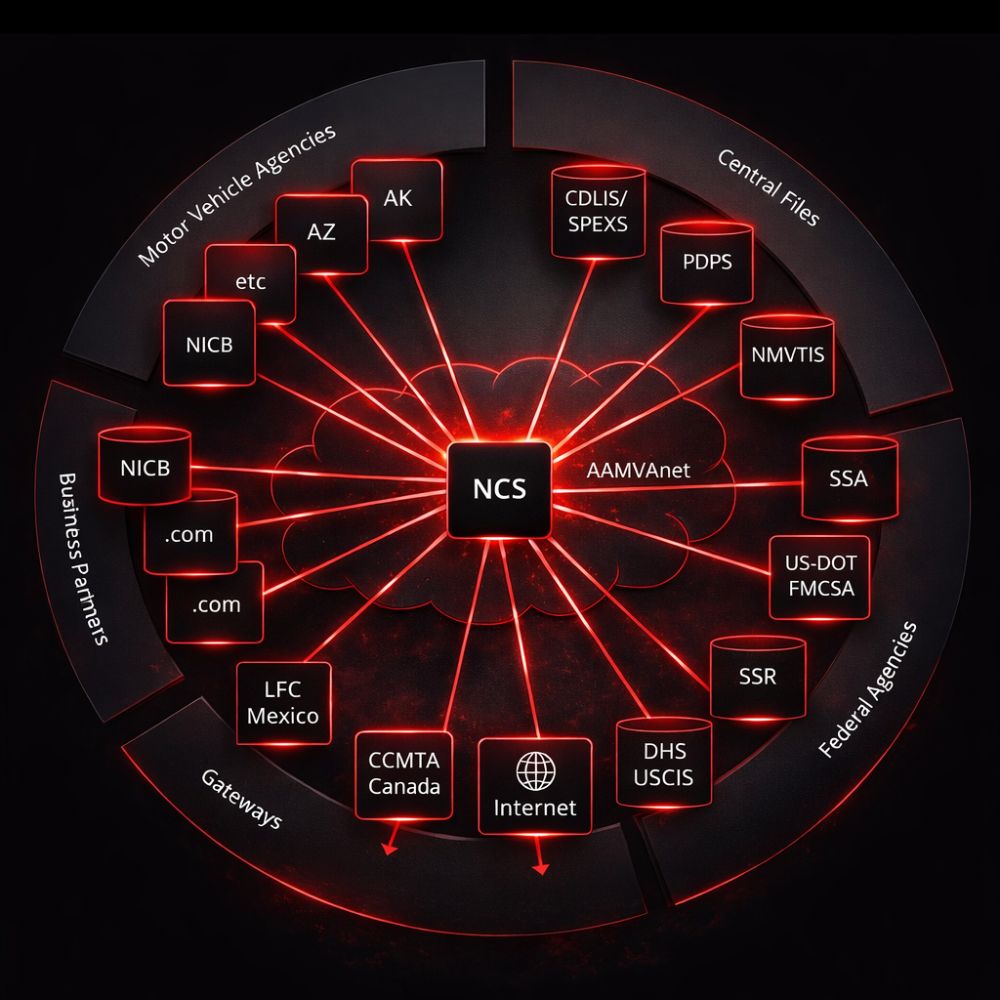
Once the data is uploaded, it will be continuously synchronized, meaning updates in Oklahoma’s system, such as a name change or license renewal, would automatically flow into the shared national file.
What is REAL ID and why does it matter?
The REAL ID Act is a federal law passed after 9/11 that sets security standards for driver’s licenses used for federal purposes like boarding a domestic flight or entering certain government buildings.
States can issue either:
- REAL ID-compliant licenses, which meet federal standards and can be used for travel and identification at federal facilities, or
- Non-compliant licenses, which are valid for driving and identification within the state, but are not accepted for federal use.
Oklahoma law deliberately preserves both choices so residents who prefer not to share data beyond state systems can opt for the non-compliant version.
The legislators say the S2S upload would eliminate that choice since AAMVA’s rules require states to submit all license data, including that from non-compliant cards, to the same database. Those rules do not come from Congress or Oklahoma law but from AAMVA’s own membership terms.
Who is AAMVA, and what is SPEXS?
AAMVA is a nonprofit trade association that began in 1933 as a coordination group for state motor vehicle departments. Over time, it became the operator of the core systems linking states together for license verification and REAL ID compliance.
SPEXS is AAMVA’s national driver database. It stores limited identifying data from every participating state and lets each state check whether someone already holds a license elsewhere. AAMVA presents it as a way to prevent duplicate licenses, but it effectively creates a shared national index of driver identities.
Although AAMVA performs functions that resemble those of a government agency, it is not one. It is a private corporation that contracts directly with state agencies, usually without public bidding. This means the public has no guaranteed way to see what data is stored, who can access it, or how it might be shared with other entities.
Lawmakers’ main arguments
No legal authority: The petition argues that Service Oklahoma has no legislative authorization to share the data. State law, 47 O.S. § 6-110.3a, explicitly forbids releasing license or ID data except as required by the federal REAL ID Act, and that Act does not require states to join AAMVA’s network.
Timing and oversight: The upload is scheduled just after the next legislative session begins, leaving little opportunity for lawmakers to debate or block it through normal lawmaking. The petition questions whether the timing was chosen to avoid oversight, as has reportedly happened in other states.
Loss of state control: Once the data is uploaded, Oklahoma cannot retrieve or delete it. Other states and potentially federal systems can continue querying those records. Since AAMVA is private, federal agencies could obtain the data through subpoenas without notifying the state.
Privacy concerns: The legislators warn that giving a private association the ability to route and manage state identity data poses long-term risks. They point out that AAMVA’s own Verification of Lawful Status (VLS) system already sends data to the Department of Homeland Security’s Systematic Alien Verification for Entitlements. While that may serve administrative goals, it also means personal information travels through multiple systems with limited public visibility.
Why it matters
The outcome of this case will determine whether Oklahoma residents keep the right to keep their driver’s data inside state-controlled systems or whether participation in a national identity network becomes automatic.
For privacy-minded Oklahomans, the difference is critical. Once personal data is replicated into SPEXS, it effectively becomes part of a national index that operates beyond the state’s legal reach. The legislators’ filing calls this an irreversible shift, a permanent change in who holds control over identity data.
Across the country, other states have joined AAMVA’s network quietly, often without a public vote or debate.
The question before the Oklahoma Supreme Court now is simple but important. Can a state agency transfer every resident’s identifying information to a private network without the explicit approval of elected lawmakers?
For many Oklahomans, the answer may define how much control they and their state retain over one of the most personal forms of data, the driver’s license record that proves who they are.