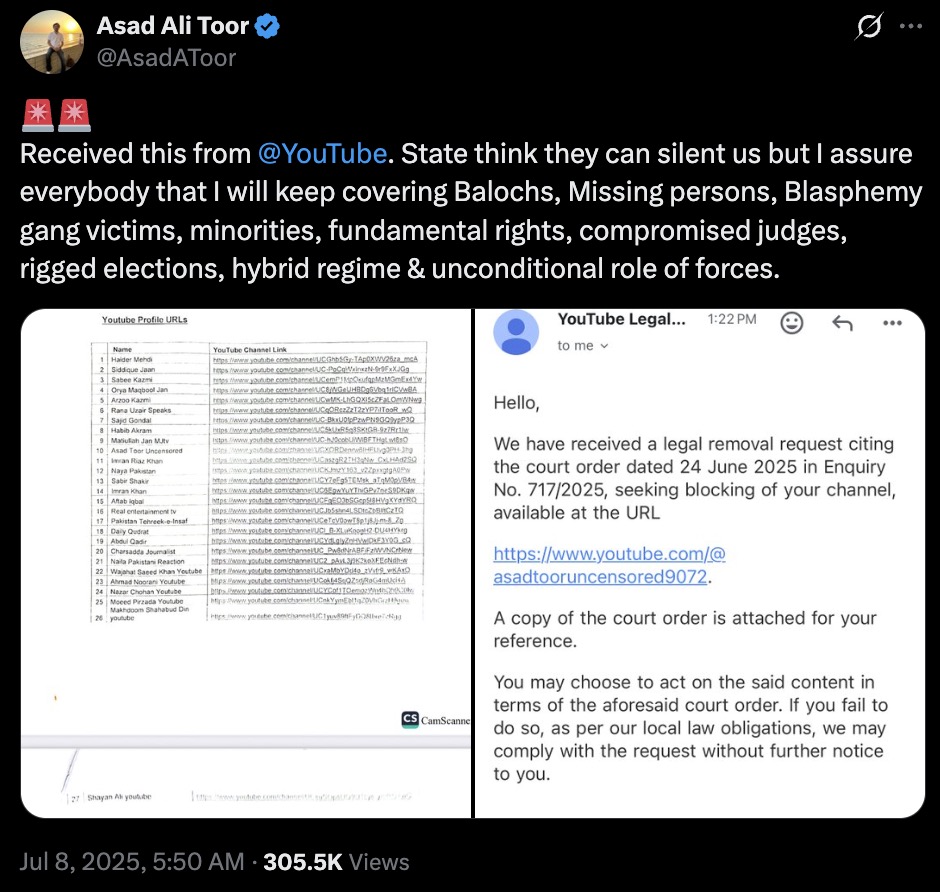
Pakistan’s clampdown on dissent has escalated as YouTube notified more than two dozen independent journalists, opposition figures, and commentators that their channels could soon be restricted within the country.
The warning follows a court order that seeks to block access to content labeled “anti-state,” targeting a range of creators including jailed former Prime Minister Imran Khan and members of his political party.
A court in Islamabad issued the directive on June 24, following a report from the National Cyber Crime Investigation Agency (NCCIA).
The NCCIA accused the targeted YouTube channels of publishing what it described as “highly intimidating, provocative and derogatory contents” directed at state institutions. That report, submitted on June 2, served as the basis for the court’s call to suppress the content.
With conventional media outlets increasingly subdued by state pressure, social media has become one of the few remaining spaces where dissenting perspectives can be aired. Now, that space is under direct threat.
YouTube has informed 27 creators that unless they comply with the court’s demands, their channels may be blocked inside Pakistan. “If you fail to do so, as per our local law obligations, we may comply with the request without further notice,” read a message from the platform, according to the notice.