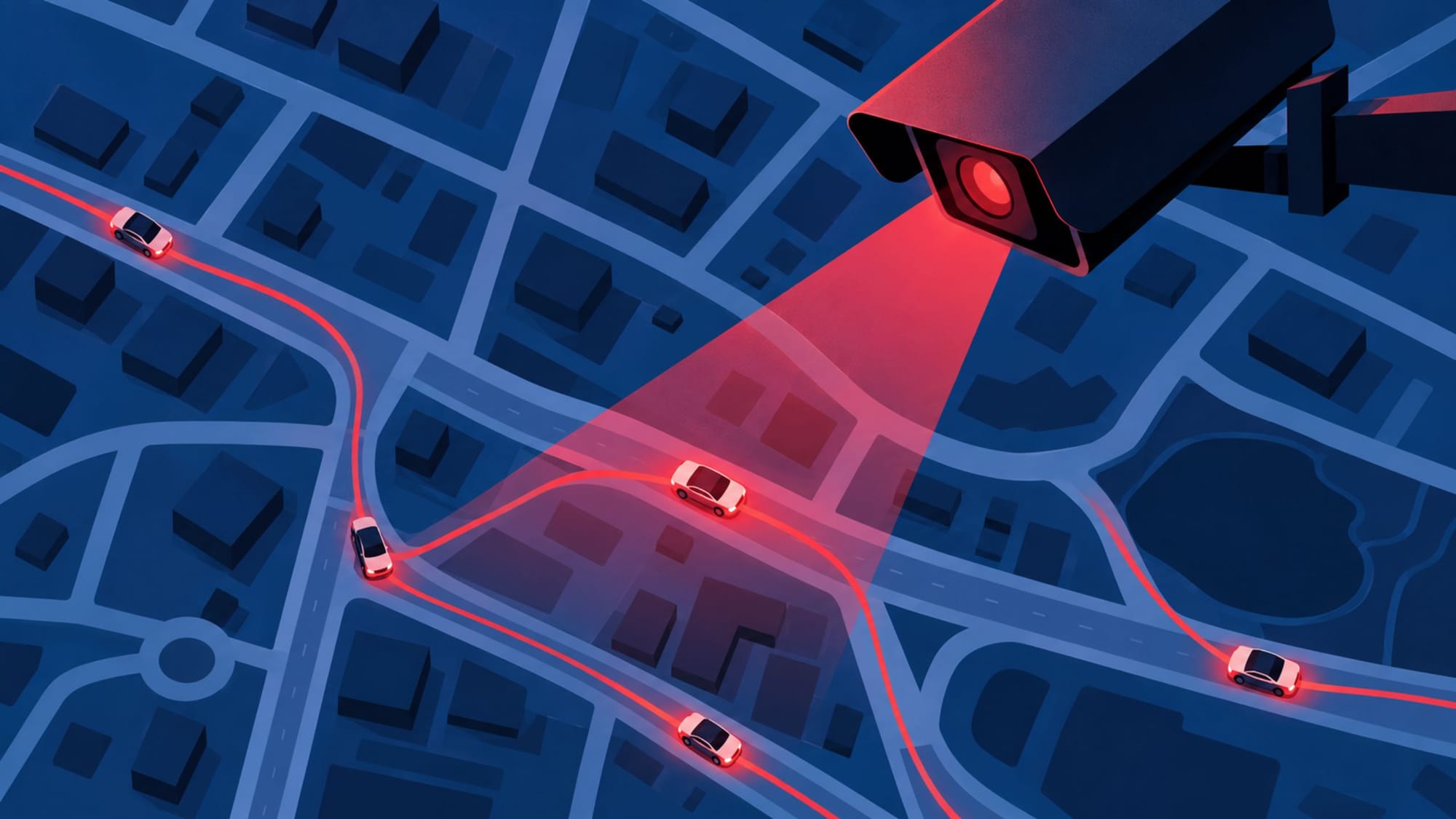
Norman, Oklahoma's city council turned down Flock's automated license plate readers more than once. The surveillance cameras hit the city anyway, carried in by the county sheriff and a scatter of homeowners associations the council has no authority over.
All nine members of the council said no. Mayor Stephen Tyler Holman told 404 Media that Flock gave the city two presentations in three years, both at the request of a police department that wanted the cameras, and that the company's answers on privacy and data security were what sank the deal. He asked why anyone would want a record of every vehicle going in and out of the city, whether or not the driver had done anything wrong, held for 30 days on a database whose security and access nobody at Flock could fully account for.
"Those were some of the reasons why we ended up not doing it," Holman said. Some council members wanted any retention measured in minutes, not a month.
That refusal governs the city government and nothing past it. Norman lies inside Cleveland County, and the county's commissioners approved a $60,000 renewal for 20 Flock cameras run by the Cleveland County Sheriff's Office, an agreement that runs through December 2026 and passed on a 2-1 vote after the board postponed the decision three times waiting on a legal opinion from the district attorney.
Jacob McHughes, the commissioner whose vote carried the renewal, backed it only on the strength of that opinion. He said the cameras belong with the state legislature rather than county officials, and he called the legal question unsettled, "I think it needs legislative approval, and I think it's super gray."
Rod Cleveland, a commissioner who happens to share the county's name, cast the only vote against the renewal. He said the Flock model builds "a vast, warrantless surveillance network that tracks the movements of every driver, innocent or otherwise," feeding private databases reachable nationwide and, potentially, by federal agencies, and he would not support it without enforceable limits on how long the data is kept and who can reach it.
"There are numerous homeowners associations that use them too," Holman said, and the city itself, by his account, is now the only body in the area holding out. By the police department's own count, fewer than a dozen privately owned Flock cameras already operate inside Norman, held by local businesses and neighborhoods the council cannot touch.
More than 80 cities have canceled Flock contracts, and Holman said the company turned Norman's own stance into a selling line at that last presentation, warning the room that people "would find that out and they'd come to commit crime in Norman because they know that we don't have Flock cameras." Norman borders an Oklahoma City metro already blanketed by the cameras, so the pitch amounted to telling a town that its restraint was a liability.
Holman spent 12 years on the council before beating the incumbent for the mayor's office last year. He traces the anti-Flock feeling to an earlier fight over the police buying a Bearcat armored vehicle, the sort of purchase most cities rubber-stamp, which Norman took ten years and a bare five-four vote to approve. "There's a lot of folks here who are weary about government surveillance, especially giving that over to a private company," he said.
404 Media has reported more about the company the council rejected and the county renewed anyway. Officers keep getting caught using the cameras to stalk people, the system makes mistakes, and a former employee recently said Flock lied to him about how it does business.