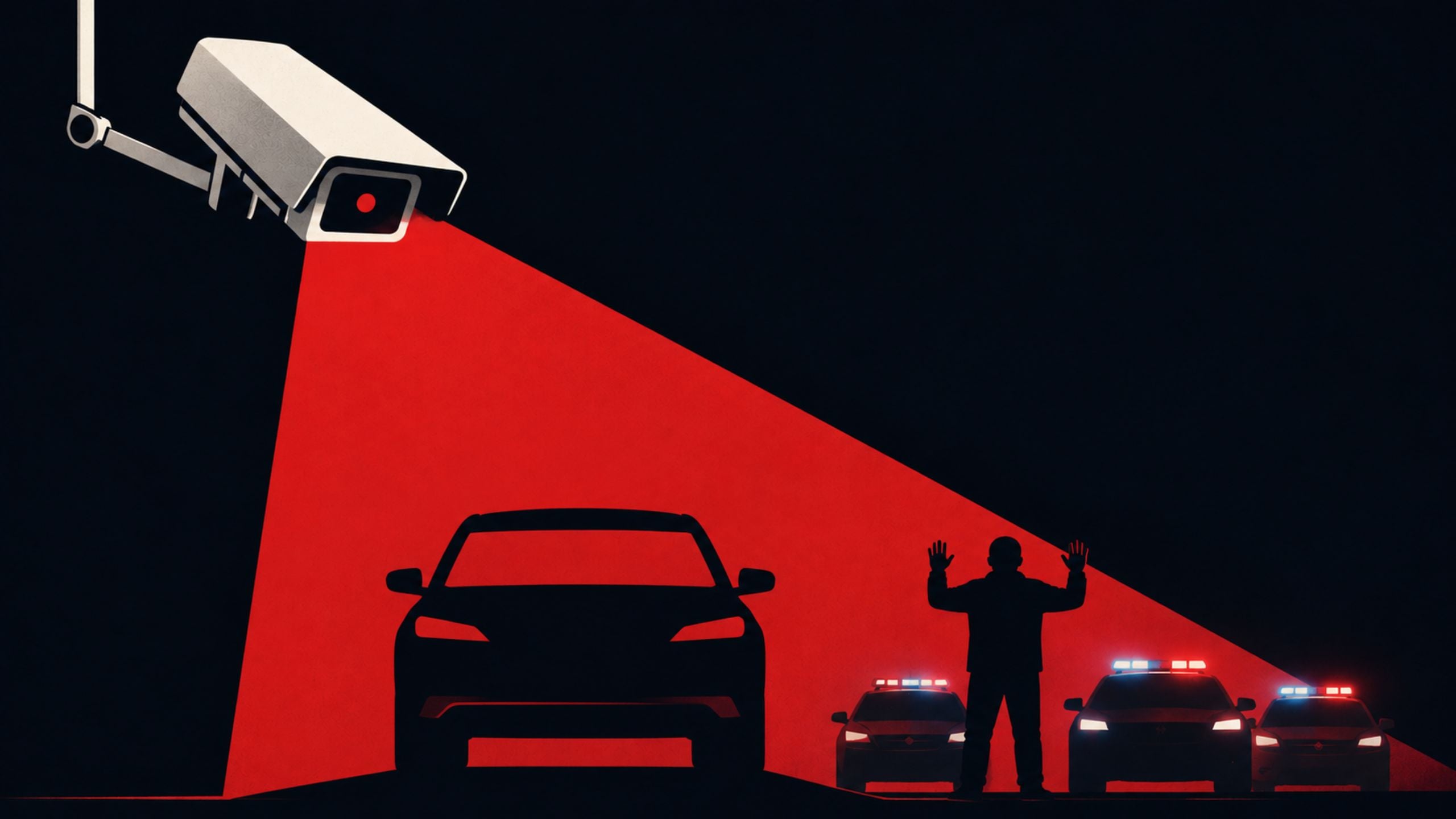
Flock Safety‘s cameras did exactly what they were built to do on the day four squad cars boxed in Joel Feder outside a Kohl’s in Plymouth, Minnesota. They read a plate, matched it against a hot list, and told the police where the car was. Nothing malfunctioned. The network passed along a bad piece of data with the same authority it gives a good one, and a journalist ended up standing in a parking lot with his hands up while officers rested theirs on their holsters.
The bad data had been sitting in the system for days. A Jaguar Land Rover dealership in Los Angeles misplaced a plate during a photo shoot and reported it lost. New Jersey prints its manufacturer plates with the middle characters in tiny type, and by the time the report reached law enforcement those digits had fallen off, so plate 34 03 DTM was logged as 34 DTM. Flock’s cameras cannot read the small middle numbers either. They looked at 34 10 DTM on the Range Rover Feder had borrowed as a press loaner, saw 34 DTM, and started telling the Plymouth police they had found a stolen vehicle. Two systems with the same blind spot confirmed each other, and their agreement became probable cause for an armed stop.
A camera reports what it thinks it sees, and it reports it with the same certainty every time. Doubt is outside its vocabulary. It has no way to flag that the characters in the middle of a plate fall below the resolution of its sensor and the read should be thrown out. It returns a plate number, a timestamp and a location, and a wrong answer arrives looking precisely like a right one. Everything downstream inherits that false confidence, including the officer who gets out of the car with his hand near his weapon.
The police in Plymouth had a seventeen-character VIN, stamped into the vehicle at the factory and checked against a state database, and it came back clean. They also had a camera hit generated by a machine that could not see two of the digits it was ruling on. “The plates on this car are stolen,” Officer Max Ganshyn told Feder. The department kept the camera’s story and set the VIN aside. The human in the loop, the safeguard these contracts are sold on, turned out to be the part of the system most willing to believe the machine.
By Flock’s own numbers, its readers capture plates accurately about 93 percent of the time across roughly 20 billion vehicles a month. The company offers that figure as reassurance. Seven percent of 20 billion is 1.4 billion misreads a month, and any of them can land on a cruiser’s screen as grounds for a stop. Sharper cameras will not solve this. A higher accuracy rate applied to a far larger population of scanned drivers still produces bad hits by the million, and it produces them overwhelmingly against people who have done nothing wrong, since those are the people the network spends its day looking at. More technology here does not mean fewer errors. It means the same error rate industrialized and aimed at the public.
Making an error and unmaking one run on completely different hardware. Feder’s misread propagated across a national network in milliseconds. Undoing it meant getting the LAPD to amend the original report and push the fix into Flock’s system, which Jaguar Land Rover was trying to arrange by phone on a Sunday afternoon while everyone stood in the lot.
Ganshyn was already tracking four other cars on the same 34 ## DTM plate pattern that week, and any Flock partner department in the country would have flagged them off the same broken report. Feder was told to drive straight home and leave the car parked. “You’re lucky we’re in Plymouth,” the officer said. “If you were in Minneapolis, they definitely would’ve come at you with guns drawn.” That is the state’s own advice to an innocent man: stay off the roads because we cannot switch this thing off.
A week of surveillance and an armed stop ran their course without a warrant. The Fourth Amendment assumes a human being forms a suspicion and can be made to answer for it afterward.
A camera network hands police a suspicion pre-formed, generated by a private vendor’s software and stamped with a confidence nobody has to defend. There is no affidavit and no probable cause a judge could examine, only a hit on a screen. Nobody in Plymouth chose to hunt Joel Feder for a week. The surveillance system chose, and there is no one to depose.
The Institute for Justice counts at least 26 cases since 2018 in which Flock misreads led to innocent people being pulled over, held at gunpoint, jailed, or attacked by police dogs, most of them since 2023. Those are the documented ones, the cases where somebody had the standing and the resources to make a record. A false hit that ends in a felony stop is a different experience depending on who is behind the wheel, and the network cannot tell the difference. It reads the plate. Officers arrive with their assumptions intact.
Responsibility thins out as it travels down the chain. Flock sells the alert and disclaims the arrest. The department acted on the information it was given. The clerk in Los Angeles filled out a form. All of them performed their function, and a man with clean plates and a clean VIN was surrounded by four squad cars in a shopping center parking lot on a Sunday. The police report, when it arrived days later, confirmed the plate had never been stolen at all. “The plate was reported as NJ 34DTM instead of NJ 3403DTM,” it read.
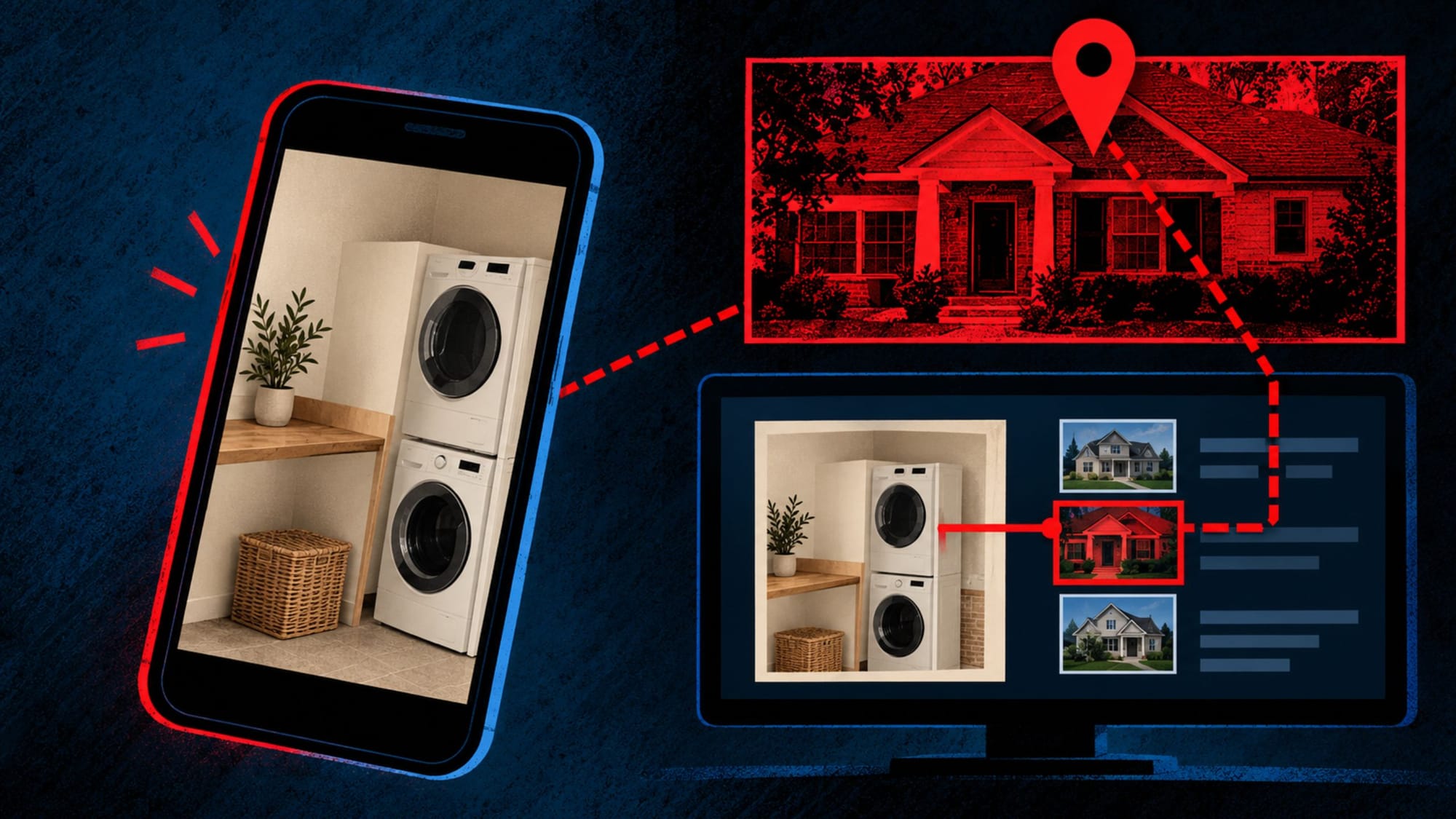
Two weeks before officers boxed him in, The Drive had run a report on Flock cameras being wired into a wider surveillance apparatus, one that reaches past plates toward phones, wearables, and even pets.
The story went viral and was shared tens of thousands of times. Then the same kind of network came for one of the people who had warned about it, on the strength of five characters and a typo.
Plate readers are only the highest-volume version of a failure that is turning up wherever police have wired a probabilistic system into a squad car.
Detroit officers arrested Robert Williams in his driveway in 2020 on the strength of a facial recognition match against a blurry surveillance still, then arrested Porcha Woodruff, eight months pregnant, on another bad match three years later.
Chicago prosecutors held Michael Williams for nearly a year on a gunshot-detection alert that pointed at the wrong noise.
The software in those cases offered a candidate and the officers downstream took delivery of a conclusion, which is the same trade the Plymouth department made in the Kohl’s lot. The vendors describe these tools as leads to be corroborated. The lead arrives with a badge number attached to it, and the work of proving the machine wrong is left to whoever is already in handcuffs.