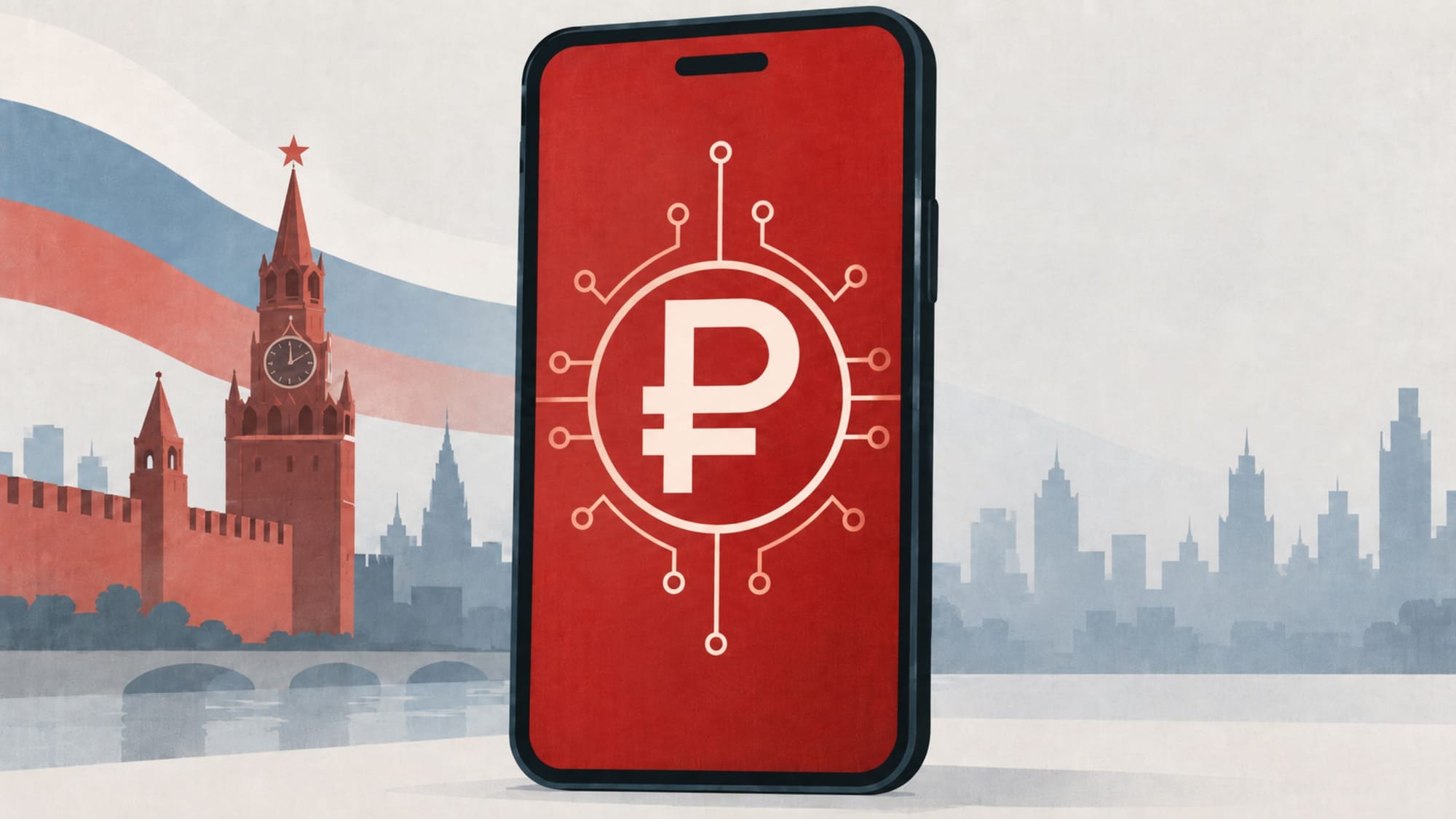
Sep 1, 2026 was a milestone date in Russia’s monetary policy, as three separate but related measures came into force.
The digital ruble, a central bank digital currency (CBDC), entered its large-scale rollout. At the same time, a new law, Federal Law No. 282-FZ, maintained the ban on using cryptocurrencies for domestic payments, while extending restrictions on foreign-currency cash withdrawals.
The digital ruble is now mandatory for 12 systemically important banks, while retailers that are clients of those banks and have annual revenue above 120 million rubles (about $1.39 million) must accept and process digital-ruble payments.
The first pilot involving real-money transactions began in August 2023, and the current stage of the rollout expands in three phases. From Sep 1, 2027, all banks with universal licenses and retailer clients of those banks with annual revenue above 30 million rubles (about $346,567) must participate. From Sep 1, 2028, the requirement extends to the remaining banks and retailers with annual revenue above 5 million rubles (about $57,761).
All digital-ruble operations take place on the Bank of Russia’s platform, where user wallets and the digital rubles in them are held. The State Duma, the lower house of parliament, appoints and dismisses the Bank of Russia governor and board members.
Cash can change hands in Russia without the central bank having to run a wallet or a ledger to record the transaction. Not so with the digital ruble: every operation involving the digital currency takes place on the Bank of Russia platform.
The bank says operations involving digital-ruble accounts may be restricted in a number of legally specified circumstances: those involving enforcement proceedings, tax, bankruptcy, anti-money-laundering and counter-terrorist-financing rules.
The digital ruble is not anonymous, and the Bank of Russia does not claim it to be.
In general, CBDCs have the capability of incorporating programmable restrictions, but the Bank of Russia has not announced any such plans, and has instead presented the digital ruble as another form of the national currency and a payment option.
However, what is happening in Russia is that participation in the digital-ruble scheme is becoming mandatory for an increasing number of banks and retailers, making it look more like a duty than an option.
Meanwhile, Federal Law No. 282-FZ, which also took effect on September 1, maintains the ban on using cryptocurrencies for domestic payments, originally introduced in 2020 and in force since January 2021. Cryptocurrency can be used for certain settlements in foreign trade, with additional exceptions involving cryptocurrency obtained through mining.
Holding and trading cryptocurrency is legal, but only through authorized entities, and the law now caps annual purchases at 300,000 rubles (about $3,700) for non-qualified retail investors. Authorized public trading is currently limited to bitcoin, ether, and USDT.
And as the digital ruble is becoming more widespread, the Bank of Russia has extended restrictions on foreign-currency cash withdrawals for six months, until Mar 9, 2027, blaming sanctions that prevent Russian financial institutions from obtaining Western cash.
Individuals who opened foreign-currency accounts before Mar 9, 2022 can withdraw no more than $10,000, or the euro equivalent, in foreign cash, and only if they have not already used that opportunity. Remaining funds must be withdrawn in rubles at the Bank of Russia exchange rate. Foreign currency transferred without an account or held in an electronic wallet can be withdrawn only in rubles.
On September 1, three financial policies came into force in Russia, all steering more activity toward channels that are visible to and supervised by the state.
Russians are allowed to own and trade cryptocurrency, but only through authorized entities. And while it can be used in some limited scenarios, paying for things within Russia with cryptocurrency is not among them.
The restrictions on withdrawing foreign currency from bank accounts are also still in force.
Twelve systemically important banks and covered large retailers have now been required to support or accept the digital ruble. They will not be the last. More banks and smaller retailers are due to join them in stages, with the rollout continuing through 2028.
Physical cash remains the exception. One person can still hand it to another without creating a transaction on the digital-ruble platform.