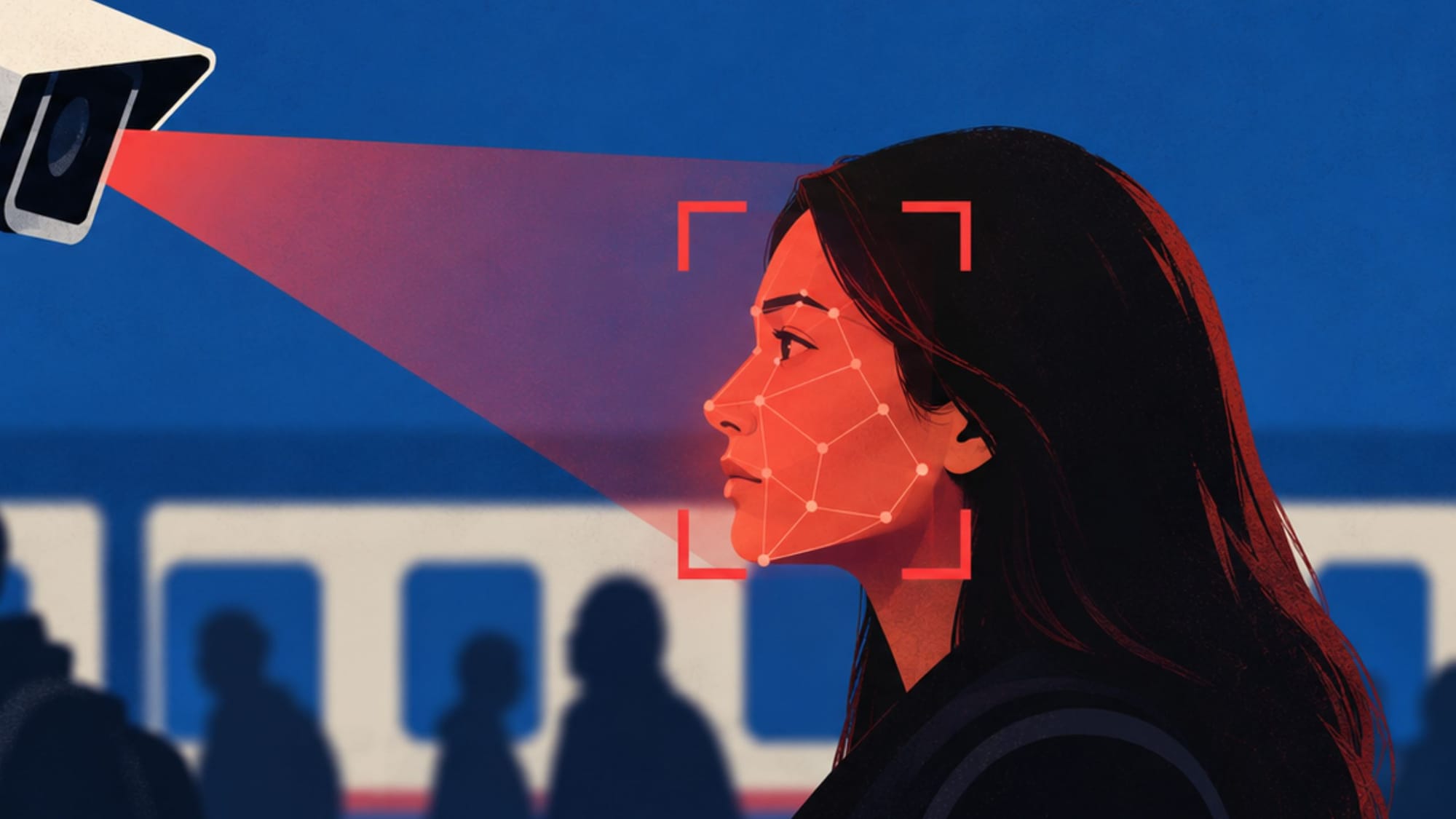
So what does it take for a police force to stop using a “trial” deployment of live facial recognition (LFR) technology? Apparently, scanning the faces of more than half a million people and catching nobody is not it.
In fact, it gets you an extension of four months and an expanded area to “hunt” in.
The British Transport Police (BTP) has now revealed that its initial six-month LFR deployment at London railway stations produced one alert – that was false.
The trial cost £320,786 ($425k) to carry out. That was just the cost of equipment hire and police officers' time, and the figure comes from a freedom of information document obtained by Liberty Investigates.
It ran from February to July across 18 deployments, which the BTP’s own register says resulted in 537,697 people having their faces scanned.
The single alert was raised on February 24 at Kings Cross, against a watchlist of 455 people. The alert was false, and the false alert rate was 0.00517 percent.
The story doesn’t end there, because the BTP’s own register doesn’t stop at the end of July. It goes on to September 24, and now includes 27 deployments – and a total of 926,912 people who have had their faces scanned.
This extension has produced alerts. On August 20 at Kings Cross St Pancras Underground, there was one true alert, unconfirmed. On September 4 at Waterloo, there was one true alert, confirmed, and the outcome was no action. And on September 24 at London Bridge, there were two true alerts, both confirmed, with the outcome again being no action.
The arrest column in the register still reads zero.
In other words, the machine has now correctly identified three people – but the police have not found any reason to arrest any of them.
The register also shows that the number of people on the watchlist has grown. On February 11, it was 381, and by September 14 at Victoria Underground, it had more than doubled, to 862.
This is where things get even better. The expansion was “welcomed” by Transport for London (TfL), who said the technology “will target and identify people on police watchlist at key stations chosen for maximum impact.”
TfL also justified the move by saying it would “specifically tackle violence against women and girls, whose travel behaviours are shaped by experiences of sexual harassment and sexual offences.”
Labour MP Bell Ribeiro-Addy is not impressed. “Tackling violence against women and girls on public transport must be an urgent priority, but that means investing in what actually works; not spending more than £320,000 on a measure, which when piloted, resulted in zero arrests and a single false alert,” she said.
“Live facial recognition technologies are a serious invasion of our privacy. The government should be suspending their rollout until there are stronger safeguards in place, including a proper legal framework,” the MP added.
This is not one force experimenting on its own. We have reported London Mayor Sadiq Khan approving live facial recognition for Oxford Street, London police using it at a protest for the first time, the High Court clearing the way for police use of it, and Greater Manchester Police joining the rollout. Liberty Investigates found that more than half of police forces in England and Wales have now deployed it.
Meanwhile, biometric images that do not match those on the watchlist are deleted immediately, while those that do match are deleted within 24 hours, as is the watchlist itself, once a deployment is finished.
BTP's own policy makes clear that the surveillance is not limited to the cameras that are part of the LFR system. Footage from the LFR camera masts will be kept for up to 31 days, “in line with general police retention periods for CCTV.”
It seems that no matter how many times these deployments are extended, and how many people are scanned, the watchlist will just keep growing.
The police will keep getting more money to throw at this tech, that has not yet proven itself as useful for anything but wasting public money.