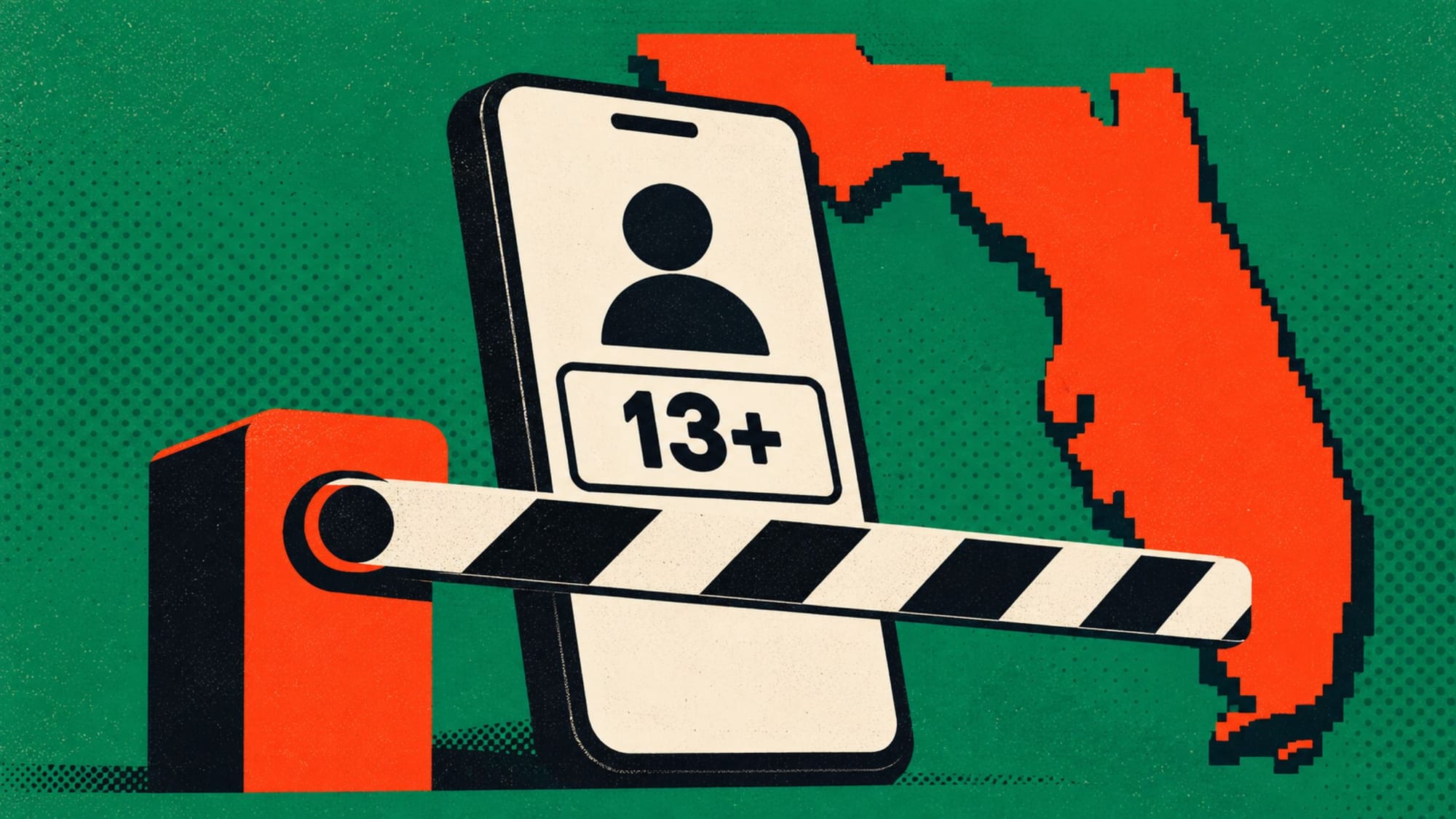
Texas can now require proof of age (which means digital ID checks) before anyone downloads an app, and the Supreme Court has decided not to stand in the way.
The justices on Monday refused to reinstate a lower-court order that had blocked the Texas App Store Accountability Act, known as SB 2420. Two short, unsigned orders released that afternoon carried the decision, and no justice publicly dissented. Texas is free to enforce the law while the fight over its constitutionality plays out.
We obtained a copy of the orders for you here and here.
Every app store now has to check the age of every downloader. Anyone under 18 needs a parent’s consent to download an app or to pay for content inside one.
Adults land inside the checkpoint too, because sorting minors from everyone else means screening everyone. Show a government ID, or some other proof of age, and then the store opens. It still sounds unbelievable to have to write this, but reaching software in Texas runs through an identity check.
Two lawsuits are trying to tear the law down, both built on the First Amendment. One comes from Students Engaged in Advancing Texas, a group whose members, in its own words, “use mobile apps to teach other kids how to get involved in policymaking.”
The other comes from the Computer and Communications Industry Association, the trade group representing app stores and developers. They sued the same day last October, well before SB 2420 was set to take effect on Jan. 1, 2026.
The students spelled out the stakes. The appeals court ruling, they warned, “would render virtually the entire internet—not to mention the distribution of every book, newspaper, magazine, movie, or record album—’commercial speech’ the government could more readily ban, restrict, edit, or compel. That is clearly wrong.”
They also noted that Texas already walls minors off from online pornography under a separate statute the Supreme Court upheld last year. So SB 2420’s stated goal of shielding children “from ‘accessing harmful or inappropriate content’ … is not a valid government interest,” they told the justices.
The CCIA counted the cost in liability and dollars. The Fifth Circuit’s decision, it argued, “has upset the status quo by allowing the Act to be enforced for the first time, exposing app stores and millions of app developers to potential liability” and saddling them with “enormous and unrecoverable compliance costs.”
Its members, the group added, already “provide various, voluntary tools that enable parents to control their children’s exposure to apps and content.” Parents who want those controls can already reach for them. SB 2420 swaps that option for a command.
Texas tells the story differently, in a version where none of this touches speech. The state says the law governs commercial transactions, the contract terms a young person agrees to when downloading an app. It reaches for an analogy.
“In the same way that the State can deny drivers’ licenses to children under sixteen, even though some fourteen-year-olds may wish to drive to a bookstore and purchase a book, the State can restrict children’s downloads of software applications to mobile devices as a product category, even if some children may wish to use applications to engage in expressive conduct.” Recast a bookstore as a product category, and the books inside stop reading as speech.
Because the law covers all apps “regardless of their content,” Texas says the district judge reached for too demanding a constitutional test and should have applied intermediate scrutiny at most.
The Fifth Circuit accepted that the law likely clears the lower bar, holding that “Requiring age verification, parental consent, and app-related content ratings likely directly and materially advances Texas’s substantial interest in protecting children’s data, safety, and privacy in a digital world.” Content-neutral on paper, the requirement still decides who gets to read, watch, and speak.
US District Judge Robert Pitman in Austin blocked the law in December, finding it likely unconstitutional. The Fifth Circuit lifted that block in May, sending the challengers to the Supreme Court within days.
Texas also complained that Pitman had reached too far by barring enforcement “against anyone, not just the Plaintiffs.”
The dispute now returns to the Fifth Circuit, which is expected to hold an expedited hearing on the merits in early August. Matt Schruers, the CCIA’s president and CEO, welcomed the timing. “We look forward to an expedited hearing before the Fifth Circuit Court of Appeals in early August to demonstrate how Texas’ App Store Accountability Act violates the First Amendment. People should not have to turn over personal data to access the internet any more than they should show government identification to enter a bookstore.”
The checkpoint stays up until then. Anyone in Texas reaching for an app store meets the ID demand first and access now waits on proof of identity that the state can require by law.