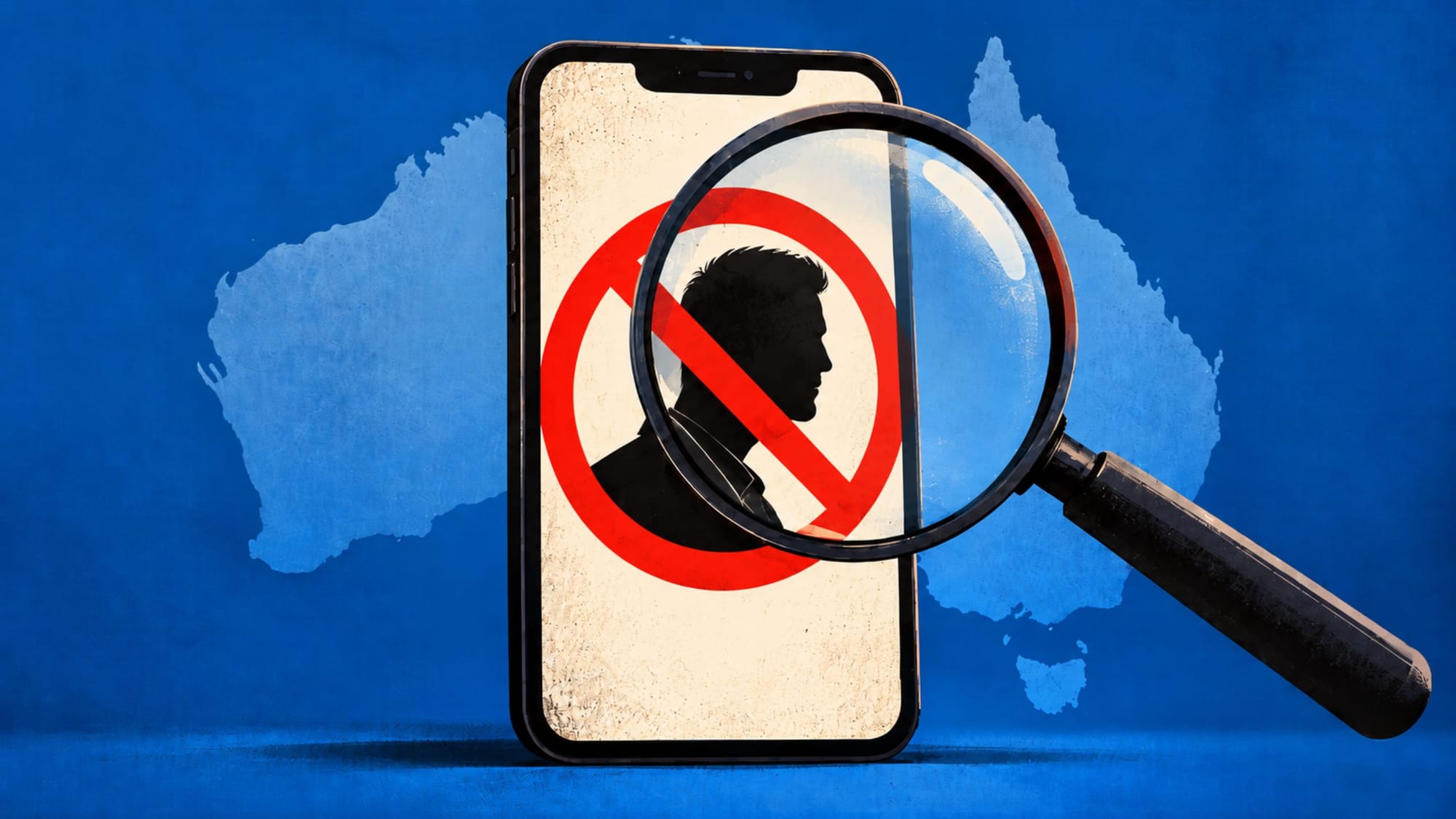

Searching Google for the address of a political party headquarters was enough to land hundreds of people inside a federal investigation.
Newly unsealed court records show the Justice Department demanded that Google identify 311 users who looked up the Republican and Democratic party offices in Washington during the first five days of January 2021, the same week someone placed pipe bombs outside both buildings on the eve of the Capitol riot.
Google fought the demand behind sealed doors and lost. The company had already turned over user data three times in the same investigation but it drew the line at this warrant, telling the court the request was “grossly overbroad” and warning that it would catch innocent party members, volunteers, and ordinary people who had done nothing more than type a committee’s name into a search box.
The records came out on Thursday.
We obtained a copy of the order for you here.
People in Florida, Texas, Iowa, and Wyoming, plus users overseas in Spain and the Philippines, had typed things such as the street address of the Democratic National Committee or a request for the Republican committee’s email address. Yet, none of it pointed to a crime. The government wanted their names anyway, together with their email addresses, backup emails, payment information, and the devices tied to their accounts.
The demand reached anyone Google could tie to them through shared technical traces, a login from the same coffee shop Wi-Fi, an airport network, a library terminal, a common credit card, or recovery email.
Google warned that a single search by one person could expose the names of thousands of strangers whose only connection was passing through the same public network at some point. The company described associations that ran from family members and roommates to people who had never met the searcher, all caught in the same net by accident.
This was the fourth time the government had turned Google into a search tool aimed at its own users. Two geofence warrants in early 2021 mapped everyone whose phone passed near the buildings, the second one widening the zone tenfold to cover homes, two hotels, and part of the Library of Congress. A keyword warrant came next, pulling anonymized data on roughly 1,341 people. By the time this latest warrant arrived, the government had already unmasked more than 370 users across the investigation and charged none of them.
Google’s lawyers leaned on the First and Fourth Amendments, arguing that letting the government comb through political searches would chill the kind of activity the Constitution exists to protect. They called the warrant a “general search” of the sort the country’s founders wrote the Fourth Amendment to forbid, and they argued the government was attempting something the law does not permit, “seizing the haystack to find the needle.”
The court never decided whether the warrant was too broad. Magistrate Judge Matthew Sharbaugh ruled in November 2024 that Google had no right to make the argument at all, at least not at that stage.
Citing a 2006 Supreme Court decision, he found that a warrant cannot be challenged on Fourth Amendment grounds before it is carried out, only afterward, through a motion to suppress or a lawsuit. “Google’s challenges largely fail,” he wrote. The people who could have objected after the fact were the users themselves and they had no idea any of it had happened.
Faced with the challenge, the government dropped the most extreme part of its request and withdrew the demand for technically connected users. The judge struck that language from the warrant. The rest stood and Google produced the identities the Justice Department wanted.
The unsealed file leaves behind a working template for the next investigation. The government asked a search engine to turn its own index against the people using it, kept the request hidden under a nondisclosure order, and won on a question of timing rather than on the merits.
The hundreds of people whose names and accounts were handed over were never told. Most of them, going by the record, had done nothing but look up an address.