Joseph Foreman, better known as Afroman, walked out of an Ohio courthouse Wednesday having beaten a $4 million defamation lawsuit brought by the sheriff’s deputies who raided his home in 2022. The jury found in his favor on every count.
Police executed a warrant, found nothing actionable, filed no charges, and left behind a broken door and gate. Foreman responded the way artists respond: he made songs about it. The deputies responded by suing him.
“The whole raid was a mistake. All of this is their fault. If they hadn’t have wrongly raided my house, there would be no lawsuit. I would not know their names,” Foreman said. “They wouldn’t be on my home surveillance system, and there would be no songs, nothing.”
The videos, which racked up more than 3 million views on YouTube, pulled directly from Foreman’s home security footage. They showed deputies breaking down his front door, rifling through his suit pockets, and lingering near a cake on the kitchen table. That last detail became a song title: “Lemon Pound Cake.” Another track went after the deputies personally and called them “crooked cops” over $400 that Foreman said went missing during the search.
The deputies claimed the videos caused public harassment and damaged their reputations.
One testified the videos questioned her gender and sexuality. A sergeant said his child came home crying after being hazed at school. Their attorney, Robert Klingler, told the jury that Foreman had lied about “these seven brave deputy sheriffs” for three years. “Even if somebody does something to you that hurts you, that you think is wrong,” Klingler argued, “that doesn’t justify telling intentional lies designed to hurt people.”
What Klingler was describing as lies, a jury just classified as protected speech. Defense lawyer David Osborne put it plainly in closing: “No reasonable person would expect a police officer not to be criticized. They’ve been called names before.”
The warrant that sent armed deputies through Afroman’s front door cited a drug and kidnapping investigation. No charges followed. Foreman was not even home at the time. His wife was, and she recorded parts of the search on her phone.
His testimony was direct about what he believed he had the right to do: “Police officers shouldn’t be stealing civilians’ money. This whole thing is an outrage.” He told the court the raid traumatized his children, then aged 10 and 12, and that he used revenue from the diss tracks to cover the damage the deputies left behind.
The lyrics in “Will You Help Me Repair My Door?” address the officers directly: “Did you find what you were looking for/ Would you like a slice of lemon pound cake/ You can take as much as you want to take/ There must be a big mistake.”
Another passage: “The warrant said, ‘Narcotics and kidnapping’/ Are you kidding? I make my money rapping,” and “You crooked cops need to stop it/ There are no kidnapping victims in my suit pockets.”
Judge Jonathan Hein read the verdict plainly: “In all circumstances, the jury finds in favor of the defendant; no plaintiff verdict prevailed.”
Foreman walked outside and shouted: “We did it, America! Yeah, we did it! Freedom of speech! Right on! Right on!”
He posted the clip to social media. The deputies who wanted him silenced gave him the material for that post.
Seven public officials with law enforcement authority, a $4 million damages claim, and three years of litigation. That is a significant amount of institutional power to bring against one person for making songs about what police did in his house. The jury was not persuaded that it was justified.
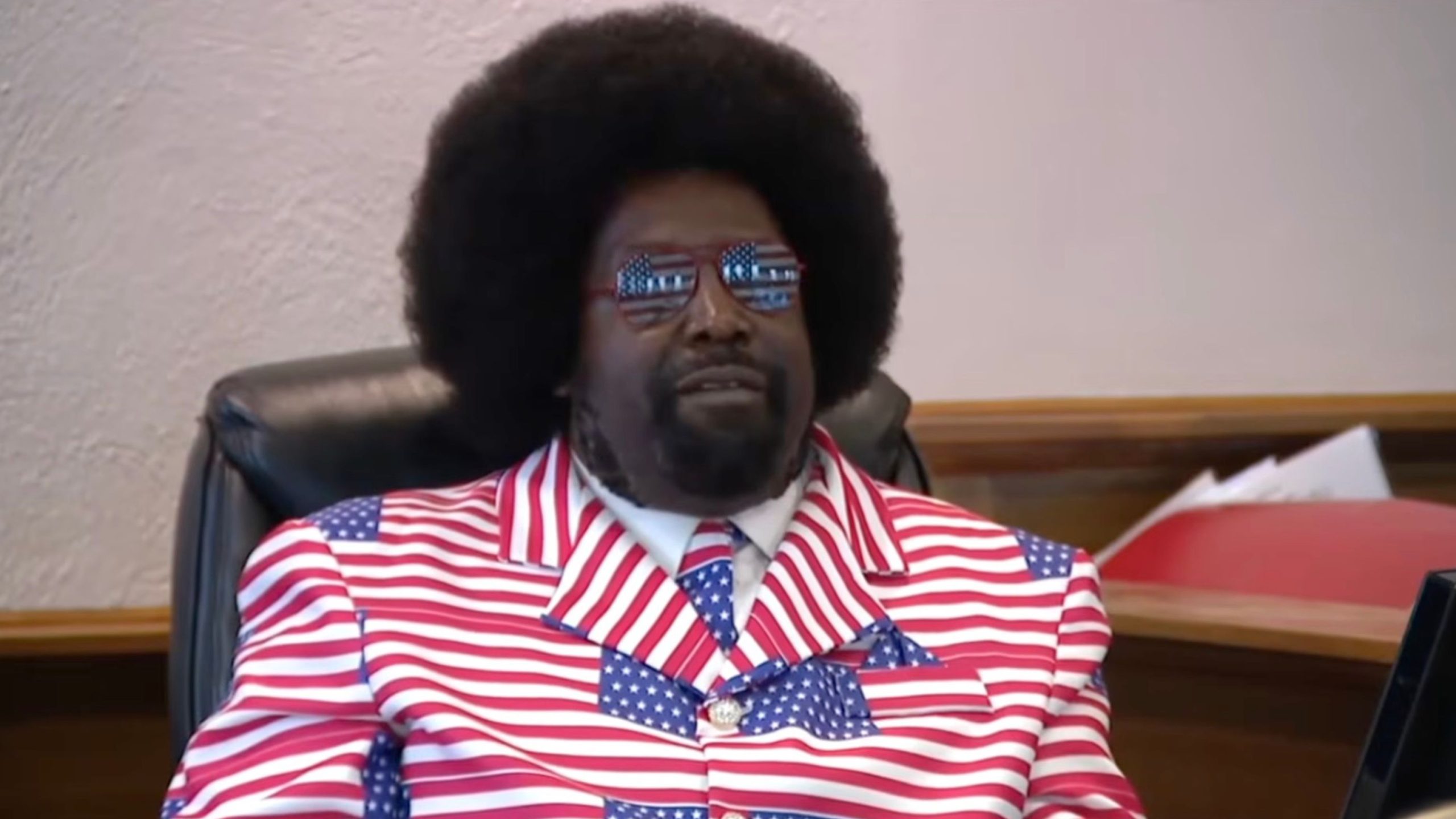
Foreman showed up to deliver his closing arguments in a red, white and blue American flag suit. For once, the outfit matched the occasion.