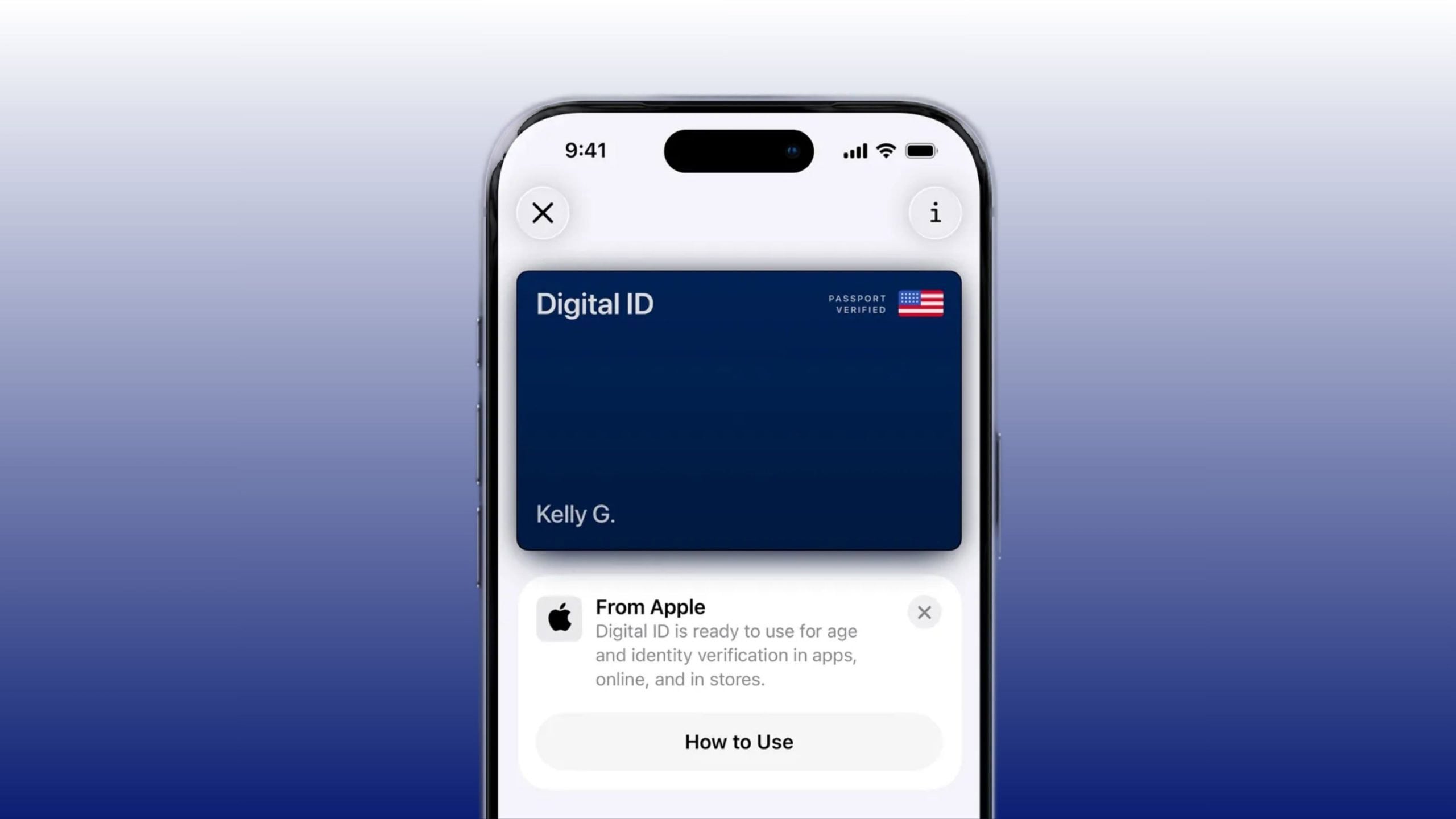
Apple just turned on the next phase of its Digital ID rollout and the framing in the company’s support documentation is almost casual. The passport-derived credential in Apple Wallet can now be used to confirm a user is over 18 when creating an Apple Account, updating iOS, adjusting safety settings, or downloading apps rated 18+. No press release accompanied the change, by the way.
The understated rollout undersells what is actually happening. Apple, like Google, Meta, Discord, and every other consumer-facing platform of significant size, is racing to operationalize digital identity infrastructure to meet a wave of age-verification mandates landing across the US, UK, EU, and Australia.
The companies did not invent this demand; lawmakers did, but the response is arriving faster than the laws themselves, and the architecture being built right now will outlast any specific statute that prompted it.
More: The Age Verification Con
The legislative push driving the rollout
The UK’s Online Safety Act is already forcing platforms to verify ages with documented credentials.
Discord attempted its own age-verification rollout earlier this year, paused after backlash, and has continued reworking the system. State laws in the US are moving in the same direction with Texas, Louisiana, Utah, and a growing list of others passing mandates that target app stores, social platforms, and adult content sites.
Federal proposals keep recycling similar models. The European Union is preparing its own age-verification framework. Australia has already legislated a social media ban for under-16s.
The platforms doing the verifying have a choice. They can build the credential infrastructure themselves, license it from third-party vendors who upload your passport to their servers, or hand the job to the operating system that already lives on your phone. Apple’s Digital ID, and Google’s parallel work on digital credentials in Android, are bids to be the third option. They are also bids to be the default option, because once an OS-level identity wallet exists, regulators tend to treat it as the natural place to plug in.
What Apple actually launched, and when
Digital ID went live last November as Apple’s workaround for the slow march of state-issued mobile driver’s licenses. Twelve states and Puerto Rico currently support adding a real driver’s license to Wallet, which left most US iPhone owners without a digital credential. So Apple built one.
At launch, acceptance was limited to TSA checkpoints in over 250 US airports.
Apple was explicit at the time that this was a starting point. Jennifer Bailey, Apple’s vice president of Apple Pay and Apple Wallet, said, “With the launch of Digital ID, we’re excited to expand the ways users can store and present their identity — all with the security and privacy built into iPhone and Apple Watch.”
The same announcement promised that “in the future, users will be able to present their Digital ID at additional select businesses and organizations for identity and age verification in person, in apps, and online.” The first organization to accept Digital ID for age verification is now Apple itself.
The mechanics appear in a support page titled “If you’re asked to confirm that you’re an adult.”
Apple lists the acceptable proofs and rules out the obvious ones. Passports, debit cards, and gift cards do not work. A footnote states, “A Digital ID in Apple Wallet created using a U.S. passport can be used to confirm that you’re an adult.”
Why platforms are building this faster than they have to
Compliance is the immediate motivation, but it is not the only one. Big Tech companies have spent years watching governments threaten and then partially deliver age-verification regimes. The threat is now real enough and varied enough across jurisdictions, that building one’s own verification rails has become cheaper than complying with a dozen incompatible regional schemes through external vendors.
There is a strategic upside as well. A platform that controls the identity wallet controls the chokepoint. When a regulator next year, or next decade, decides that some new category of content requires age gating or identity verification, the company that already runs the credential infrastructure becomes the obvious place to plug in. That position has value beyond compliance. It shapes which competitors can operate, which startups need to negotiate access, and which government requests get routed through which corporate intermediary.
Google has been moving along the same track. Android’s Identity Credential API and the Google Wallet pivot toward digital IDs are being positioned for the same legal moment Apple is meeting now. Meta has been pushing its own age-estimation tools across Facebook and Instagram.
Discord’s verification flow, paused and restarted, draws on the same vendor ecosystem. The companies do not always coordinate, but the pattern is unmistakable. The infrastructure for online identity verification is being constructed in parallel by every major platform, on a timeline driven by the laws coming down the pipeline.
The privacy architecture, and what it does not change
There is also the question of what happens when verification stops being optional. Apple’s support page already lists the actions that can trigger an adult-confirmation prompt, including software updates and changes to safety settings. The legal pressure driving these checks is expanding rather than retreating. As more states and countries pass age-verification laws, a Digital ID in Wallet stops being a convenience and becomes the path of least resistance.
For now, the practical impact on US users is limited. Most age-verification prompts in Apple’s services have appeared overseas, where the Online Safety Act and related laws are doing the prompting.
The number of US users who have a Digital ID and have also been asked to prove their age to Apple is modest. The system, though, is in place.