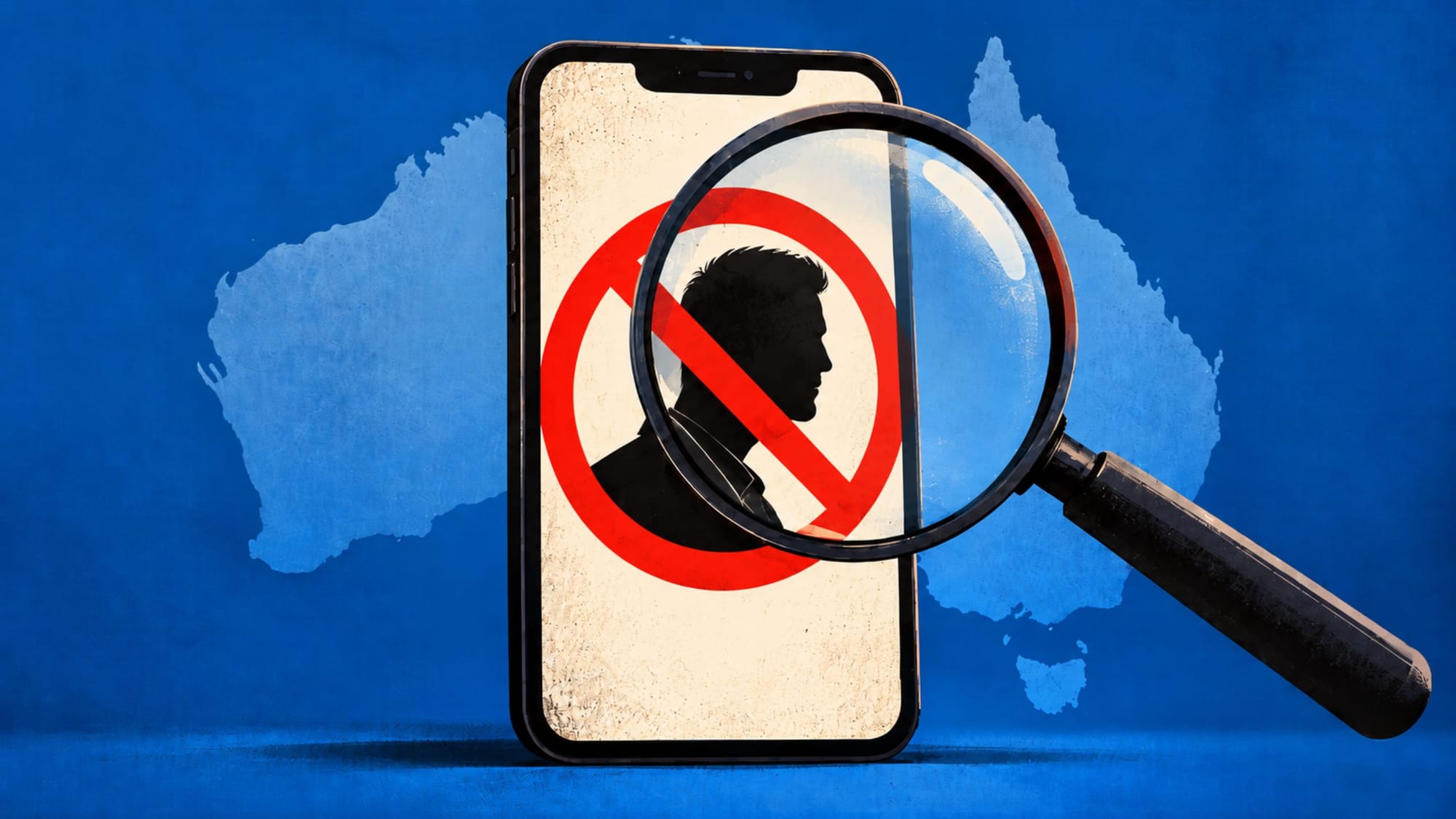

Arizona legislators have introduced what may be the most aggressive app store age verification bill in the country. House Bill 2920 would require age verification not just for app downloads, but for preinstalled software, the browser, the text messaging app, the search bar, the calculator, and the weather widget. Every piece of software on a mobile device would be subject to age-gating ID checks under this proposal.
The bill, introduced on January 27 and currently pending before the House Science & Technology Committee, creates a surveillance architecture that applies to every mobile device user in the state. App store providers would be required to verify every account holder’s age category and share that data with developers.
HB 2920 divides users into four age categories: children under 13, teenagers between 13 and 16, older teenagers between 16 and 18, and adults. Every person who creates an app store account in Arizona would be sorted into one of these buckets through what the bill calls “commercially available” verification methods, a phrase it declines to define with any precision. The Arizona Attorney General would be tasked with creating rules to establish acceptable verification processes.
For anyone under 18, the bill mandates that their account be “affiliated” with a parent account. The app store would then be required to obtain “verifiable parental consent” before allowing the minor to download an application, purchase an application, or make any in-app purchase. This consent requirement extends to preinstalled apps as well. The first time a minor launches their browser or messaging app, the system would need to check with the parent account before allowing access.
The law does not specify how parent-child account affiliation would actually be verified. It grants app stores broad authority to determine parenthood through unspecified commercially reasonable methods, but provides no regulation for how this determination would occur.
The bill’s reach extends beyond initial downloads. If a developer makes what the legislation calls a “significant change” to an application, the parent account must provide renewed consent before the minor can access the updated version.
The definition of significant change covers modifications to privacy policies, changes to data collection categories, alterations to age ratings, the addition of in-app purchases, or the introduction of advertisements.
This means a weather app that adds a banner ad would require fresh parental consent. An update to a note-taking app’s privacy policy would trigger the consent mechanism. The bill creates a system where routine software updates become opportunities for access to be blocked.
Developers would be required to notify app stores of any significant change, and app stores would then be required to notify parent accounts and obtain renewed consent before providing access to the changed version. The burden falls on both parties, with civil penalties of up to $75,000 per violation and a private right of action allowing parents and minors to sue for $1,000 per violation plus punitive damages.
To make this system function, app stores would need to collect and maintain detailed records about every user’s age category, parental relationships, and consent status. This data would then be shared with developers whenever a user downloads, purchases, or launches an app.
The bill includes provisions requiring “industry standard encryption” and limiting data use to compliance purposes, but these safeguards exist alongside requirements for extensive data collection. Age category data, parent-child affiliations, verification records, consent histories, all of this information must be maintained and transmitted between parties for the system to work.
Texas passed a similar law in 2025. A federal judge blocked it before it could take effect, finding it likely unconstitutional. US District Judge Robert Pitman wrote that the law is “akin to a law that would require every bookstore to verify the age of every customer at the door and, for minors, require parental consent before the child or teen could enter and again when they try to purchase a book.” The court ruled the Texas law imposed content-based restrictions on speech and failed the strict scrutiny test because Texas did not prove it used the least restrictive means to achieve its goals.
The stated purpose of these laws is to protect children. The effect is creating systems that collect more sensitive data from children than currently exists. Every child’s age, every parent-child relationship, every app download, every purchase, and every consent decision would be logged and shared between companies.
The bill positions parents as the decision-makers, but the actual gatekeeping happens at the app store level. Apple and Google would be deputized to determine what verification methods meet the “commercially reasonable” standard. They would build the consent interfaces. They would decide how the parent-child affiliation system functions.
The chilling effect operates at multiple levels. Developers might avoid making any updates to their apps to prevent triggering renewed consent requirements. Small developers might exit the market entirely rather than build compliance infrastructure. Families might find that the apps they use become unavailable because the compliance costs exceed what the developer can bear.
And for anyone who values the ability to access information without first presenting identification, the bill represents a fundamental issue. Reading news, checking the weather, sending messages, using a calculator, all of these activities would require first verifying your age and, if under 18, obtaining parental permission.
Arizona joins a growing list of states pursuing app store age verification. Texas, Utah, Louisiana, and California have all passed versions of these laws, with varying effective dates and enforcement provisions. The Texas law faces an appeal after being enjoined; Utah and Louisiana are scheduled to take effect later this year; California’s version arrives in 2027.
HB 2920 goes further than most by explicitly including preinstalled applications. A child in Arizona could buy a phone and find themselves unable to use the basic software that came with it until a parent account is established and consent is obtained. The browser that came with the device, the messaging app, and the search function would all be locked behind age verification and parental consent gates.
The First Amendment Question
By verifying age, these bills could violate the First Amendment primarily due to concerns about the right to speak anonymously online: if users must provide identifiable information about themselves, their ability to share or obtain information anonymously could be jeopardized.
The anonymous internet user is becoming an endangered species in this regulatory environment. Age verification at the app store level means identification at the app store level. The ability to download and use software without revealing who you are would functionally disappear.
Courts have consistently treated anonymous speech as protected under the First Amendment. The right to read and write without identification has a long constitutional history. These bills require the opposite: verified identity as a precondition for accessing digital tools.
Arizona’s HB 2920 has been read twice and awaits committee consideration. If it advances, it would take effect on November 30, 2026, creating yet another deadline for app stores and developers to comply with yet another variation of age verification requirements.