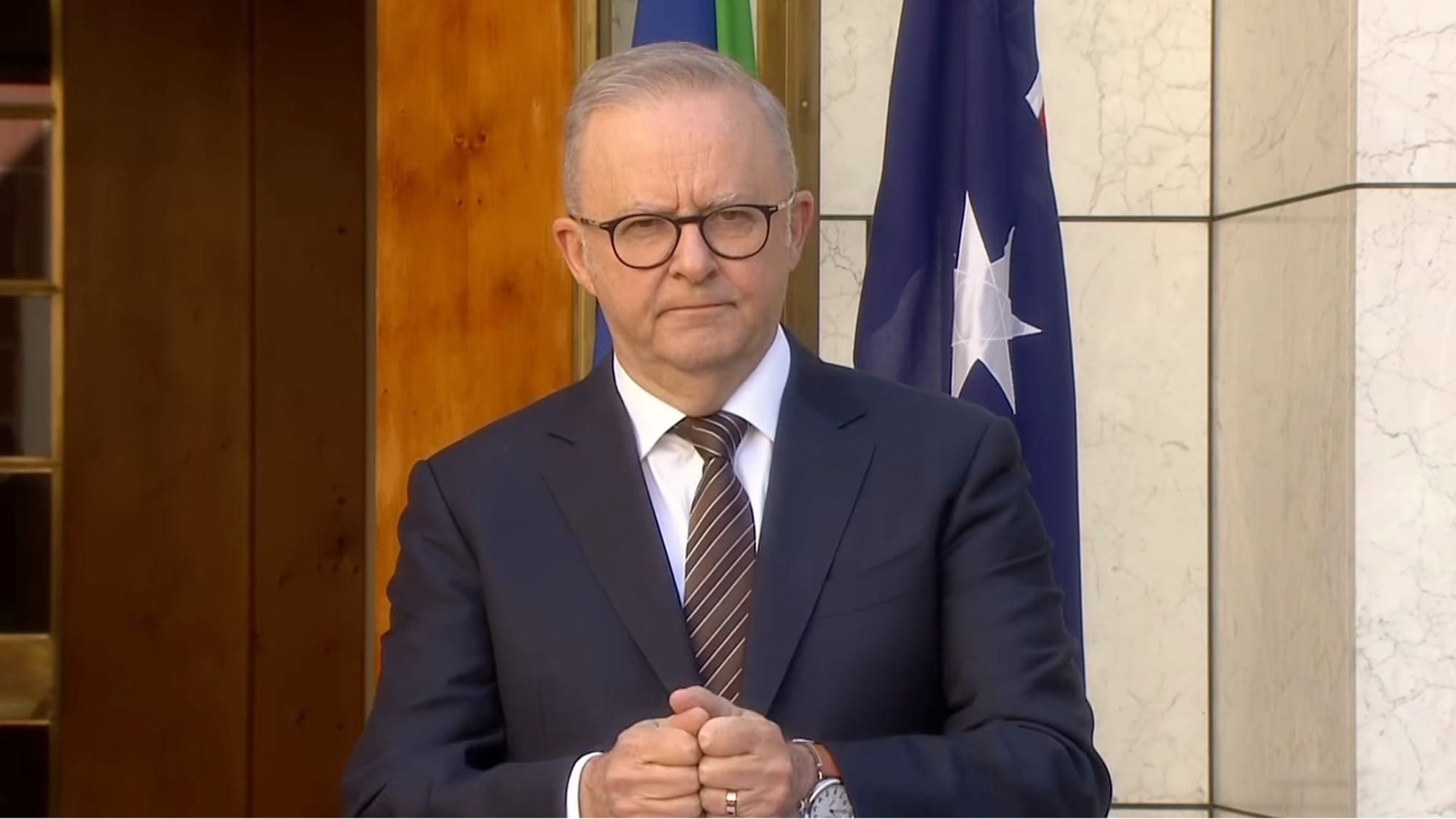
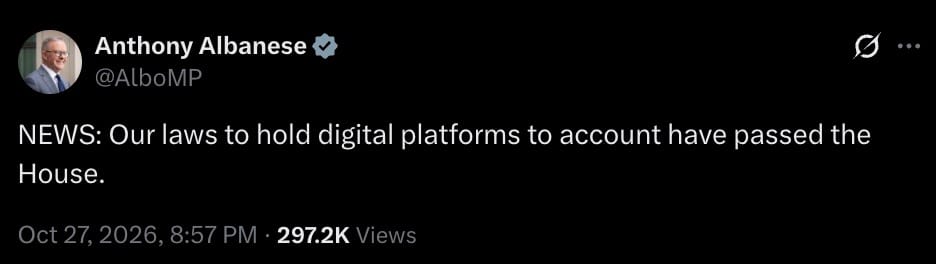
Australia’s Digital Duty of Care bill, which has been criticized as introducing online age verification via the backdoor, has passed the House of Representatives with 96 votes to 38, after the government accepted 23 amendments to the proposed legislation.
These changes have not improved it and, in fact, have made it worse.
While the government would like to collect as many pluses as possible before the bill hits the Senate, the upper house is where its fate will be decided, and an inquiry has been scheduled for November 9 and 10.
The committee is expected to report by November 20.
Meanwhile, the House of Representatives accepted an amendment that was originally put forward by crossbencher Kate Chaney, and which adds to the ever-growing list of material that platforms must make sure children do not see, and that is now also “material or conduct that simulates emotional intimacy and encourages or fosters a child’s dependence on it in place of human relationships.”
AI chatbots are clearly covered by this definition, and the way platforms will be able to keep this type of service away from children is by knowing which of their users are children – and which are not.
When he spoke in favor of the bill on October 27, Prime Minister Anthony Albanese mentioned chatbots in the context of people “identifying a chatbot, a non person as their best friend” – and used this as a reason for Parliament to “act.”
Another change that was originally an amendment put forth by Chaney, and accepted by the government, concerns algorithmic systems. The Communications Minister will be able to order platforms to offer tools that can be used to opt out of these algorithms.
These tools must be accessible, easy to use, prominently available, functional and available on an ongoing basis – and if a platform fails to comply, the penalty will be $2.18 million.
The government’s own supplementary memorandum says that the package of amendments is a collection of “technical corrections and changes” – but some of these “corrections” are anything but minor.
For example, government amendment six removes R18+ and X18+ films and computer games from the “excluded material” list, and puts them in the category of harmful material that children must be kept from.
According to the memorandum, “providers will be required to protect children from X18+ and R18+ content.” There is no explicit mention of age verification as a means to achieve this – but unless a platform knows who is under 18, it cannot possibly keep R18+ material away from that age group. And since the same platforms will be serving both children and adults, this means that adults will also have to have their age checked.
Free Speech Union director Reuben Kirkham previously said that the bill’s wording means that there will be “extensive age-gating ostensibly to protect children, but which will be applied to many adults too, unless they use a VPN to access the internet.”
The original proposal already contained a number of provisions that would be impossible to implement without checking the age of every user. These include making sure that children cannot see pornography, and that under-16s are kept from “design features” such as “endless” feeds, likes, and stories.
Another is to give users a choice of “at least 2 appropriate age assurance measures” – and this is something that platforms will have to offer to anyone who might be a child.
The bill also originally contained the obligation for platforms to remove “cyber-abuse material” within 24 hours (the deadline has been cut from 48), and introduces new powers for the eSafety commissioner, including the right to issue takedown notices.
eSafety will also be able to create and control “sock puppet” accounts, that is, “fake” accounts used for gathering evidence, and will be able to delegate this power to “approved researchers.”
Amendment five has now removed R18+ and X18+ content from the list of what is considered “seriously harmful” for adults.
According to Kirkham, this means that this category now only covers content “which would be barred by the Classification Board” – and the government has sold this as a positive change, that will protect free expression.
Critics say this is merely a trade-off, as the list of material that must be kept away from children has grown, and it is the rules concerning children that will usher in age verification for everyone.
When he spoke in the House on October 27, Albanese said that the bill is not about controlling what adults do online, but “about giving people back power and choice.”
The Communications Minister, Anika Wells, told those who oppose the bill to “bring an amendment, not a slogan to ‘kill the bill’” – but the Coalition and One Nation have done just that, and voted against it.
The Labor government will now have to rely on the Greens to pass the bill in the Senate, where it holds 30 of 76 seats, and needs the Greens’ 10. Senator Sarah Hanson-Young is promising to “kick the tyres” – but also wants to make the bill even tougher, by introducing a right to sue for compensation, and tying fines to global revenue.
Andrew Bushnell of the Institute of Public Affairs said that the “duty of care” is “less about protecting children than it is about protecting the government.”
The group Teach Us Consent, almost 90 percent funded by the government, lobbied for the bill and stood beside Prime Minister Albanese when it was unveiled. On October 27, Albanese mentioned them in his speech as among the groups that back the proposal.
Minister Wells is trying to build an international coalition around the bill, and Albanese is optimistic – he told the House, “This bill, if we carry it, will be replicated around the world.”
In Australia, the Senate inquiry is the last real chance to stop it. And as it stands, what the bill proposes is using films, games, and chatbots as the means to herd internet users into a system of digital ID, under the threat of massive fines.